Jul 22, 2026
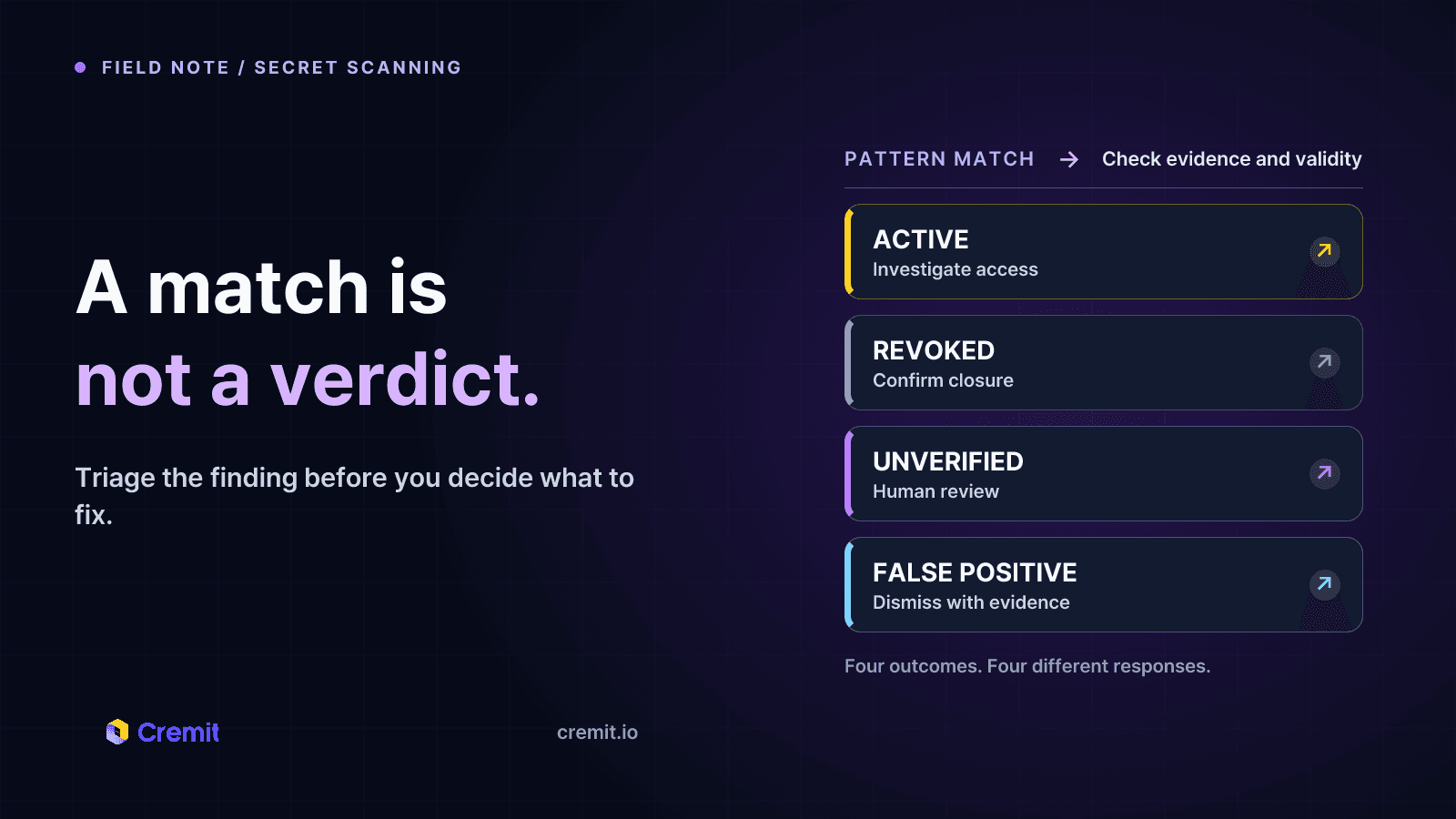
Secret scanning false positives: how to triage findings
A pattern match, a revoked key, and an unverified key need different responses. Learn how to separate them and prioritize exposed credentials.

Ben Kim
Best practices and technical tutorials
A pattern match, a revoked key, and an unverified key need different responses. Learn how to separate them and prioritize exposed credentials.
A leaked Slack incoming webhook is usually triaged as low severity: write-only, one channel, no data access. The moment an AI agent reads that channel and can act with tools, that write-only primitive becomes an indirect prompt injection path into the agent's privileges. Here is the full kill chain, the exact preconditions, and how to defend it.
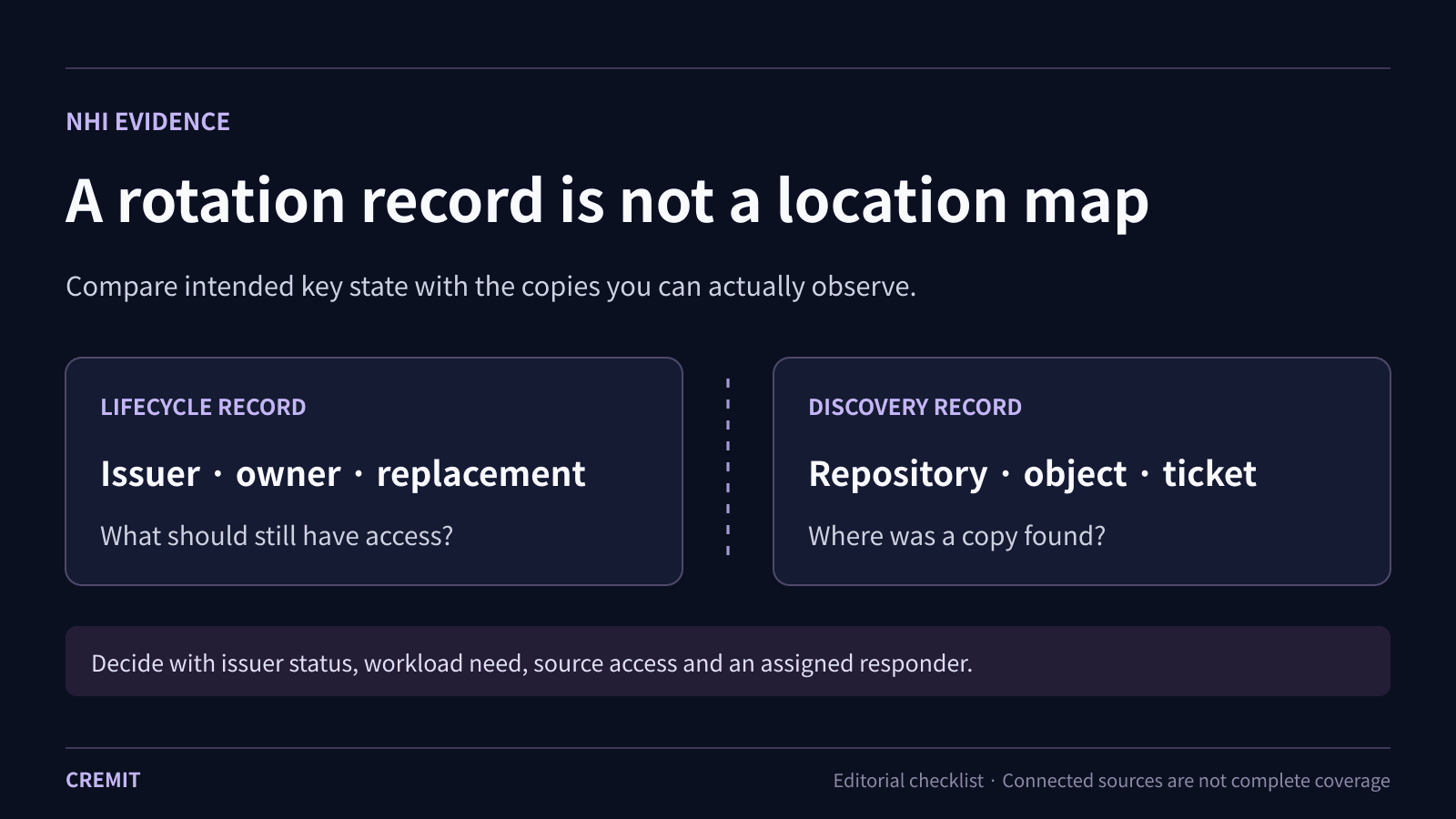
Lifecycle records show intended access. Secret findings show copies in scanned sources. Compare both before deciding who should replace a key.
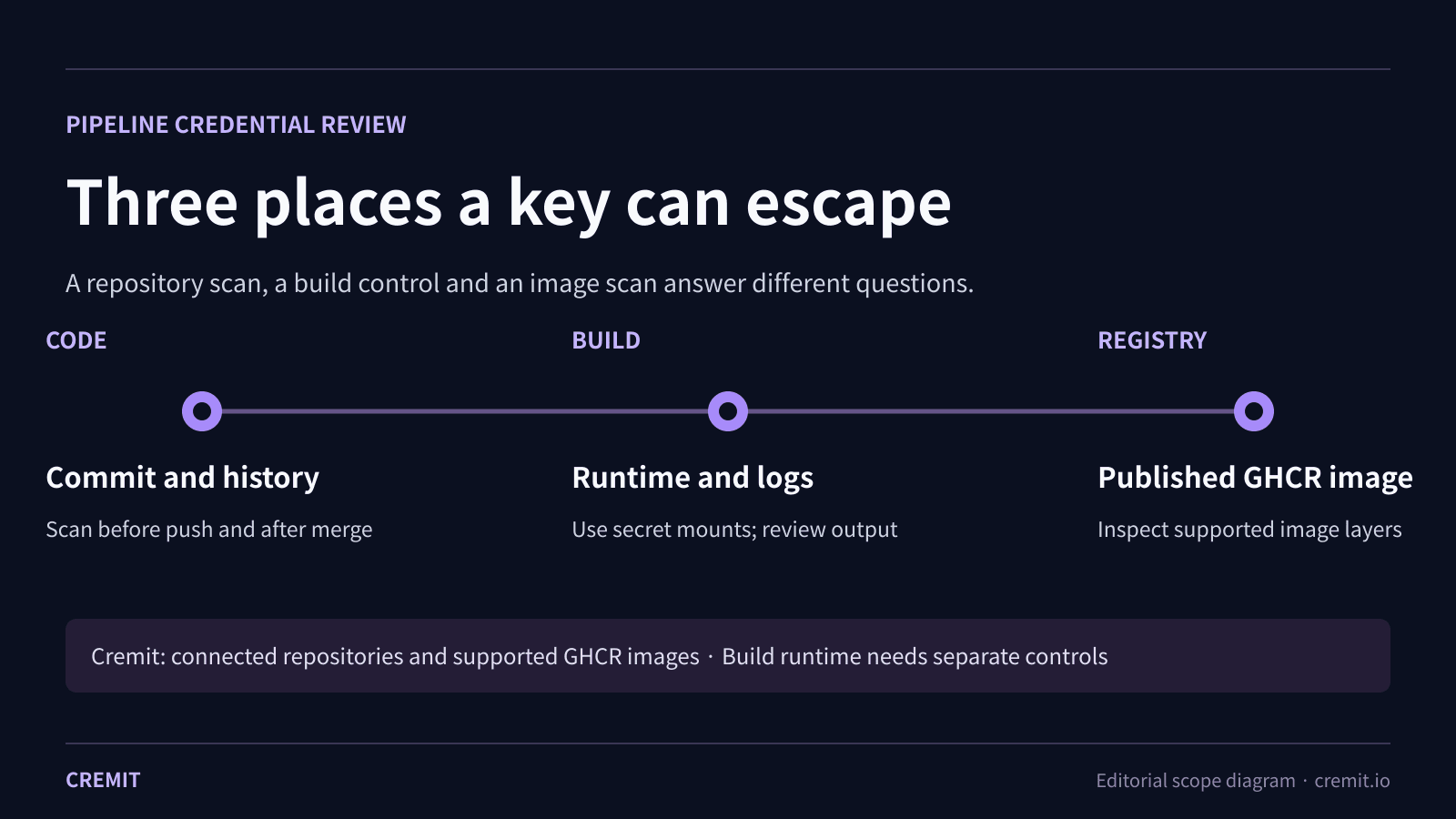
A key can land in Git history, build output or a published image. Use a different check at each boundary and verify any exposure at its issuer.
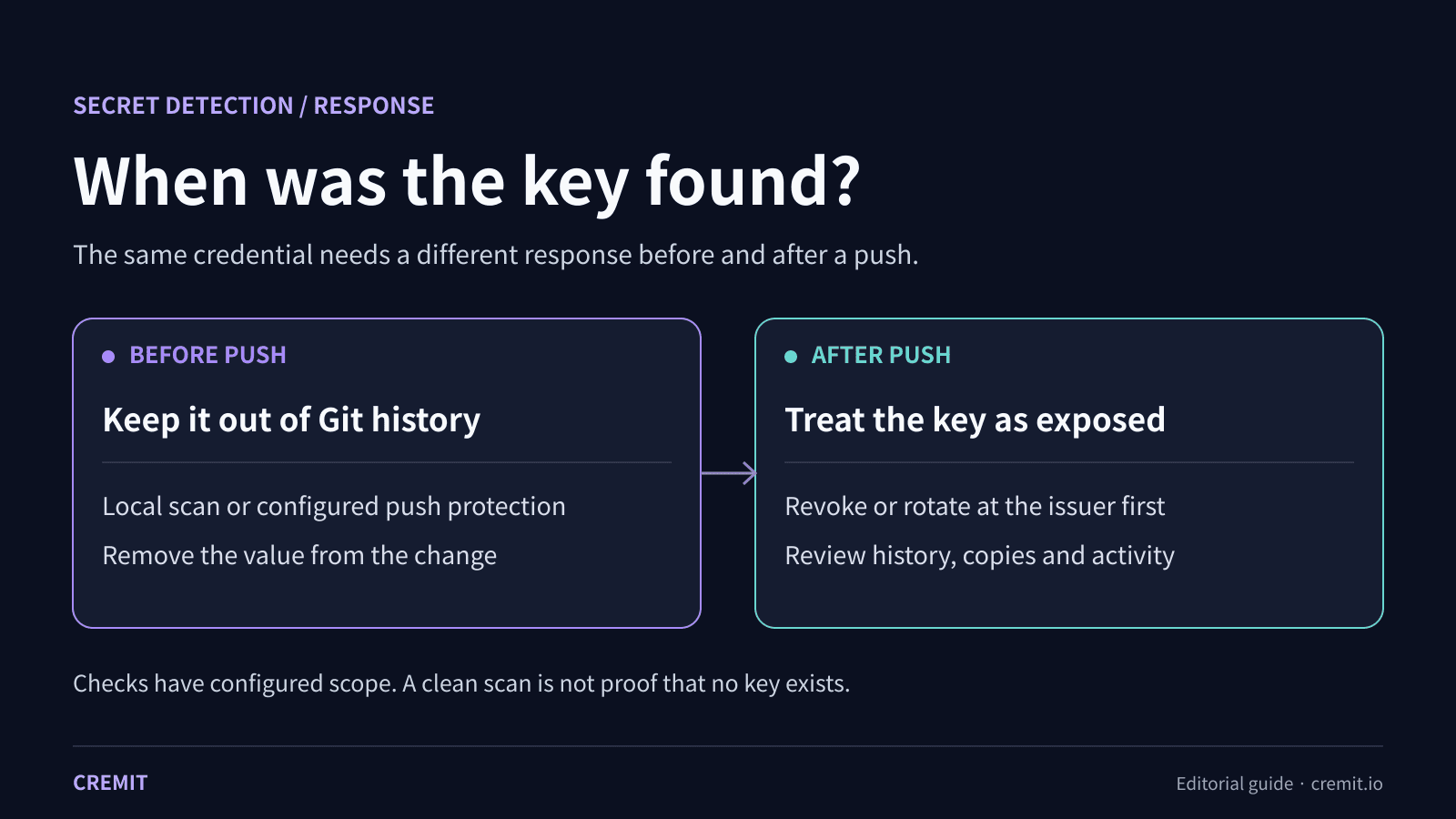
A key caught before push can be removed from the change. A key found afterward needs issuer-side revocation or rotation, even if the commit is deleted.
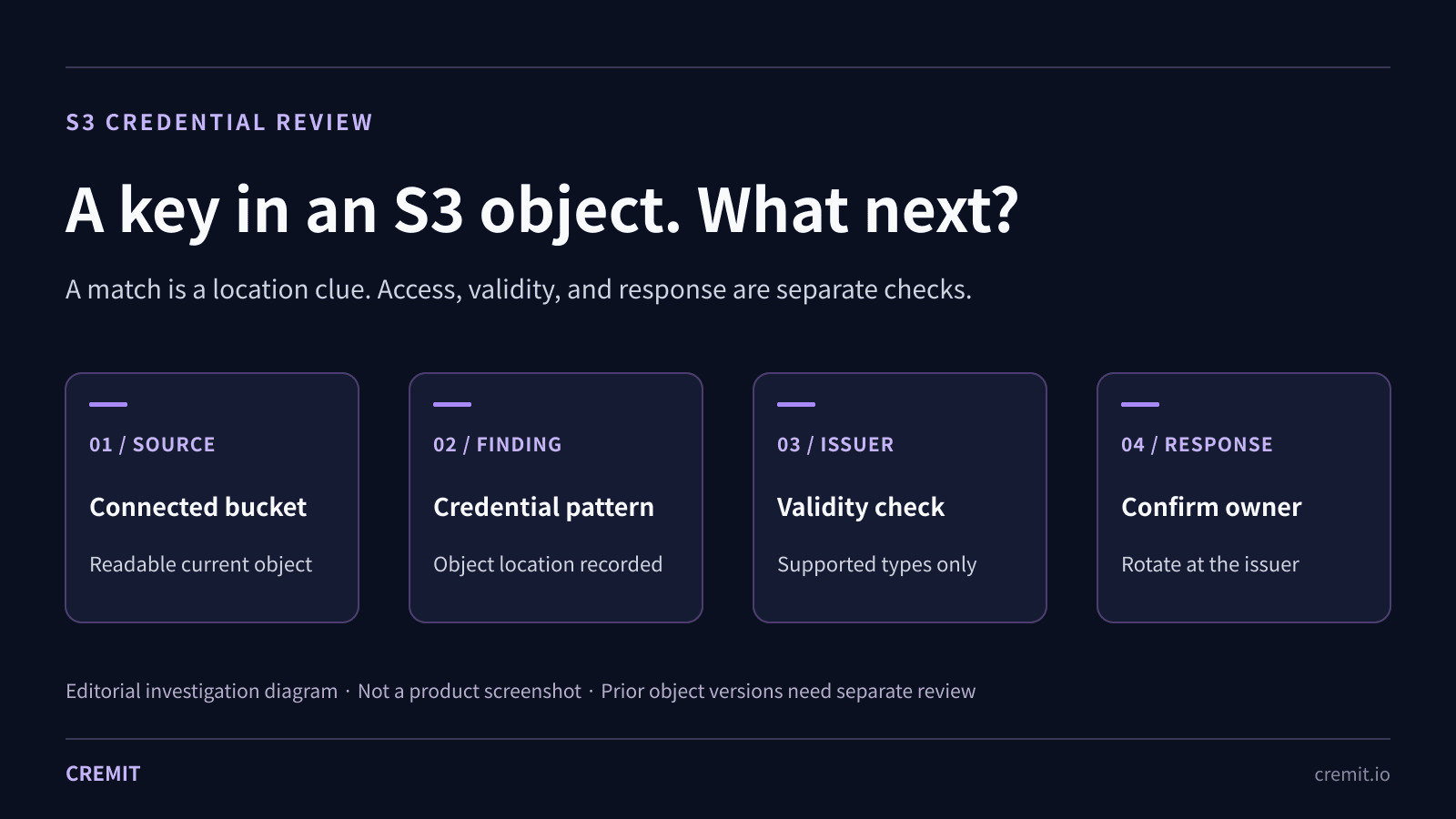
A key-shaped string in S3 does not prove public access, a live credential, or misuse. Check the object, issuer, scan coverage, and earlier versions.
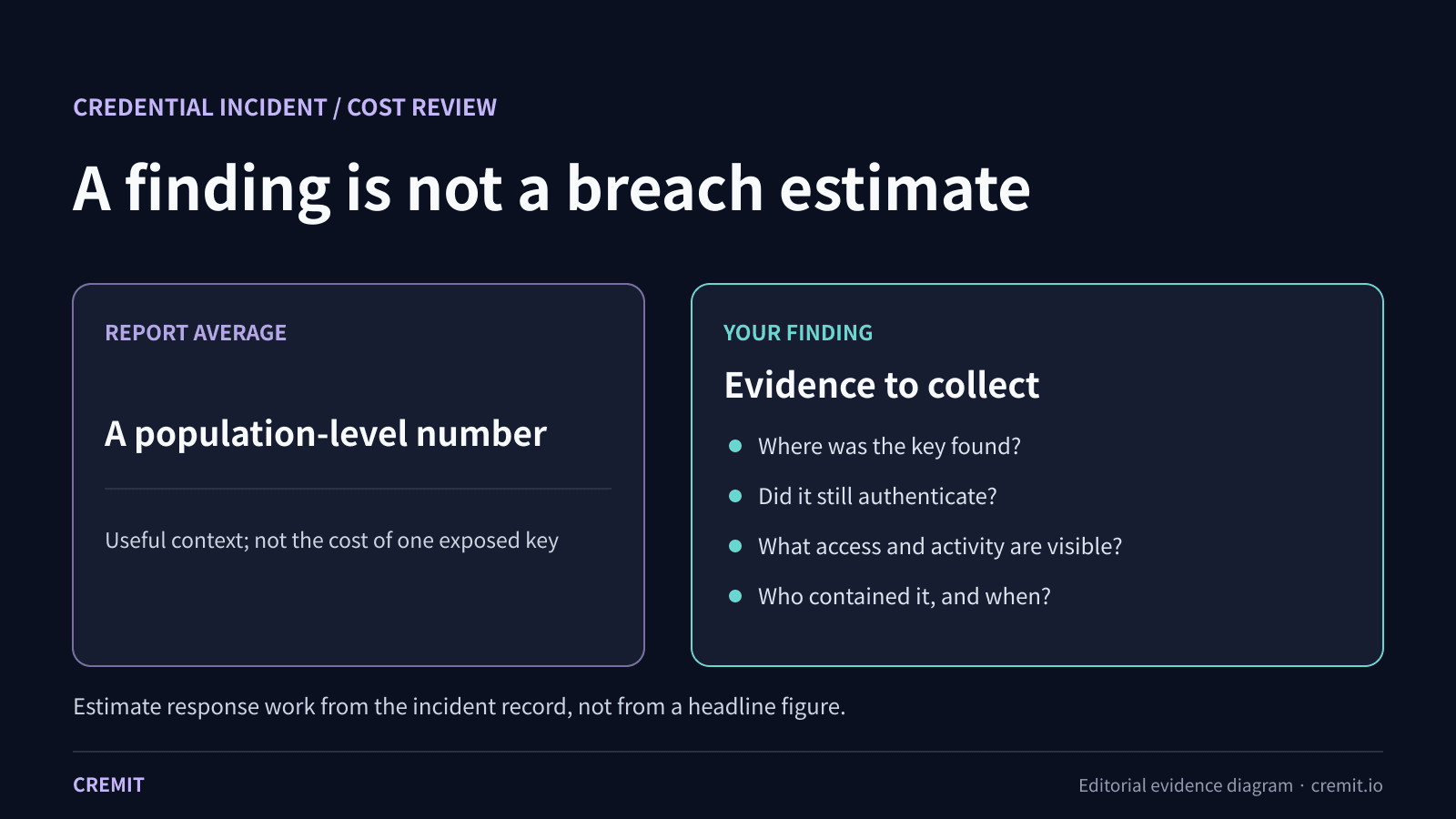
A breach-cost average cannot price one exposed credential. Record the key’s source, issuer status, available access and activity evidence, and response work before estimating impact.
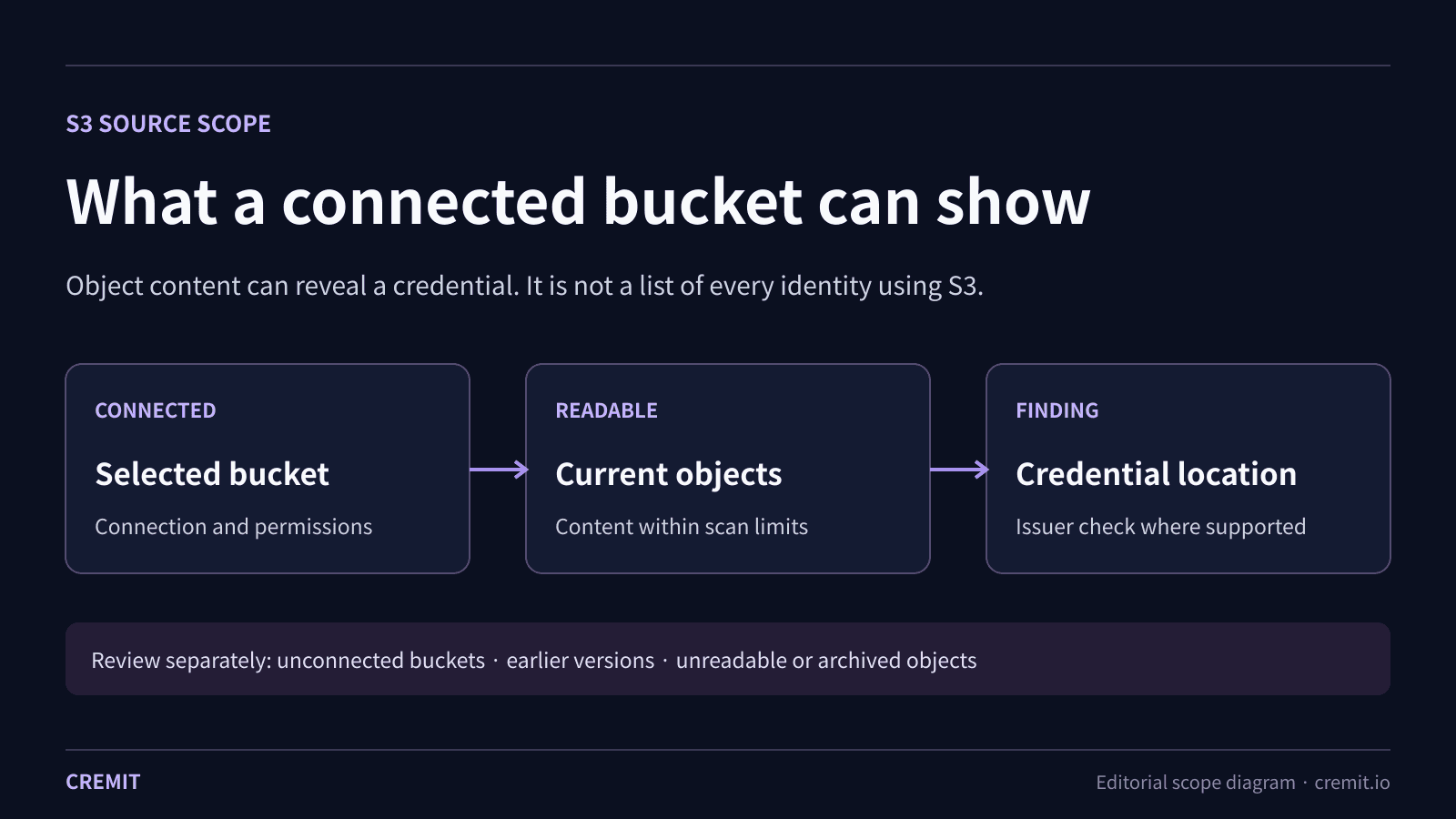
Cremit reads supported current objects in connected S3 buckets to locate credentials. Check access, skipped objects, earlier versions and the issuer separately.
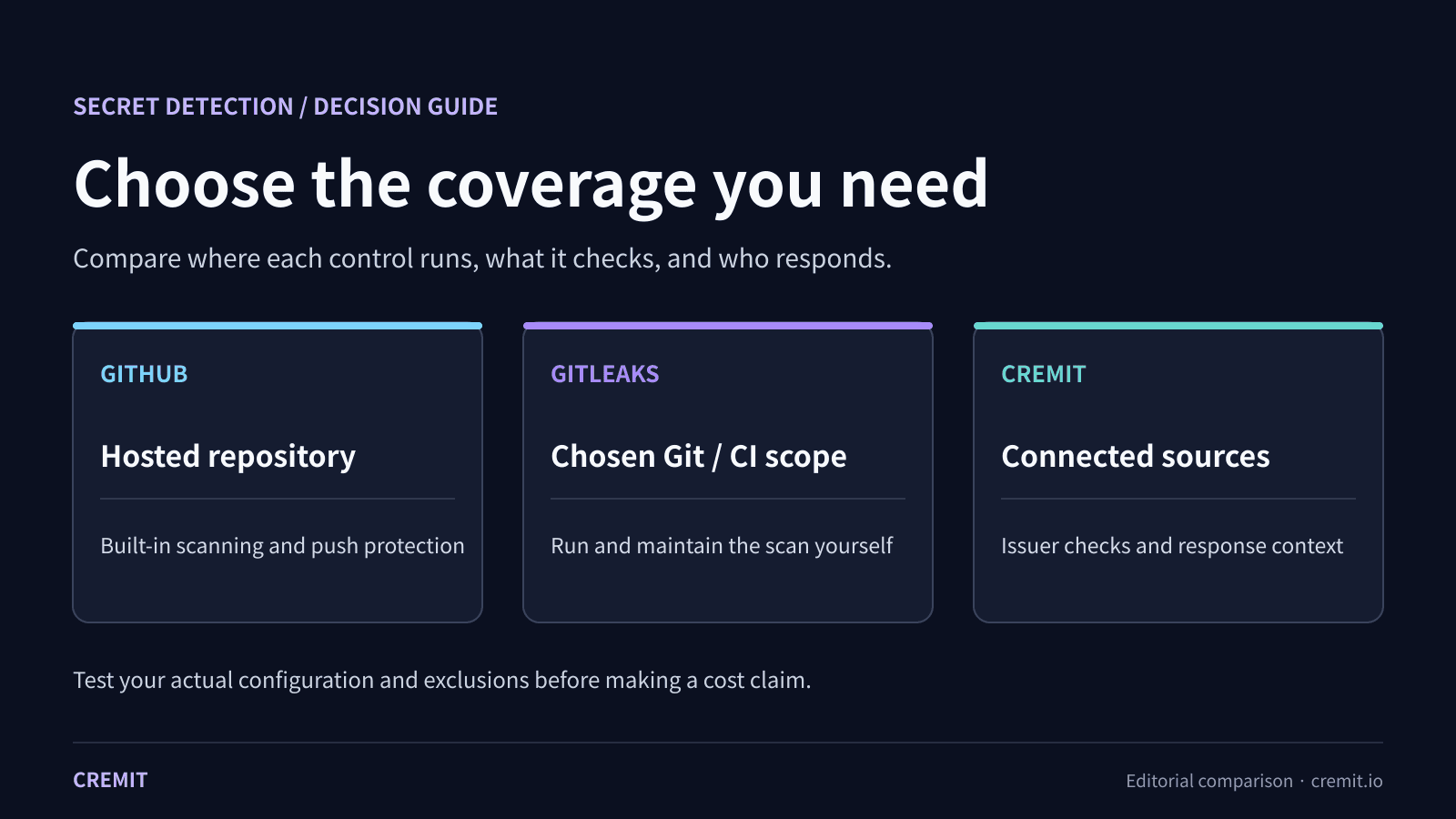
Start with the sources you need to inspect, the evidence each check returns, and who will revoke a live key. Compare GitHub, Gitleaks and Cremit by the work each covers.
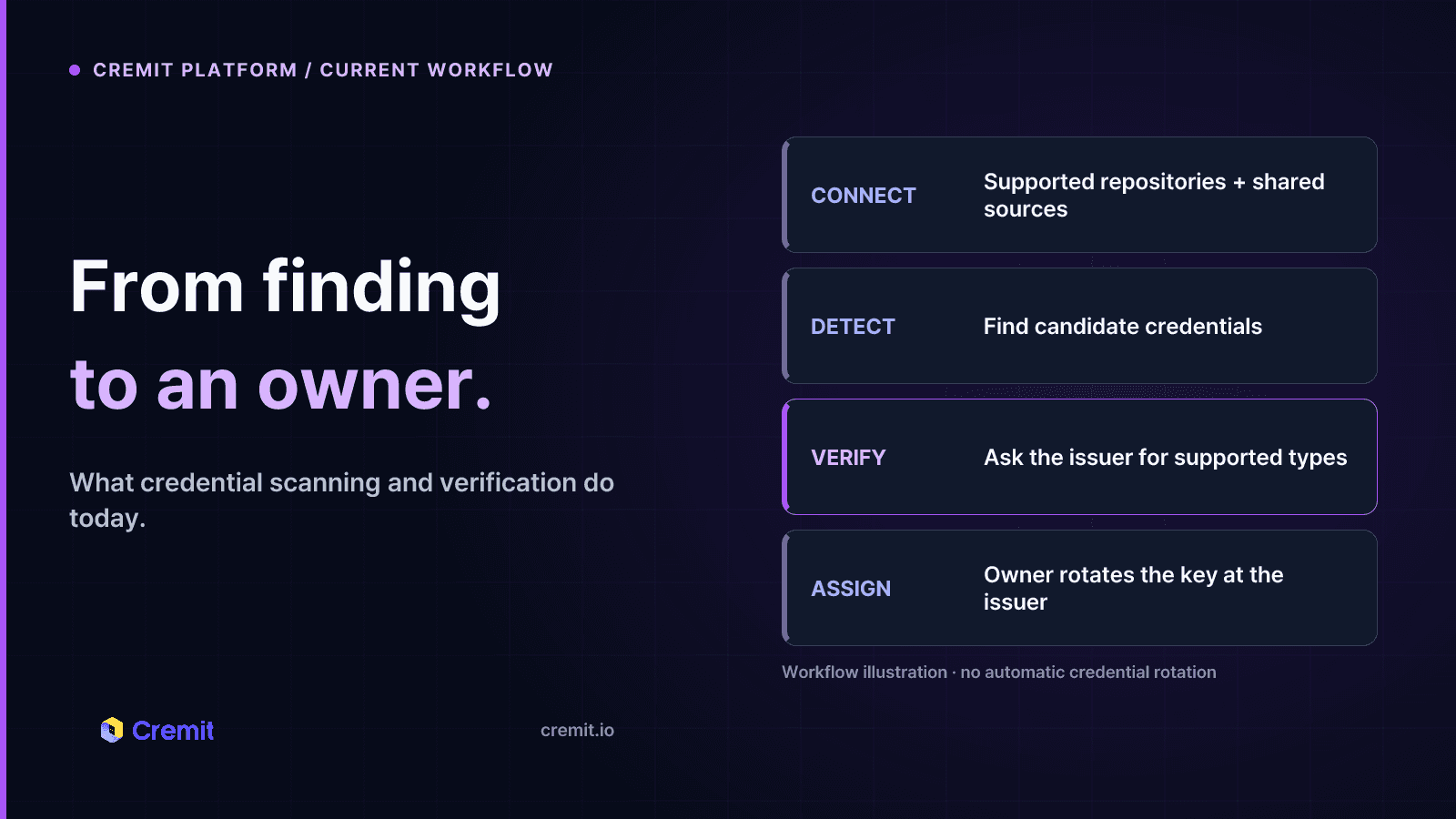
An updated guide to Cremit Platform’s scan sources, live credential checks, and remediation workflow, with current product limits.
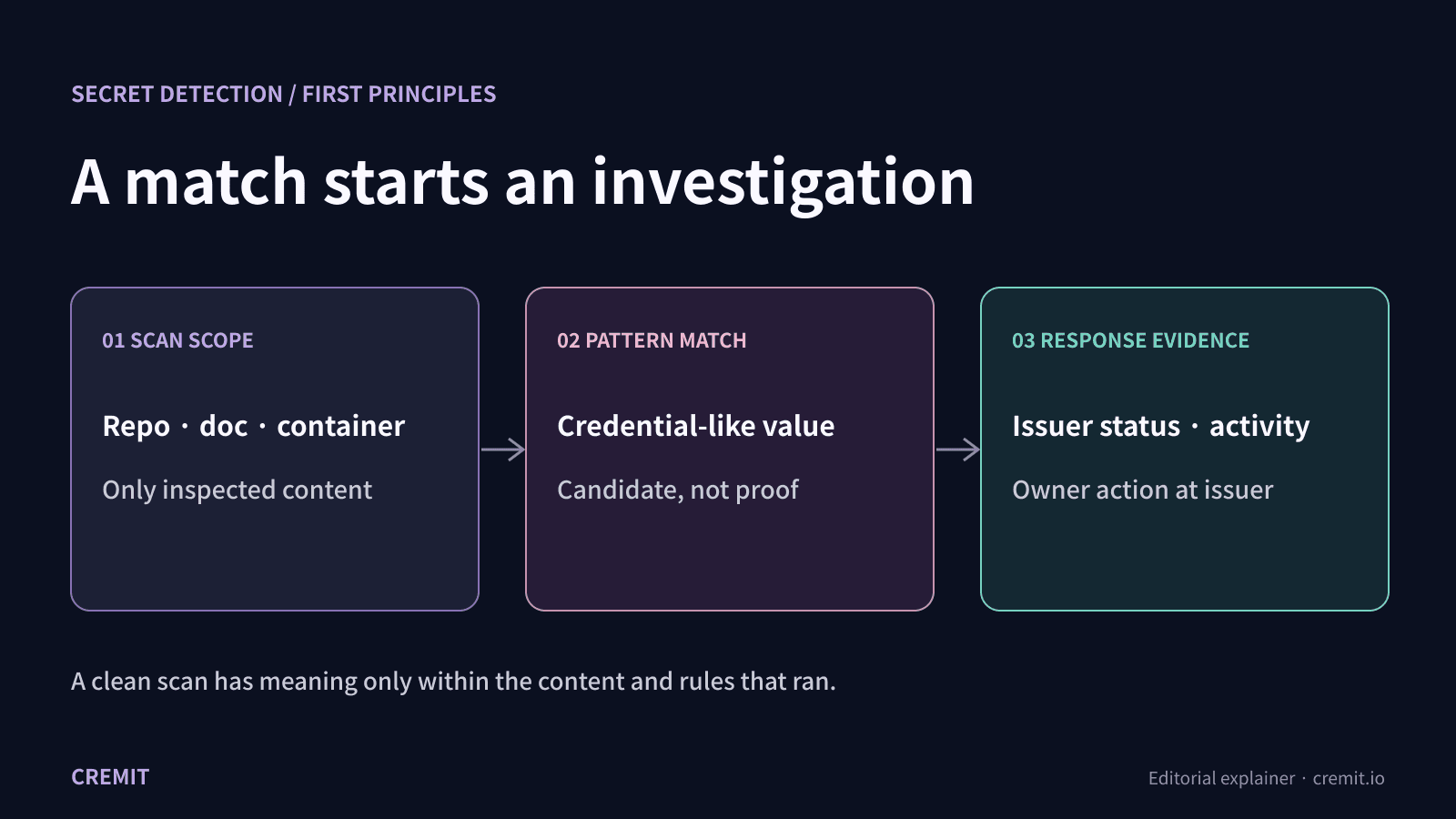
Secret detection finds possible credentials in content a tool actually inspects. Learn what a match proves, where scans run, and how to verify and contain an exposed key.
Optional cookies count visits, identify visiting companies, and measure ads. You can decline. Cookie policy