ProductThreat Detection
Found in public. Still usable?
A public location tells you where a credential appeared. It does not tell you whether the key still works. Cremit brings together the location, the latest supported issuer check, and available AWS or GCP permission details so a responder can decide what to do next.
- Threat analyst
- Security lead
- Service owner
Who does the work
The people this feature hands work to, and what each of them does with it.
Threat analyst
Triages keys found on public surfaces and separates still-valid ones from dead ones.
Security lead
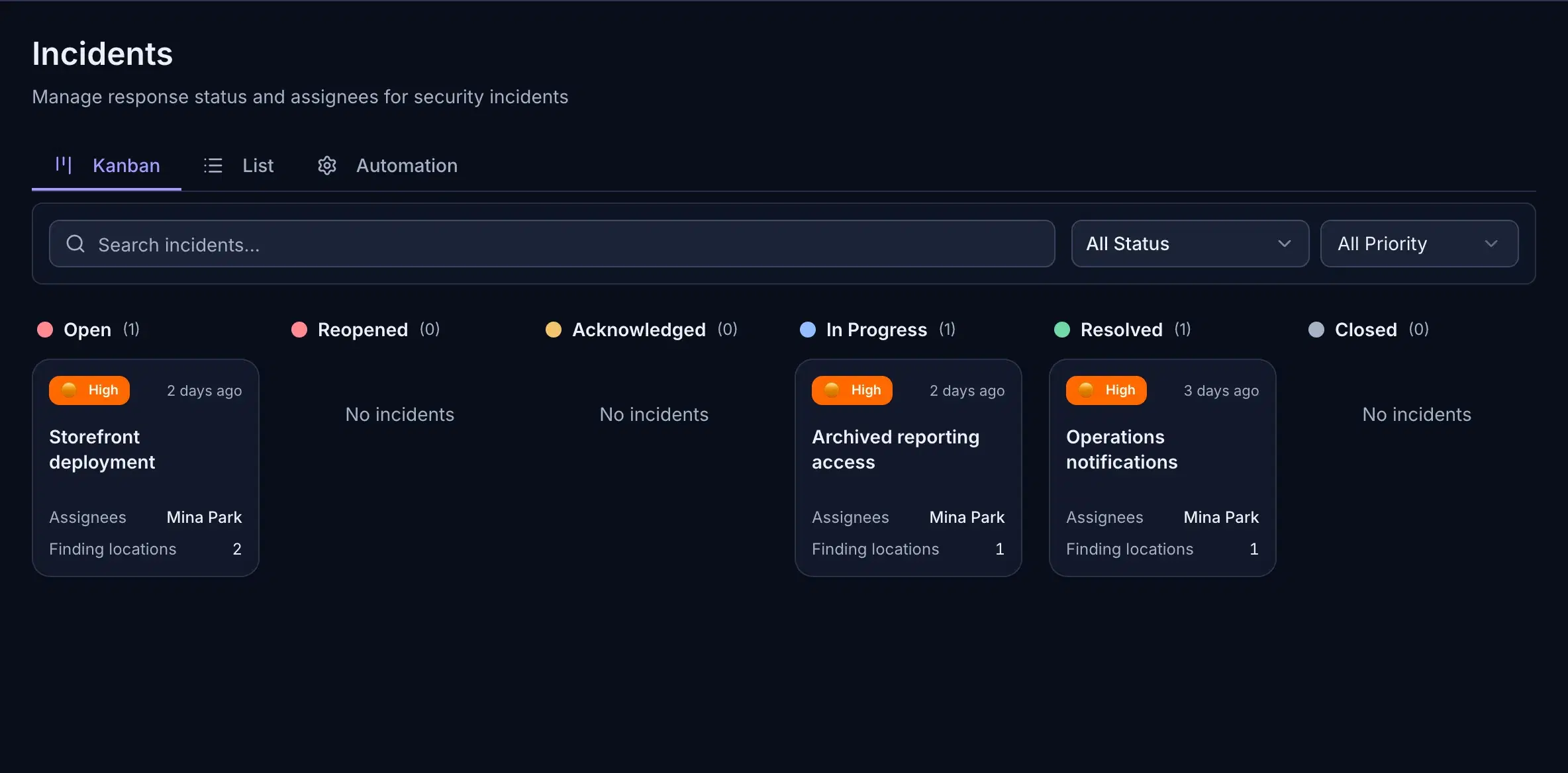
Escalates a valid public key to an incident with an owner and a priority.
Service owner
Contains the key at the issuer and checks access logs for use.
One finding, three different questions
Treat each piece of evidence as a separate answer before assigning an incident.
01
Where was the credential found, and was that source public?
02
Was its validity checked at the issuer? When, and with what result?
03
For supported AWS or GCP keys, what identity, policies or API restrictions are available?
04
Who can contain the exposure and rotate or revoke the key at its issuer?
Read the evidence in order
Location, validity and permission data answer different questions. None alone describes the entire incident.
LOCATIONWhere it appeared
Review the source and recorded locations, including whether a scanned source is public.
VALIDITYWhether it works
For supported types, inspect the latest issuer-side check and its time. Human-confirmed results are marked separately.
SCOPEWhat it may reach
Where analysis succeeds, inspect AWS key identity and policies or GCP API-key targets and restrictions.
A status needs its basis
The same label can be misread if the verification method and history are left out.
- Confirmed active
An issuer check can confirm a supported key is active. A person can also mark a key active after manual review; that is human evidence, not an automated issuer check.
- Not yet confirmed
Pending, unverifiable or manual-review-required findings should remain visible. They are not evidence that the credential is safe.
- No longer usable
A failed issuer check or manual judgment can mark a key unusable. Without evidence it previously worked, do not describe that status as a completed revocation.
Common questions
Does a public finding mean the key is live?
No. Public exposure and validity are separate checks. For supported types, review the latest issuer result and its timestamp; otherwise confirm manually.
Does a permission view show what an attacker accessed?
No. AWS policy and GCP API restriction data describe available permission context. Actual use requires issuer-side activity logs and investigation.
Will every finding send an immediate alert?
No. Notifications depend on an enabled rule, supported trigger conditions, source timing and the configured channel. Incident actions require an incident workflow.
Hand the finding to the right person
Use the relationship view to confirm source and ownership evidence. Configure a workflow for the signals that merit a response, then verify the issuer-side fix.