NEW · Blast Radius: a field playbook for leaked API keys on AWS, GCP and Azure
Back to Blog
Category

Industry Insights

Industry trends and reports

11 posts
MCP Servers Are Taking API Keys Through the Chat Window
Oct 7, 2026

MCP Servers Are Taking API Keys Through the Chat Window

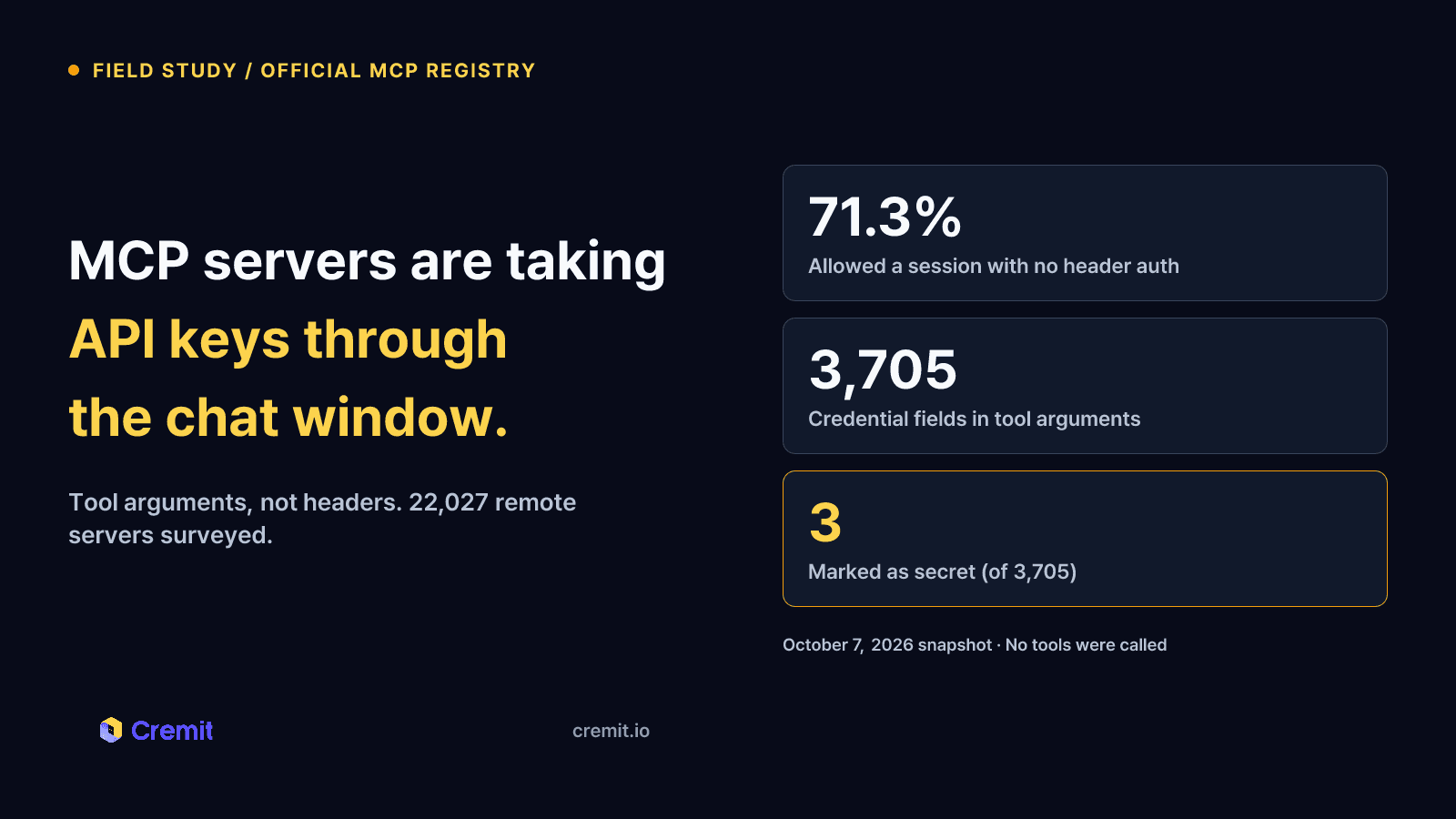
We sent one initialize request to every remote MCP server in the official registry. 71.3% of 22,027 responding servers opened a session with no header authentication, and 3,705 credential fields sit in tool arguments. Three of them are marked secret.

Ben Kim
Ben Kim
Unlisted, Not Private
Sep 18, 2026

Unlisted, Not Private

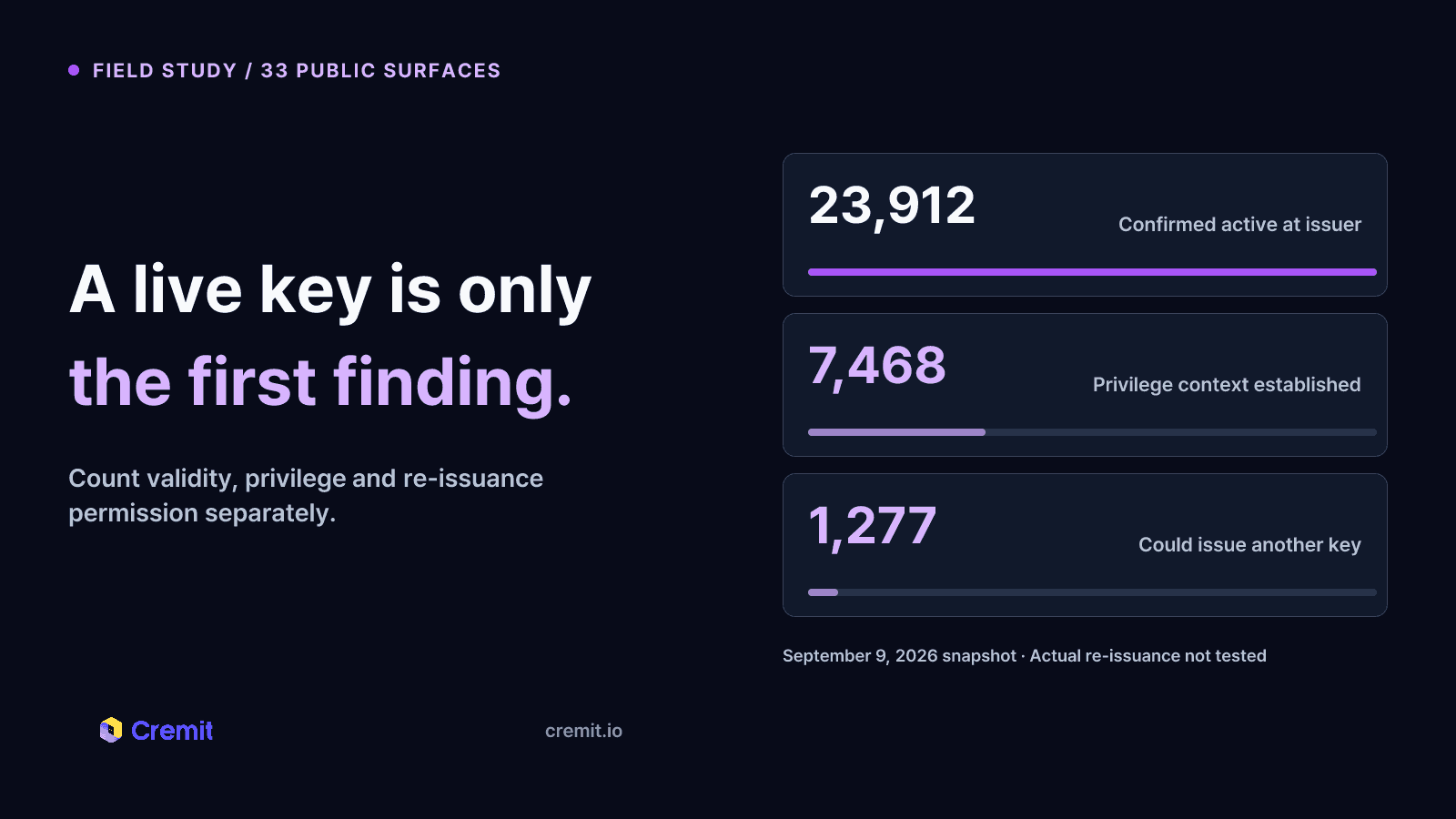
A September 2026 sweep of 33 public surfaces confirmed 23,912 active credentials. Privilege context was established for 7,468; 1,277 had permission to issue another key. Actual re-issuance was not tested.

Ben Kim
Ben Kim
How to count live credentials without confusing matches and keys
Aug 5, 2026

How to count live credentials without confusing matches and keys

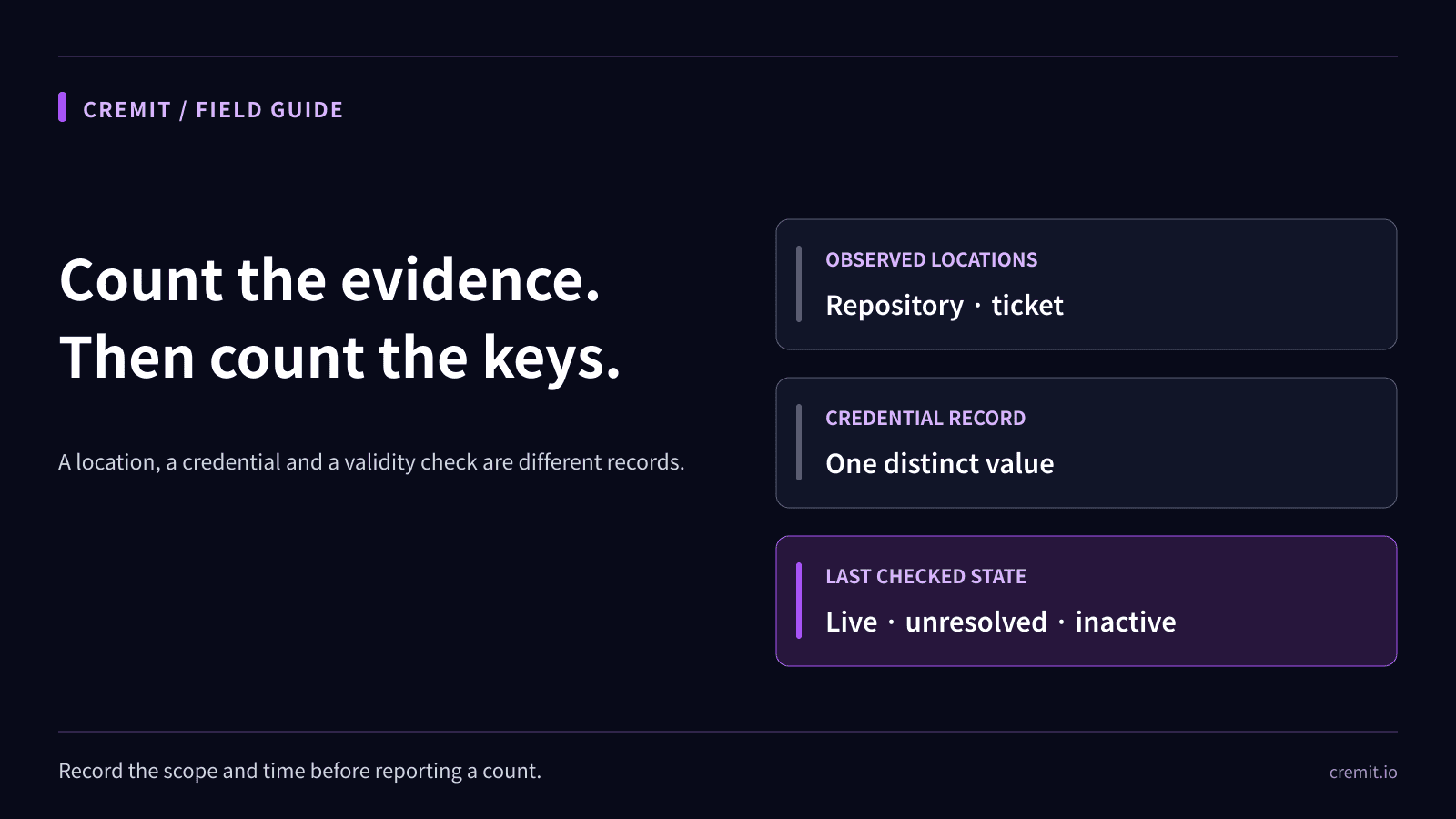
Count observed locations, distinct credential records and verification states separately. Define scope and check time before reporting exposure.

Ben Kim
Ben Kim
From exposed credentials to Cremit Platform: the workflow we support
Jul 28, 2026

From exposed credentials to Cremit Platform: the workflow we support

How Cremit Platform finds exposed credentials, verifies supported types, and routes findings to an owner, with clear limits.

Ben Kim
Ben Kim
AI agent credentials: trace the tool, issuer and responder
Jul 19, 2026

AI agent credentials: trace the tool, issuer and responder

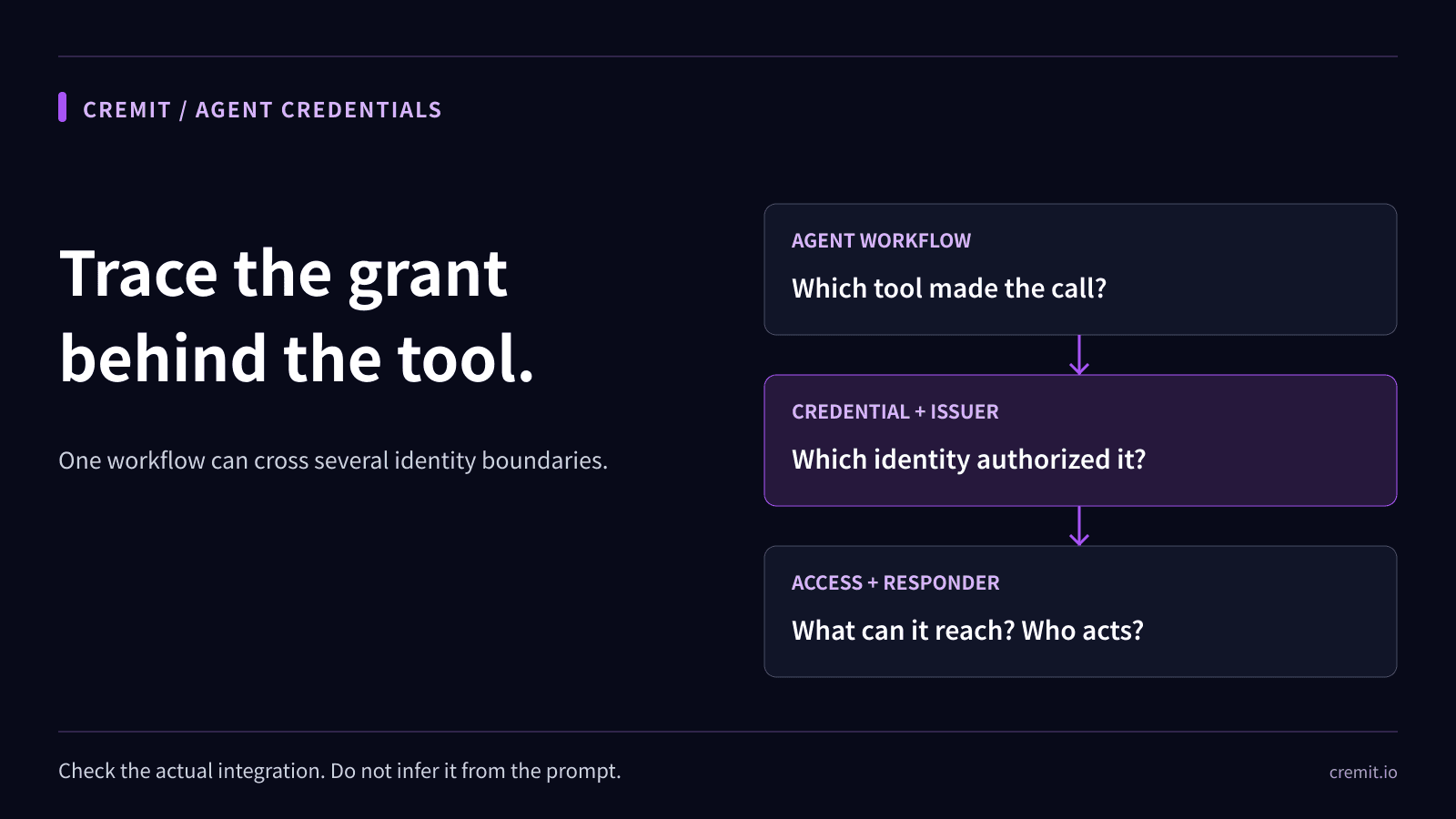
An agent workflow may cross several identity boundaries. Trace the actual grant, source location, permissions and owner before judging a leaked key.

Ben Kim
Ben Kim
The machine access behind an exposed API key
Jul 15, 2026

The machine access behind an exposed API key

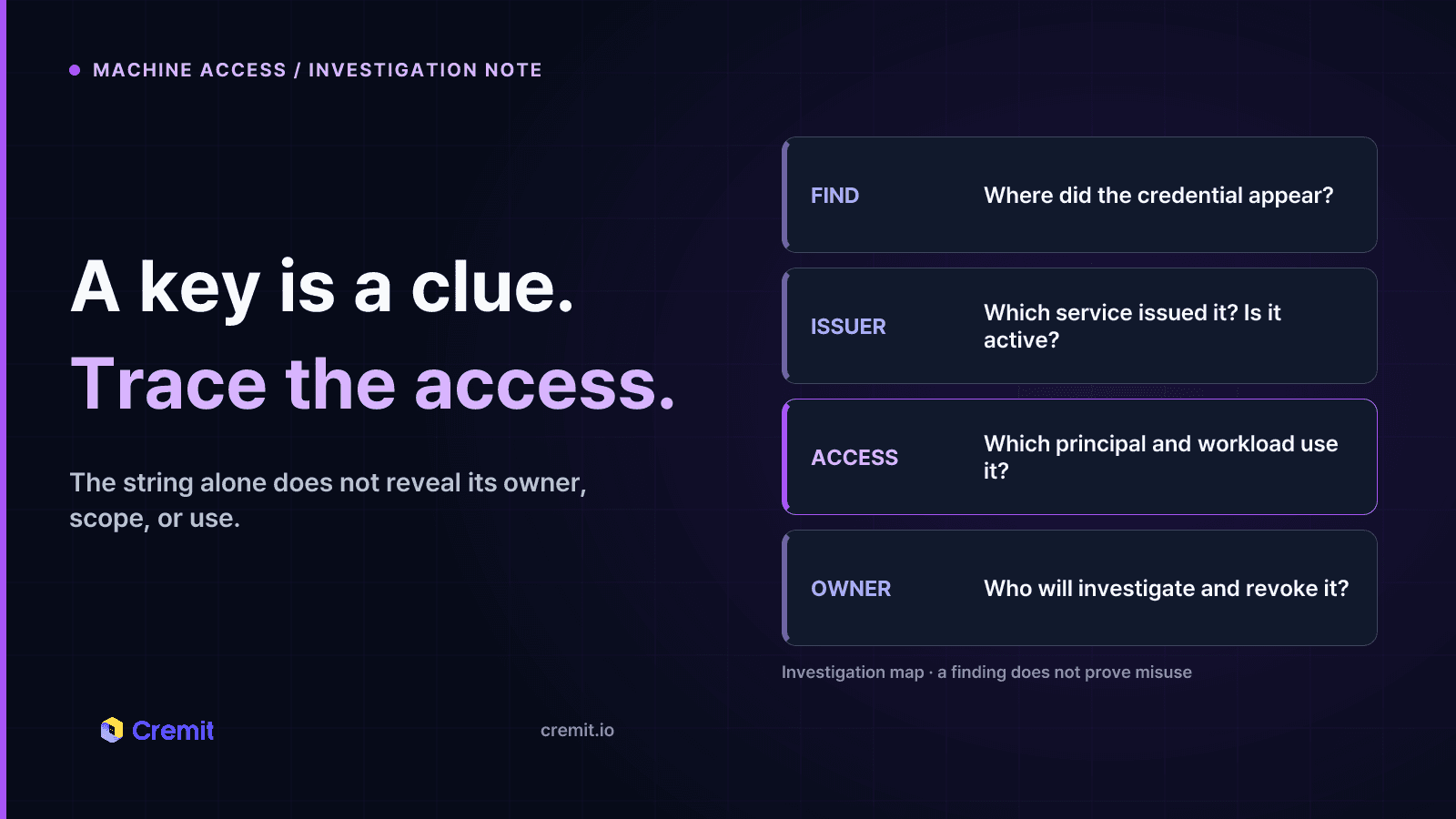
An exposed key is a lead. Connect it to its issuer, principal, permissions, workload, and owner before closing the access path.

Ben Kim
Ben Kim
Your Slack Webhook Is Write-Only, Until an AI Agent Reads the Channel
Jun 13, 2026

Your Slack Webhook Is Write-Only, Until an AI Agent Reads the Channel

A leaked Slack incoming webhook is usually triaged as low severity: write-only, one channel, no data access. The moment an AI agent reads that channel and can act with tools, that write-only primitive becomes an indirect prompt injection path into the agent's privileges. Here is the full kill chain, the exact preconditions, and how to defend it.

Ben Kim
Ben Kim
Long-exposed credentials: what a 90-day source record tells you
Apr 10, 2026

Long-exposed credentials: what a 90-day source record tells you

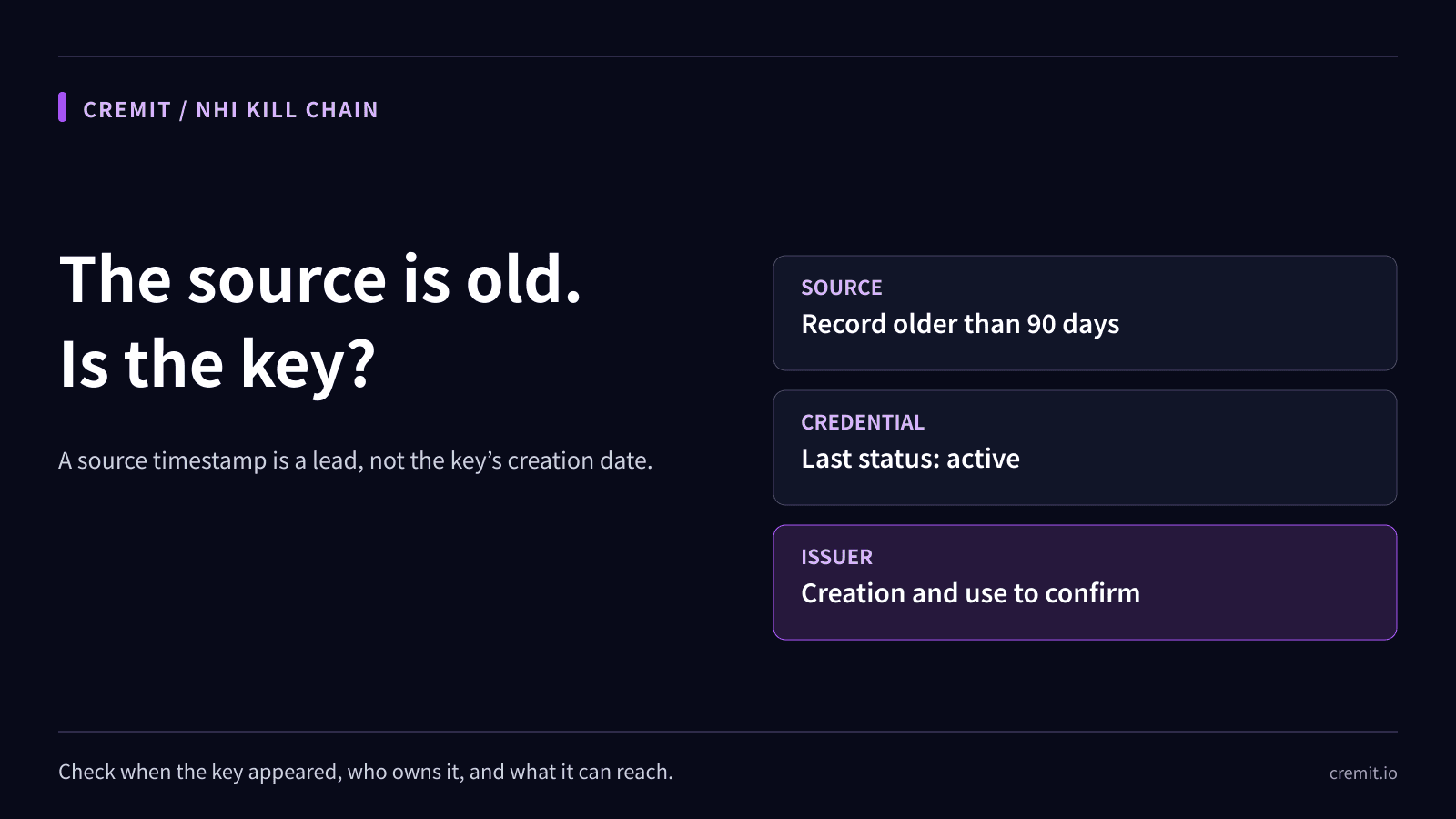
An old source record and an active key do not establish key age. Check when the value appeared, issuer status, permissions, and dependencies.

Ben Kim
Ben Kim
Public API key in a repository: what to check first
Mar 17, 2026

Public API key in a repository: what to check first

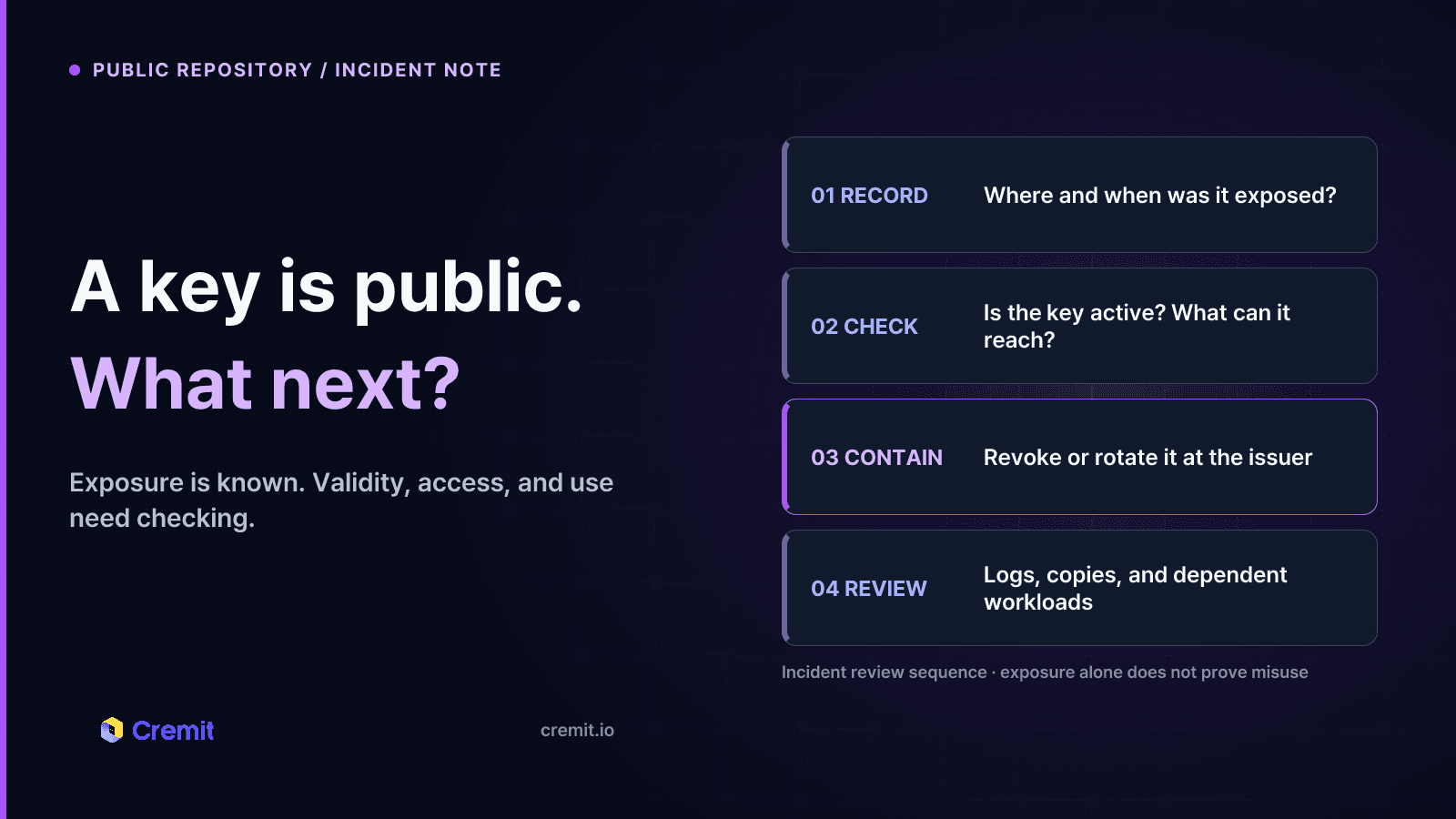
A public commit proves exposure, not misuse. Check validity, permissions, issuer logs, and dependent workloads before closing the incident.

Ben Kim
Ben Kim
2025 DBIR: what credential abuse and third-party breaches mean for teams
May 29, 2025

2025 DBIR: what credential abuse and third-party breaches mean for teams

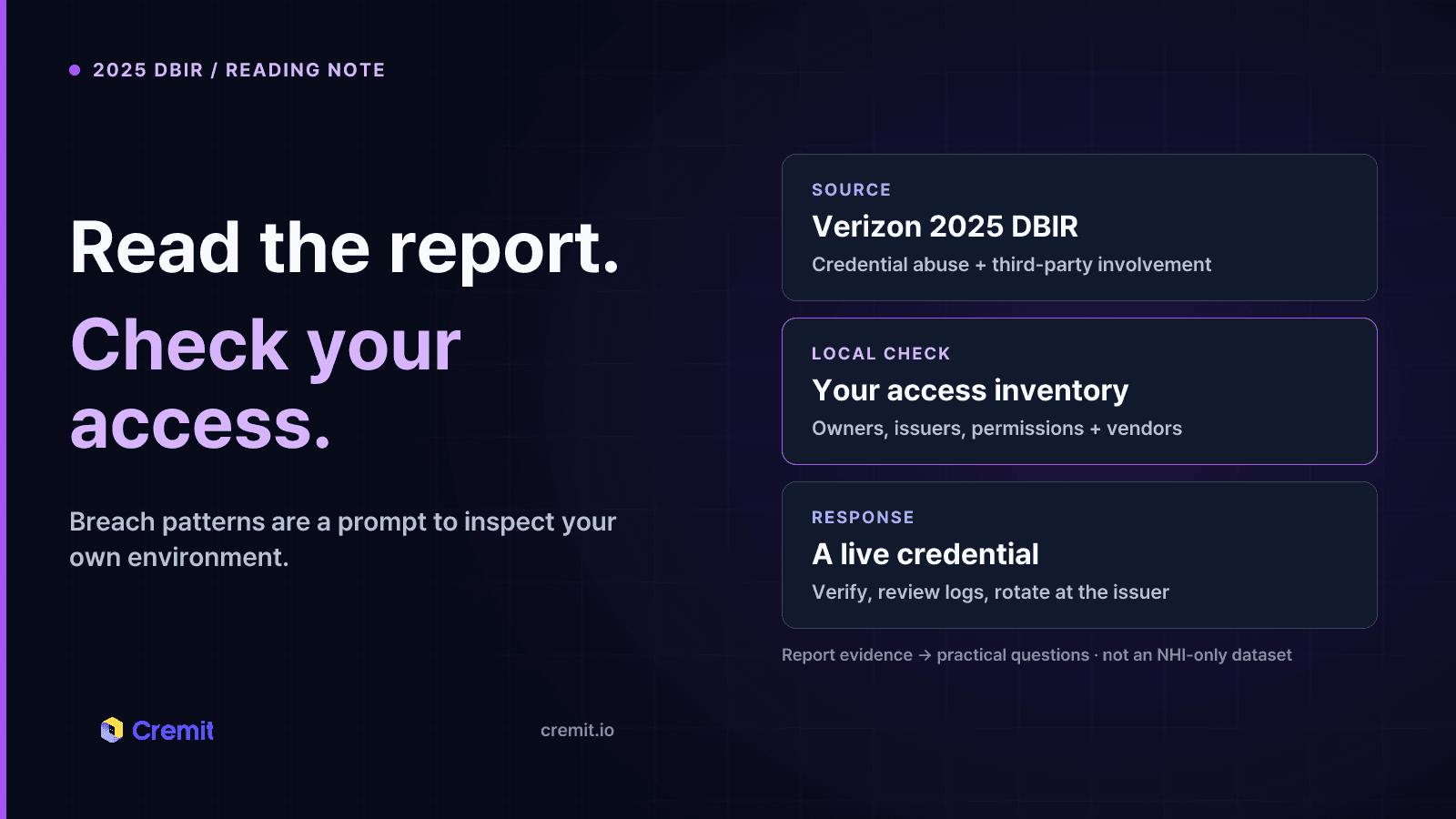
A sourced reading of the 2025 Verizon DBIR, with practical steps for credential inventory, leak prevention, and response.

Ben Kim
Ben Kim
MCP and A2A security: trace the credentials between agents and tools
Apr 16, 2025

MCP and A2A security: trace the credentials between agents and tools

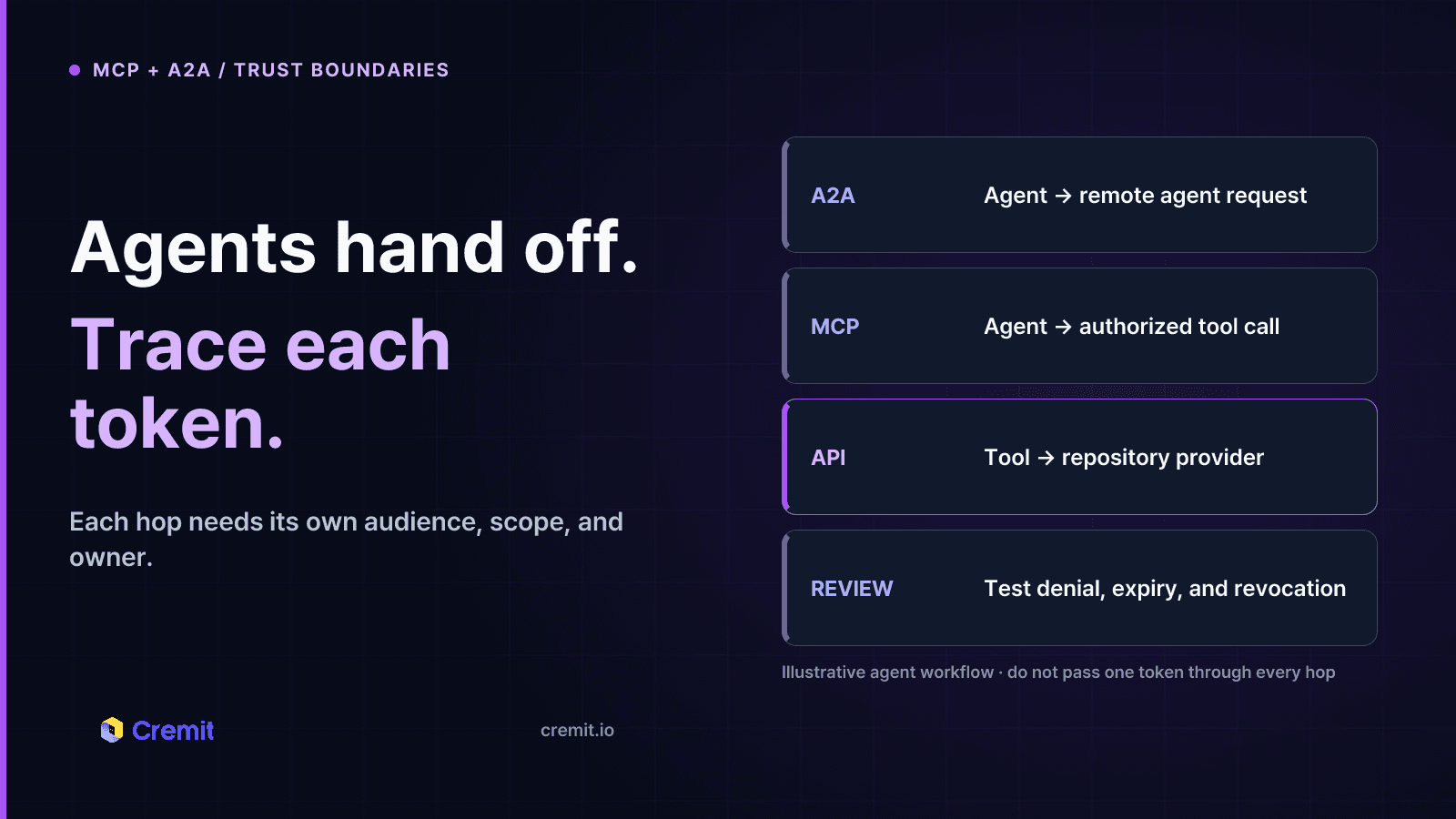
MCP connects agents to tools; A2A connects agents to each other. Map authentication, token scope, and exposed credentials at every hop.

Ben Kim
Ben Kim
Industry Insights | Cremit Blog | Cremit