NEW · Blast Radius: a field playbook for leaked API keys on AWS, GCP and Azure
Back to Blog
Tag

Secret Scanning

10 posts
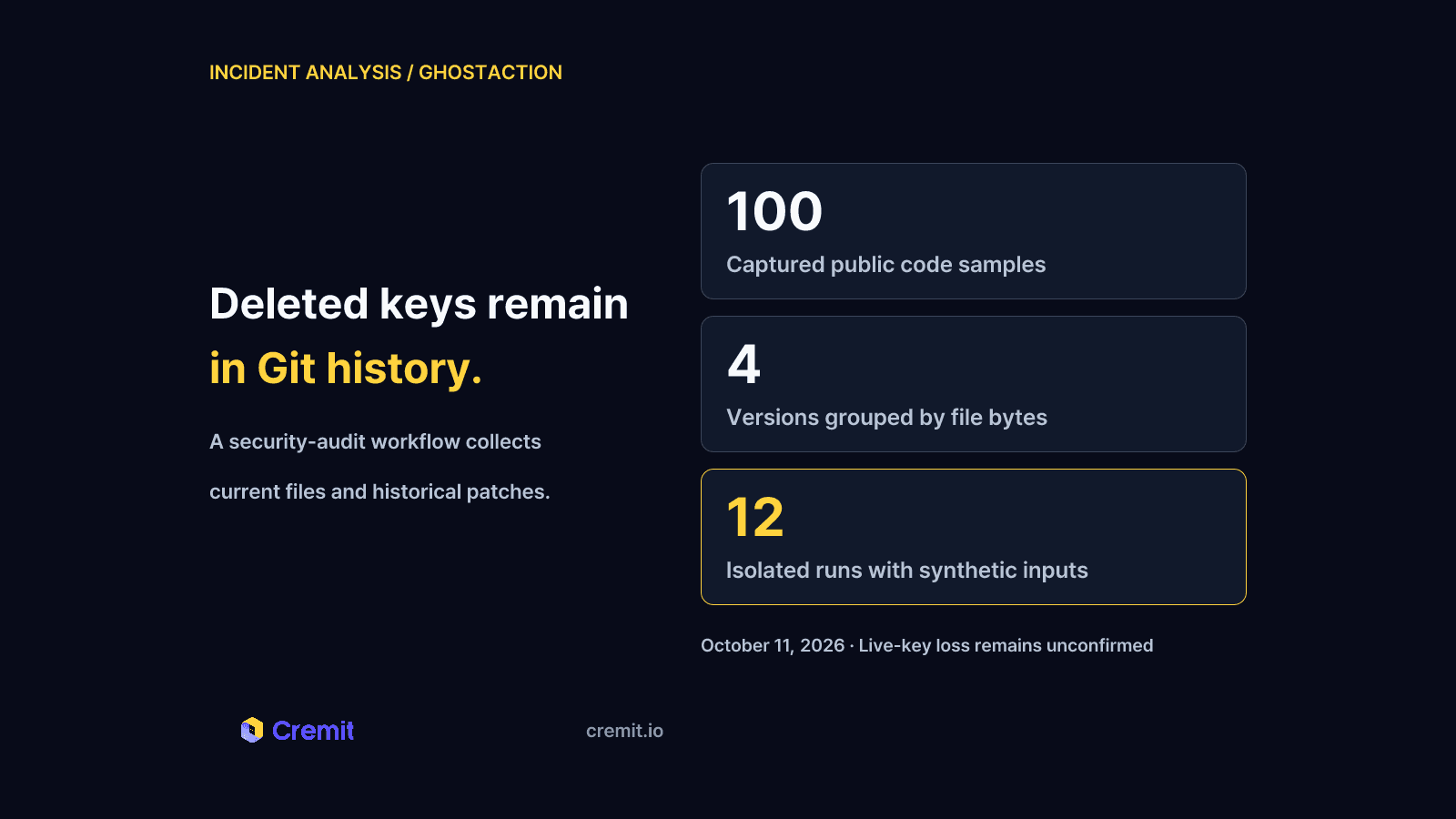
GhostAction Analysis: How a Malicious Workflow Collects Keys from Git History
Oct 11, 2026

GhostAction Analysis: How a Malicious Workflow Collects Keys from Git History

A review of 100 public workflow samples and Uber repository events shows four collector versions. We examine deleted-key collection through Git patches, successful exits after transfer failure, and credential-based response priorities.

Ben Kim
Ben Kim
MCP Servers Are Taking API Keys Through the Chat Window
Oct 7, 2026

MCP Servers Are Taking API Keys Through the Chat Window

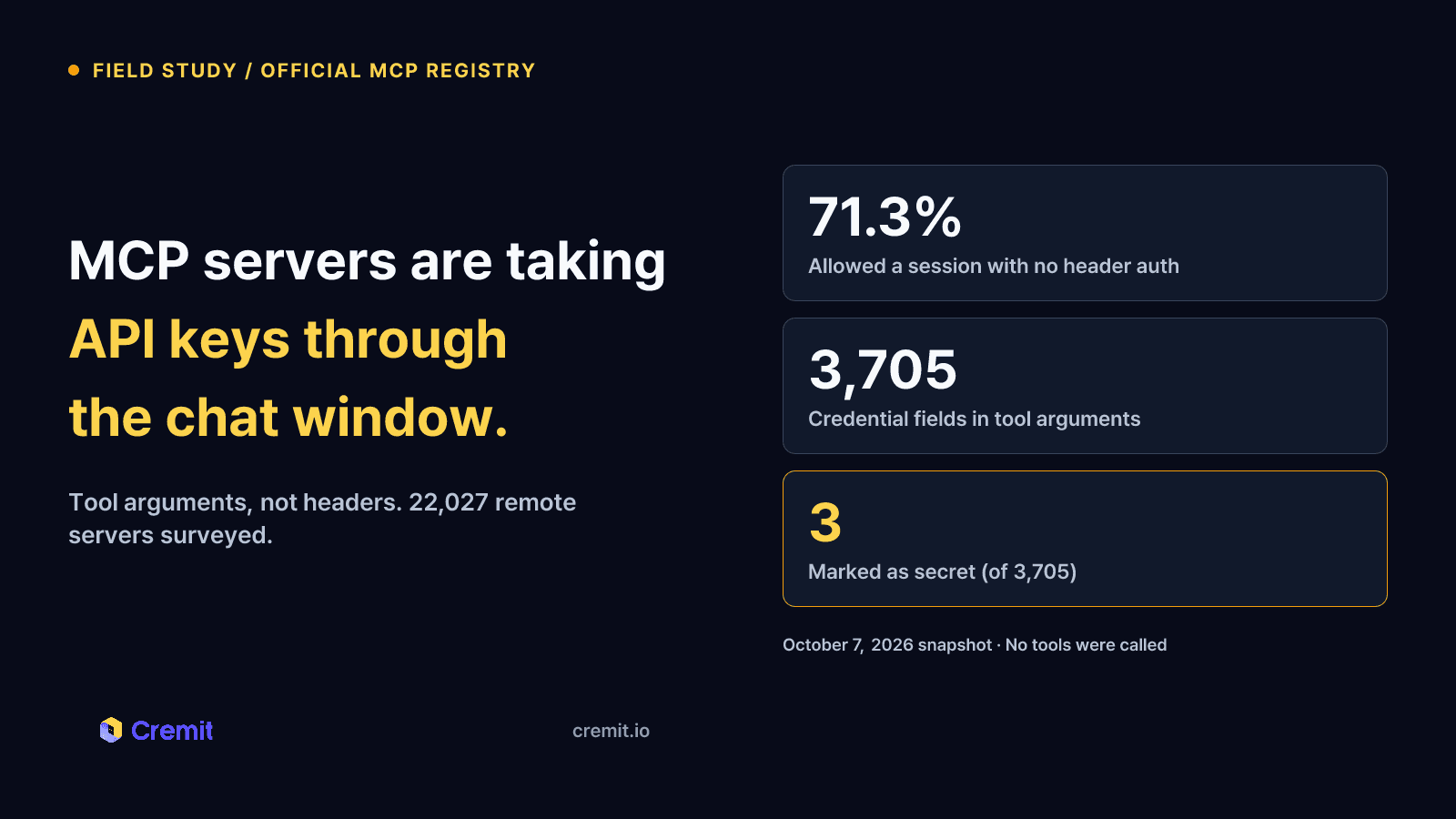
We sent one initialize request to every remote MCP server in the official registry. 71.3% of 22,027 responding servers opened a session with no header authentication, and 3,705 credential fields sit in tool arguments. Three of them are marked secret.

Ben Kim
Ben Kim
How to count live credentials without confusing matches and keys
Aug 5, 2026

How to count live credentials without confusing matches and keys

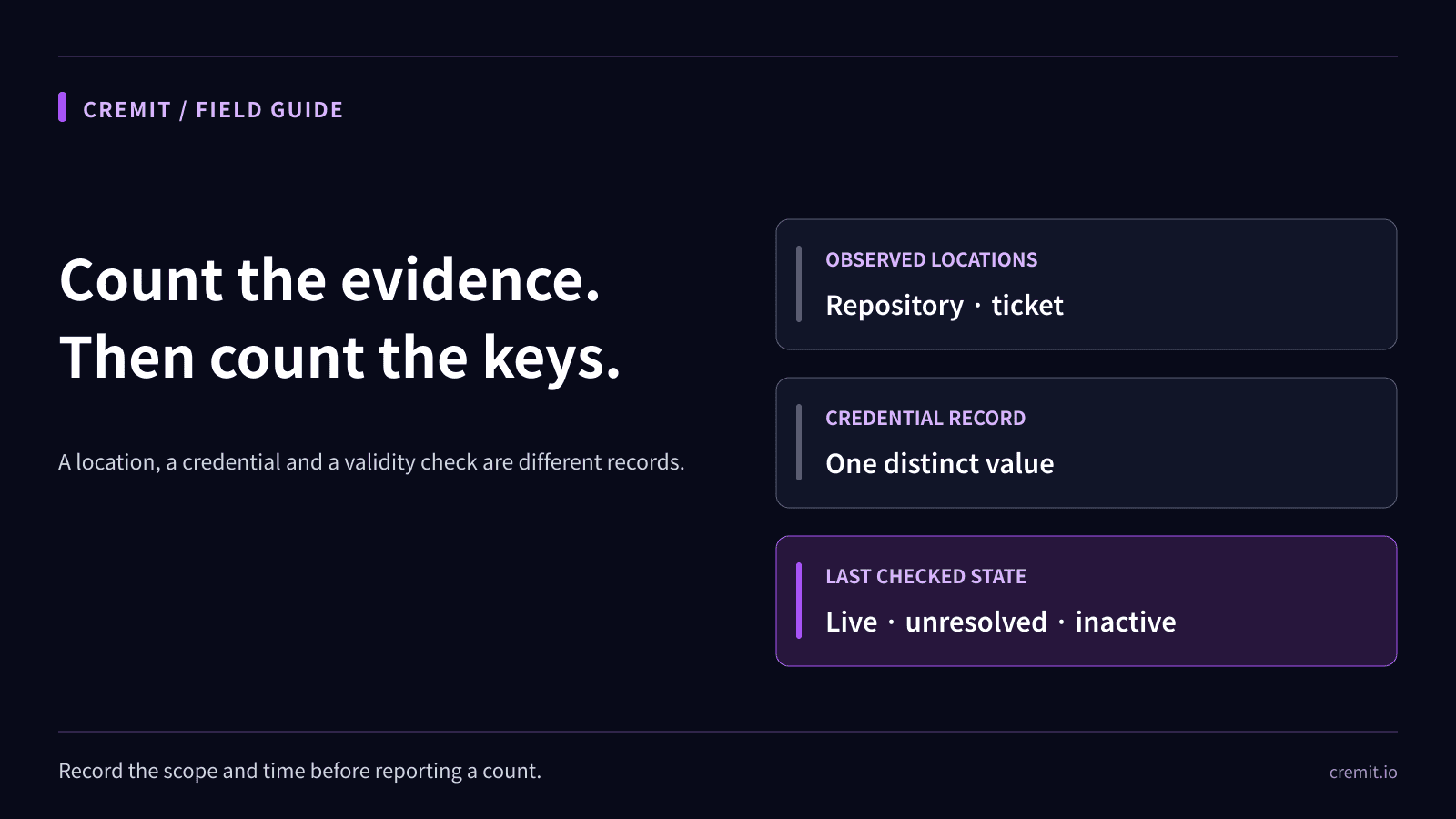
Count observed locations, distinct credential records and verification states separately. Define scope and check time before reporting exposure.

Ben Kim
Ben Kim
Secret scanning false positives: how to triage findings
Jul 22, 2026

Secret scanning false positives: how to triage findings

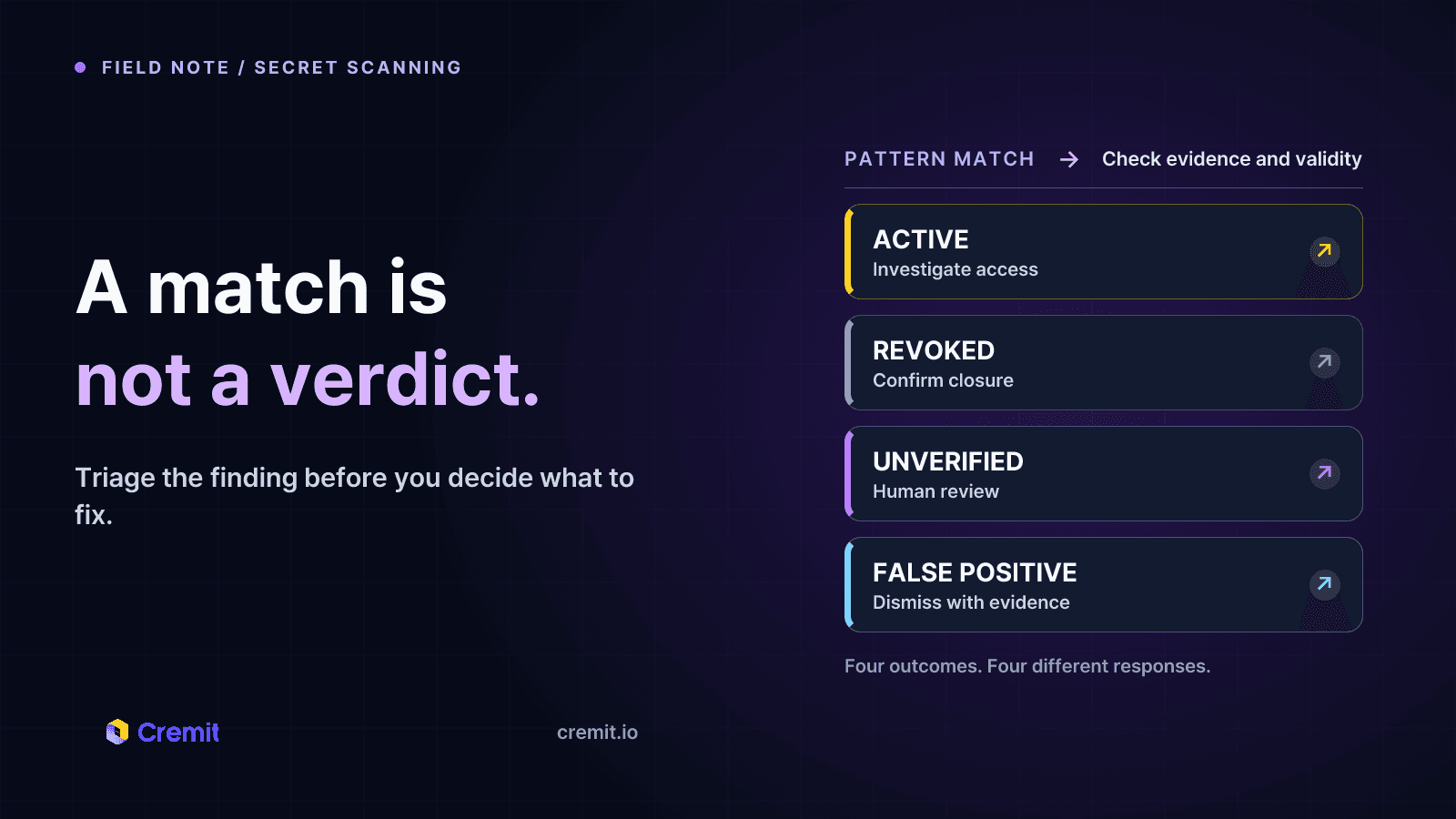
A pattern match, a revoked key, and an unverified key need different responses. Learn how to separate them and prioritize exposed credentials.

Ben Kim
Ben Kim
Your Slack Webhook Is Write-Only, Until an AI Agent Reads the Channel
Jun 13, 2026

Your Slack Webhook Is Write-Only, Until an AI Agent Reads the Channel

A leaked Slack incoming webhook is usually triaged as low severity: write-only, one channel, no data access. The moment an AI agent reads that channel and can act with tools, that write-only primitive becomes an indirect prompt injection path into the agent's privileges. Here is the full kill chain, the exact preconditions, and how to defend it.

Ben Kim
Ben Kim
Bitwarden CLI npm compromise: affected systems and response
Apr 25, 2026

Bitwarden CLI npm compromise: affected systems and response

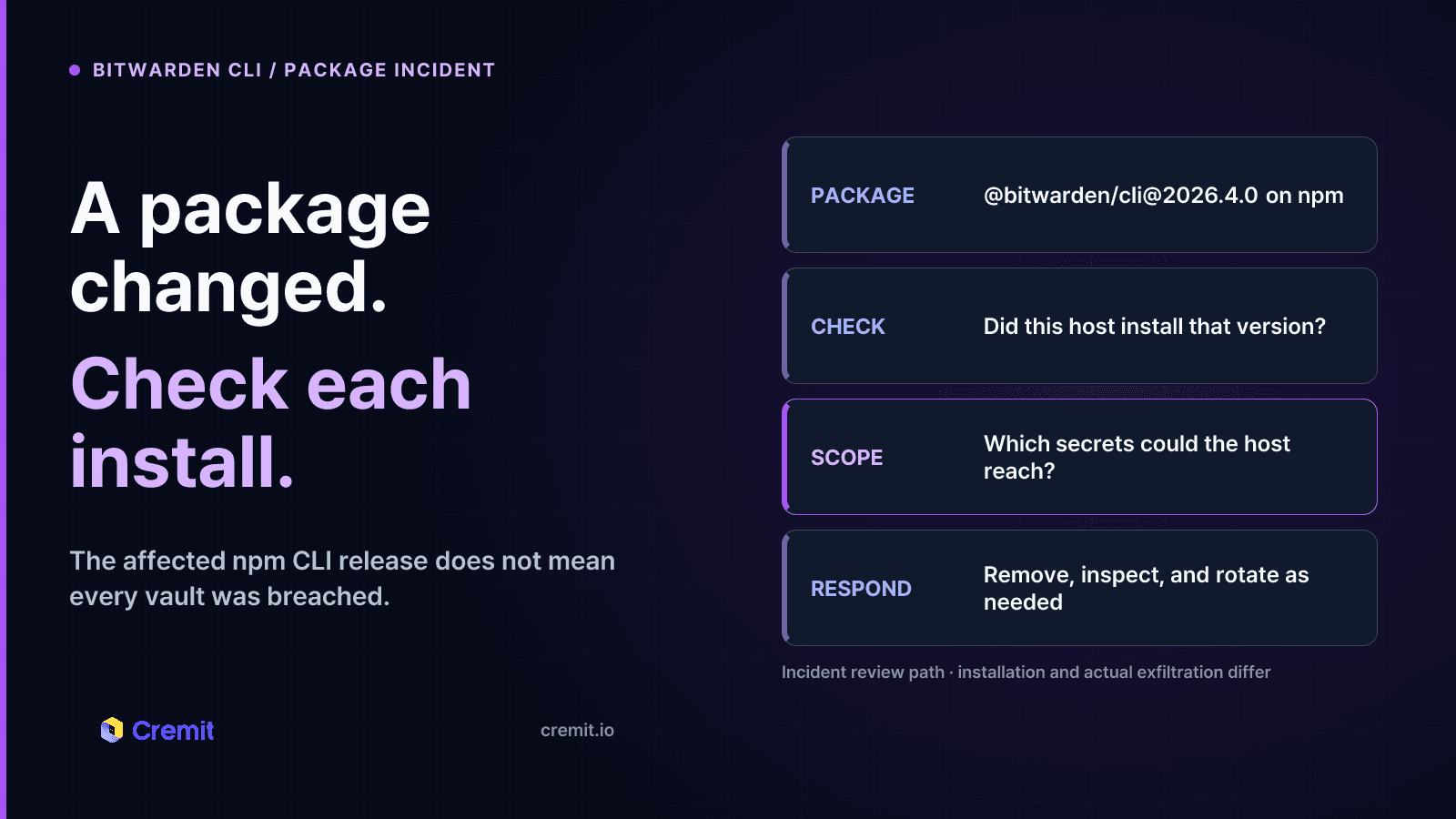
A malicious CLI package was available on npm for 93 minutes on April 22, 2026. Check who installed it, what researchers found, and Bitwarden’s response steps.

Ben Kim
Ben Kim
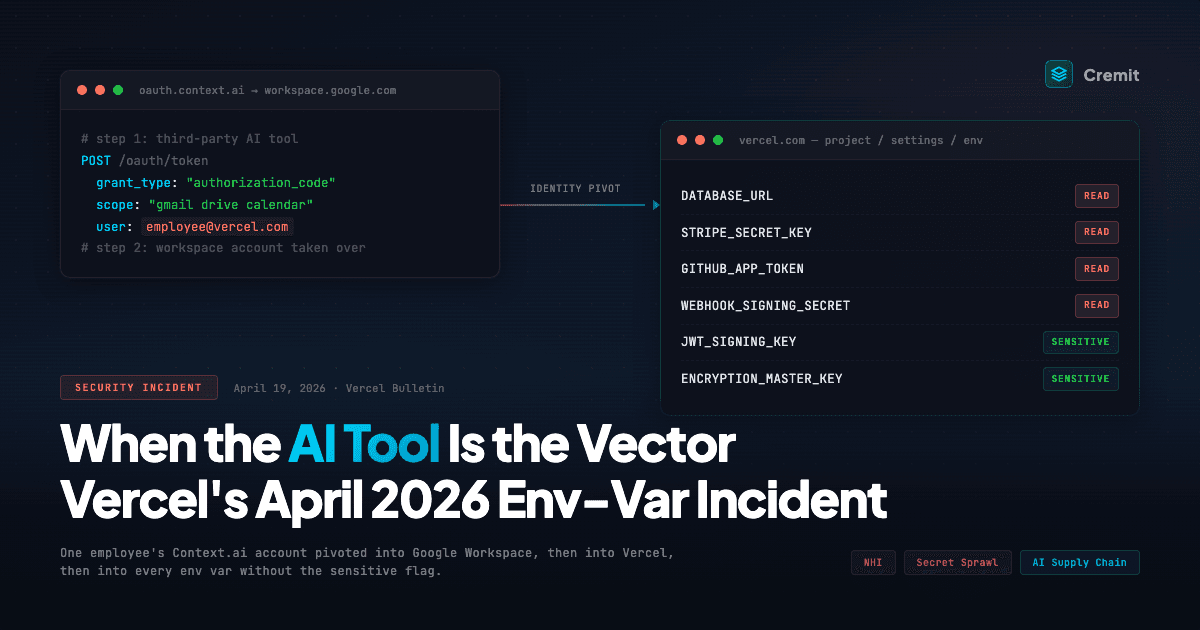
Vercel's April 2026 Incident Is a Textbook NHI Problem: What to Rotate and Why
Apr 20, 2026

Vercel's April 2026 Incident Is a Textbook NHI Problem: What to Rotate and Why

Vercel confirmed an unauthorized-access incident on April 19, 2026 that started in a third-party AI tool, pivoted through Google Workspace, and reached environment variables in a subset of customer projects. The exposure surface is every env var that was not marked sensitive. Here is what is confirmed, what is noise, and what to rotate first.

Ben Kim
Ben Kim
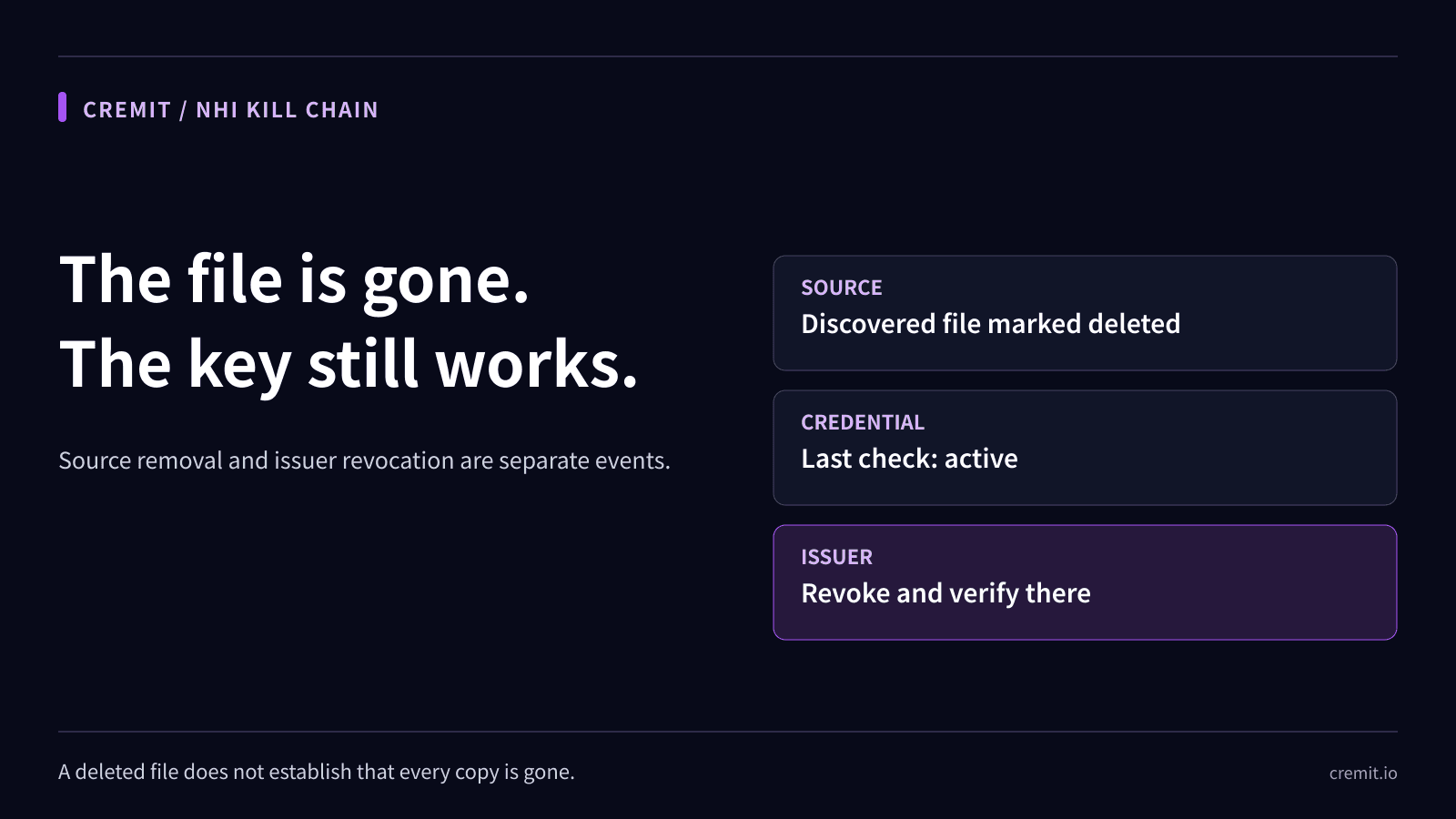
Deleted file, active credential: investigating a Zombie Key
Apr 14, 2026

Deleted file, active credential: investigating a Zombie Key

Source removal does not revoke a credential. Check the issuer, Git history, current owner, and last verification before closing the finding.

Ben Kim
Ben Kim
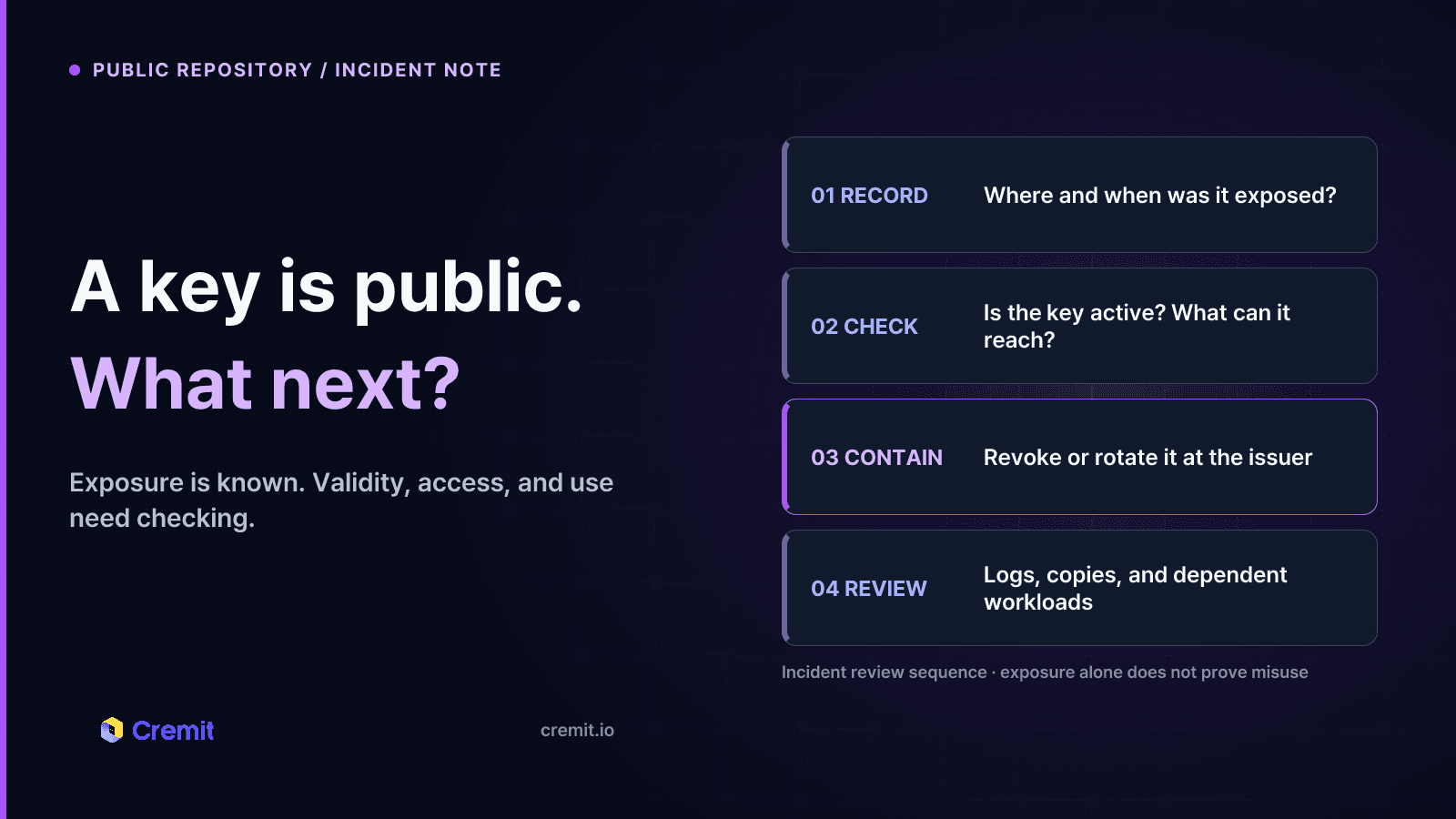
Public API key in a repository: what to check first
Mar 17, 2026

Public API key in a repository: what to check first

A public commit proves exposure, not misuse. Check validity, permissions, issuer logs, and dependent workloads before closing the incident.

Ben Kim
Ben Kim
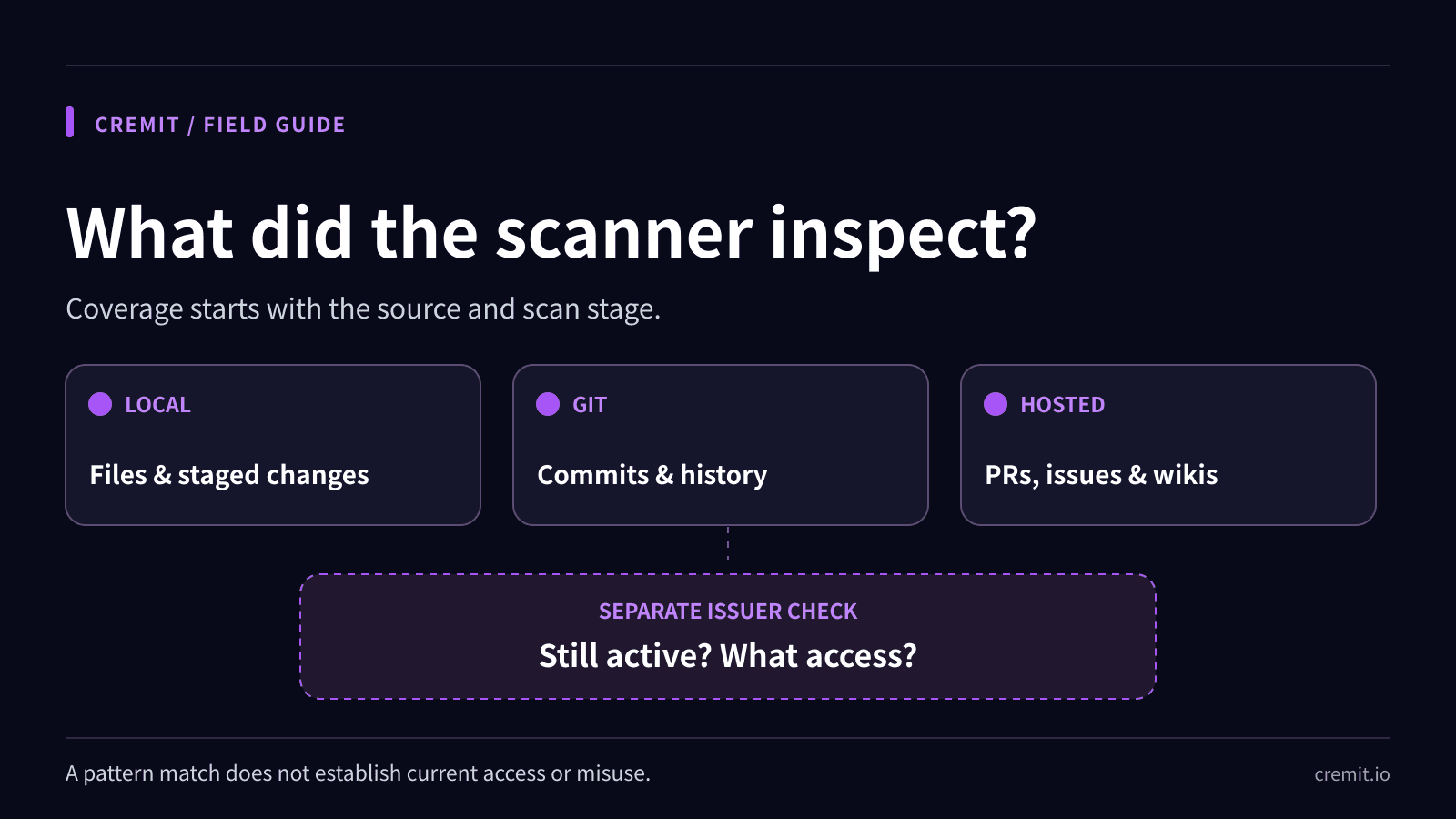
Git secret scanning in 2026: coverage, setup, and response
Jan 26, 2026

Git secret scanning in 2026: coverage, setup, and response

A practical guide to push protection, history scans, validity checks, and issuer-side response, with GitHub, GitLab, and Gitleaks source links.

Ben Kim
Ben Kim
Secret Scanning | Cremit Blog | Cremit