NEW · Blast Radius: a field playbook for leaked API keys on AWS, GCP and Azure
Back to Blog
Tag

Secret Detection

20 posts
MCP Servers Are Taking API Keys Through the Chat Window
Oct 7, 2026

MCP Servers Are Taking API Keys Through the Chat Window

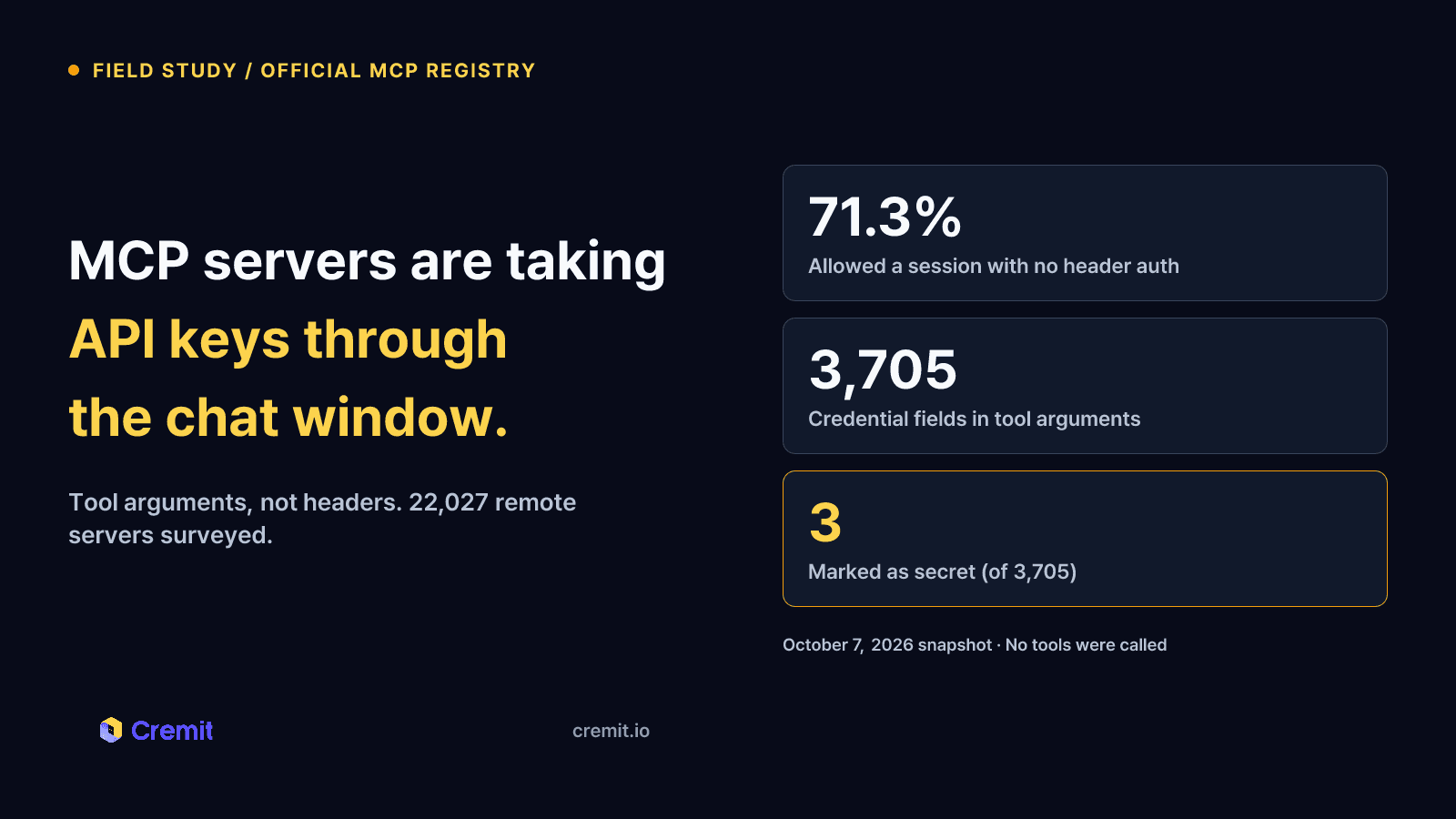
We sent one initialize request to every remote MCP server in the official registry. 71.3% of 22,027 responding servers opened a session with no header authentication, and 3,705 credential fields sit in tool arguments. Three of them are marked secret.

Ben Kim
Ben Kim
How to count live credentials without confusing matches and keys
Aug 5, 2026

How to count live credentials without confusing matches and keys

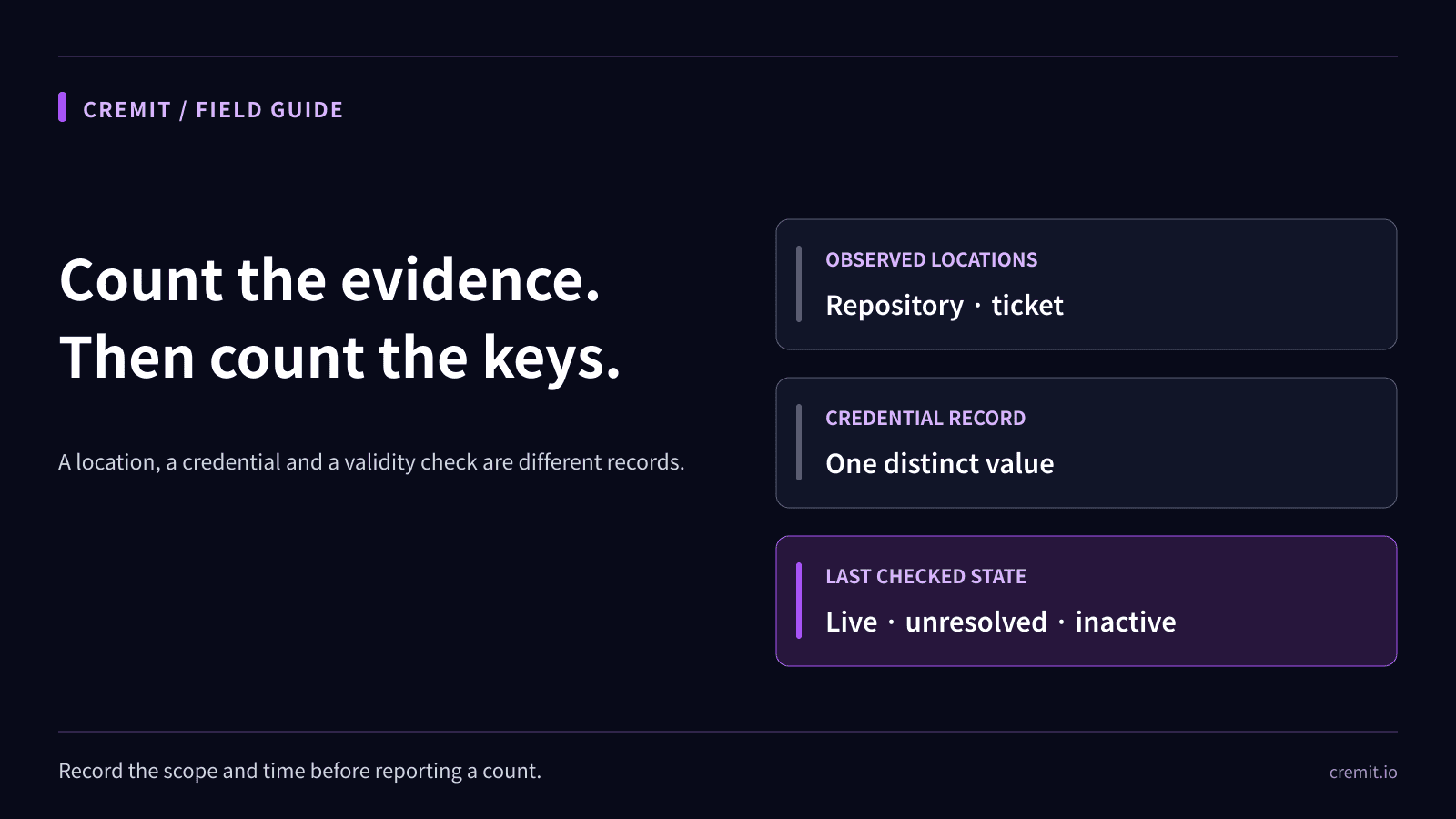
Count observed locations, distinct credential records and verification states separately. Define scope and check time before reporting exposure.

Ben Kim
Ben Kim
From exposed credentials to Cremit Platform: the workflow we support
Jul 28, 2026

From exposed credentials to Cremit Platform: the workflow we support

How Cremit Platform finds exposed credentials, verifies supported types, and routes findings to an owner, with clear limits.

Ben Kim
Ben Kim
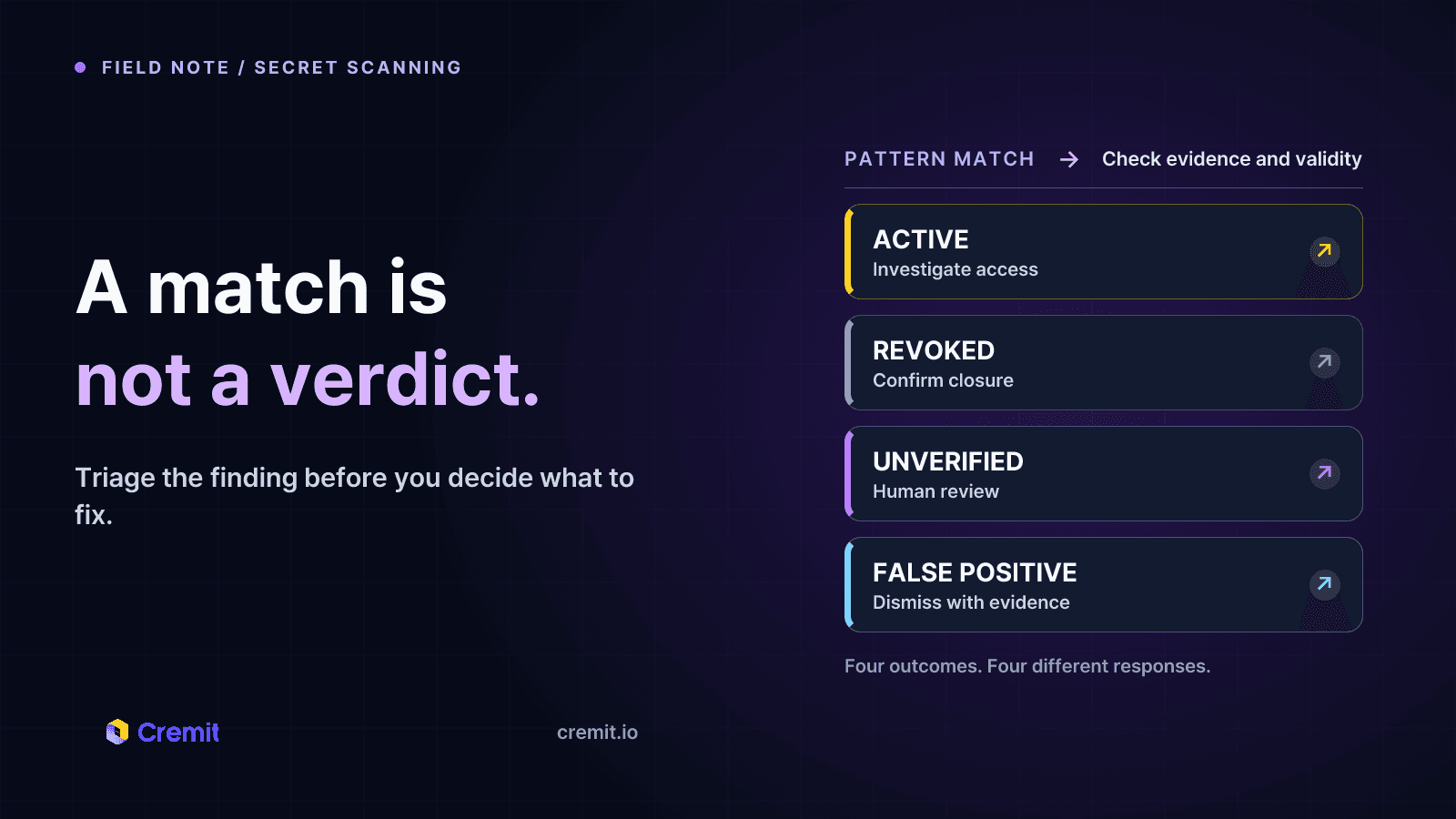
Secret scanning false positives: how to triage findings
Jul 22, 2026

Secret scanning false positives: how to triage findings

A pattern match, a revoked key, and an unverified key need different responses. Learn how to separate them and prioritize exposed credentials.

Ben Kim
Ben Kim
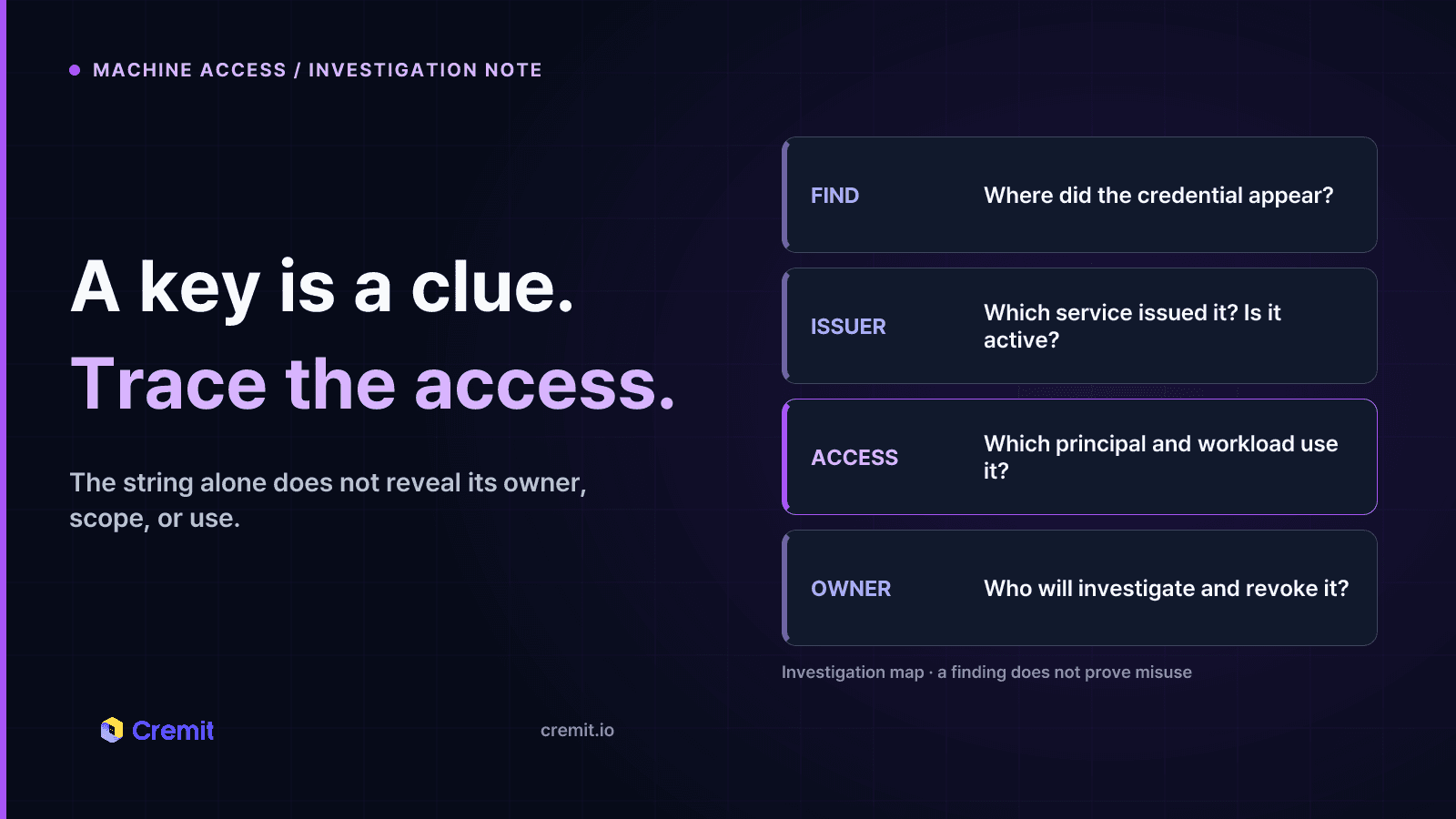
The machine access behind an exposed API key
Jul 15, 2026

The machine access behind an exposed API key

An exposed key is a lead. Connect it to its issuer, principal, permissions, workload, and owner before closing the access path.

Ben Kim
Ben Kim
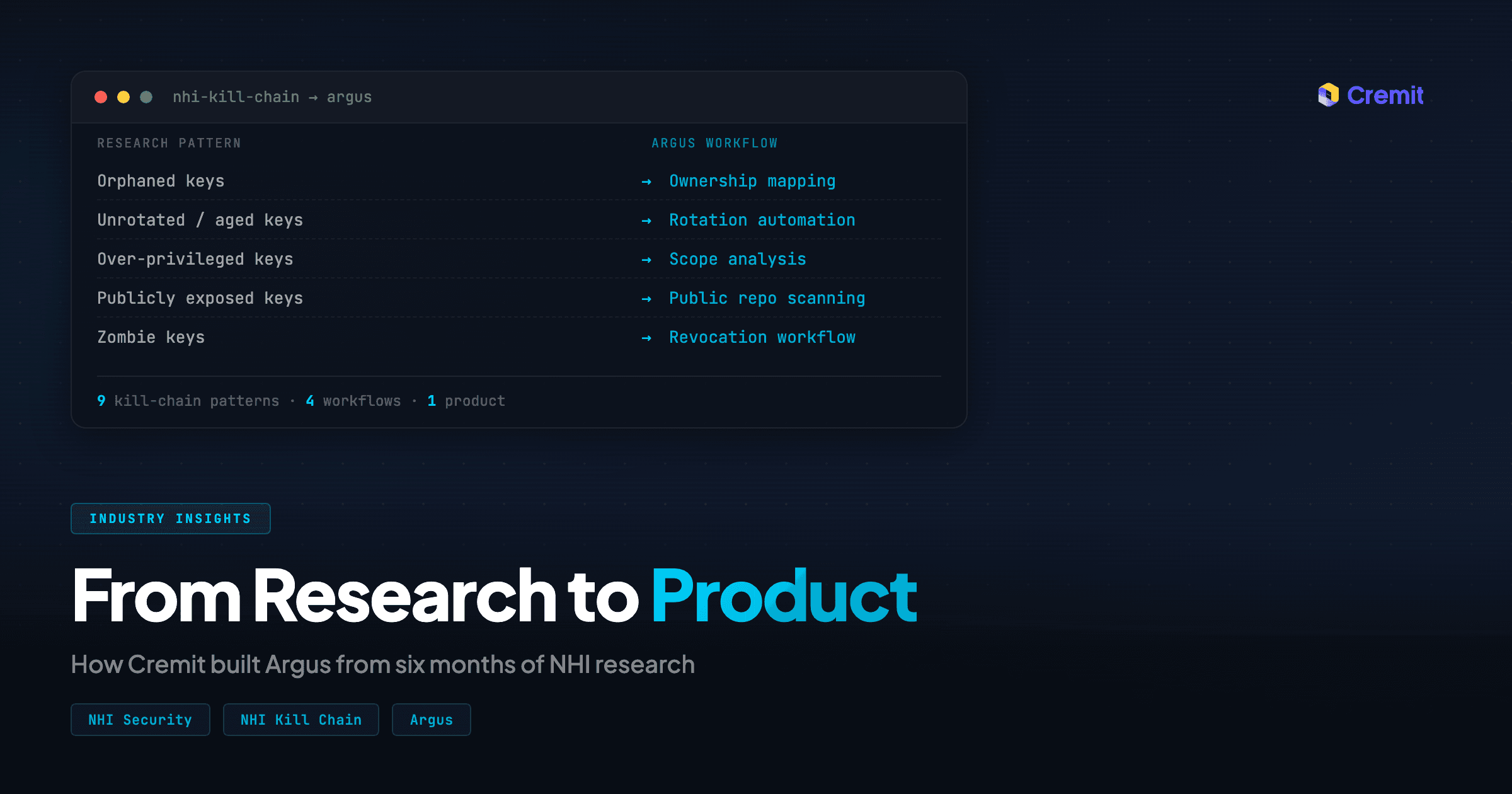
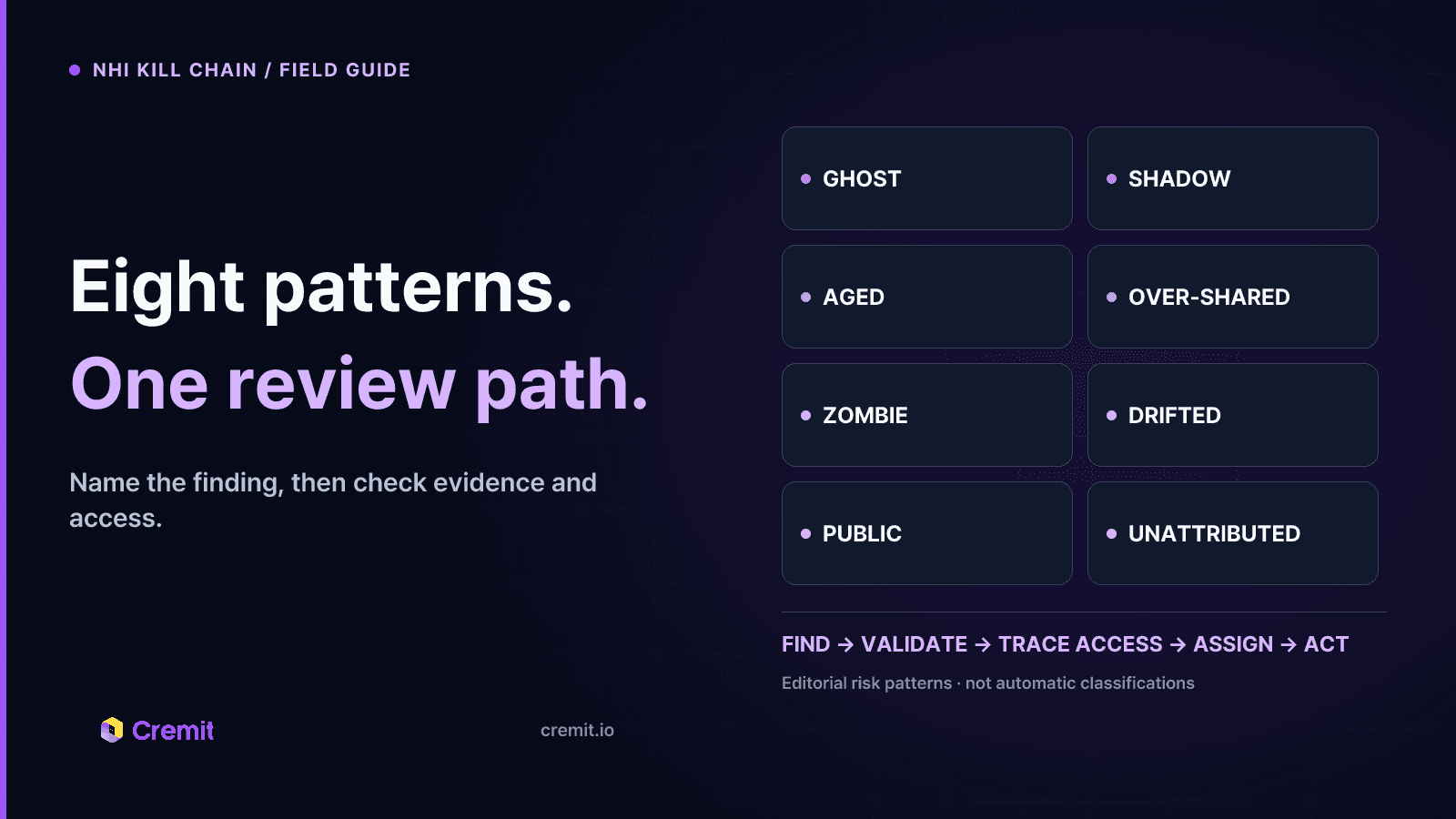
Eight credential exposure patterns and how to respond
Apr 30, 2026

Eight credential exposure patterns and how to respond

A practical summary of eight NHI credential exposure patterns, the evidence to check, and what Cremit Platform can help investigate.

Ben Kim
Ben Kim
AITU CTF Final 2026 Writeup
Apr 29, 2026

AITU CTF Final 2026 Writeup

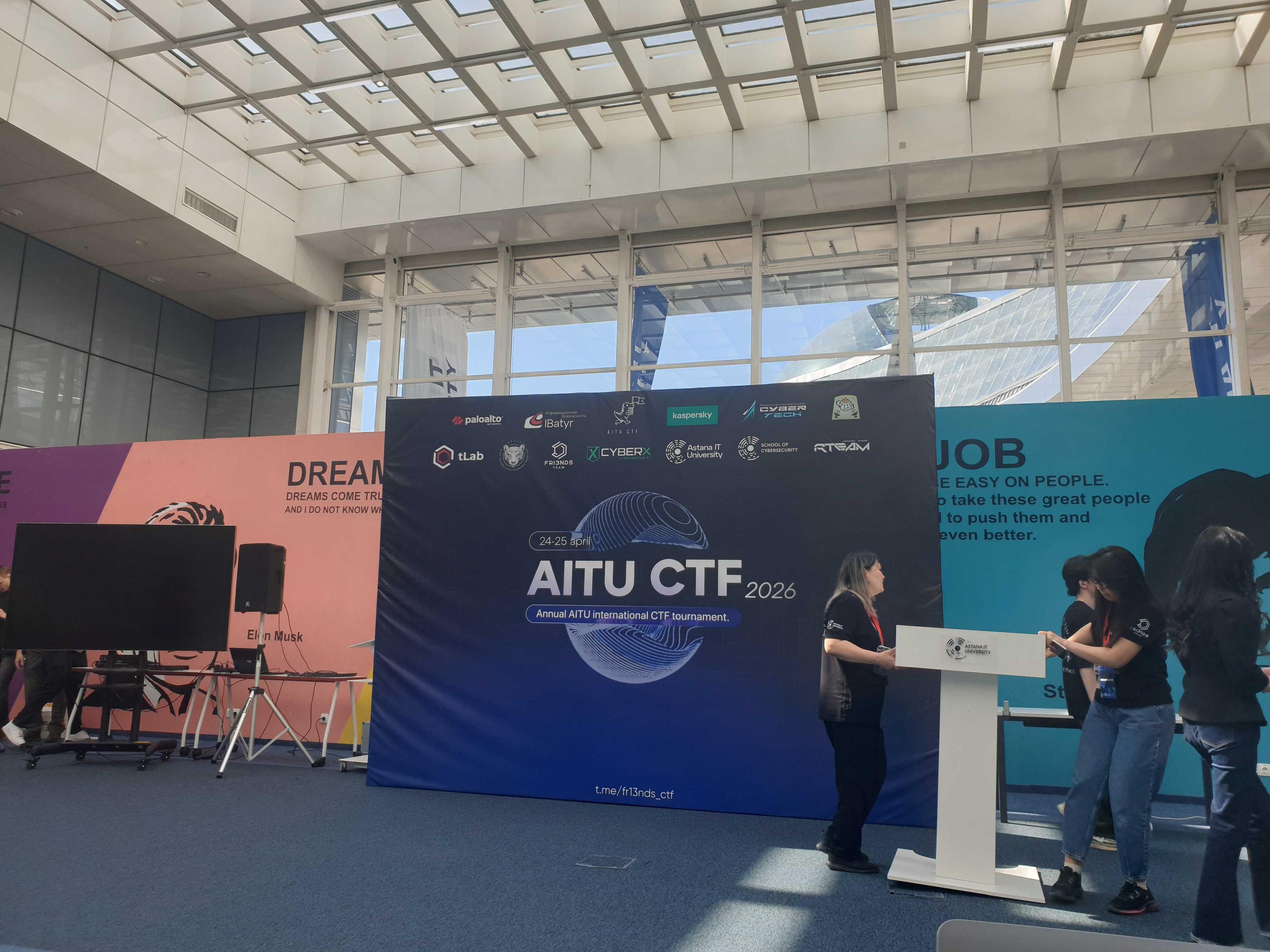
Full writeup of the AITU CTF Final (April 25-26, 2026), a HackCity-format competition. We walk through exploiting DMZ hosts via XXE, SSTI, and SQLi, pivoting into the DEV segment through AD lateral movement, escaping a privileged Docker container via cgroup abuse, and breaching a healthcare system through JWT JKU header injection.

Ethan Kim
Ethan Kim
Same key in a repository and ticket: investigating cross-platform findings
Apr 17, 2026

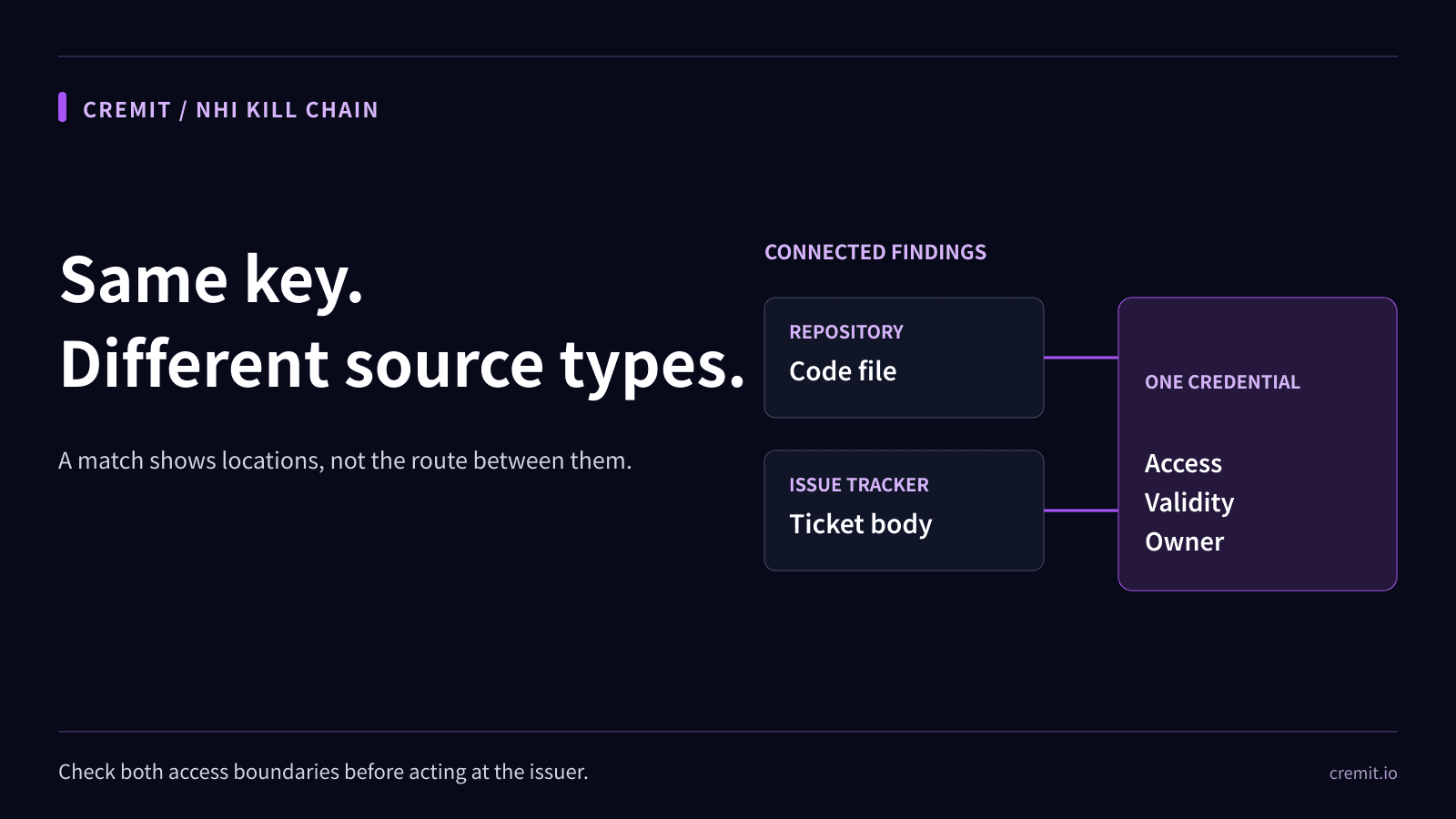
Same key in a repository and ticket: investigating cross-platform findings

Two source types show two observed locations, not how a credential moved. Check access, issuer status, owner, and actual consumers.

Ben Kim
Ben Kim
The "Out of Scope" Loophole: Why Bug Bounties Look Away From Credential Exposure
Apr 15, 2026

The "Out of Scope" Loophole: Why Bug Bounties Look Away From Credential Exposure

An organization's core credentials sat in public repositories for years. The security industry's answer: "Out of scope."

Ben Kim
Ben Kim
One API key in three repositories: investigating shared credentials
Apr 11, 2026

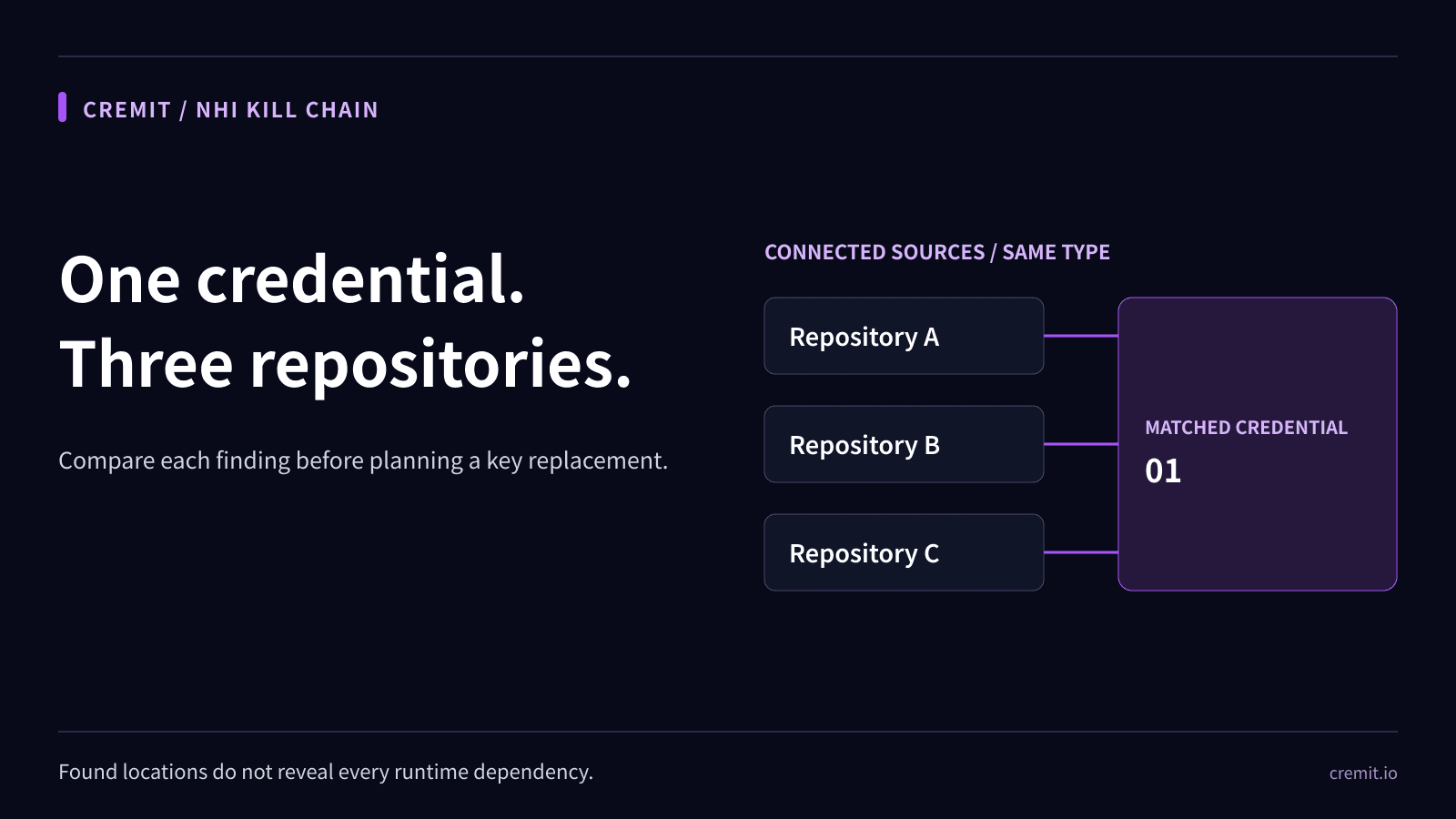
One API key in three repositories: investigating shared credentials

Three observed locations are not a complete dependency map. Check key type, issuer status, permissions, and actual consumers before replacement.

Ben Kim
Ben Kim
Long-exposed credentials: what a 90-day source record tells you
Apr 10, 2026

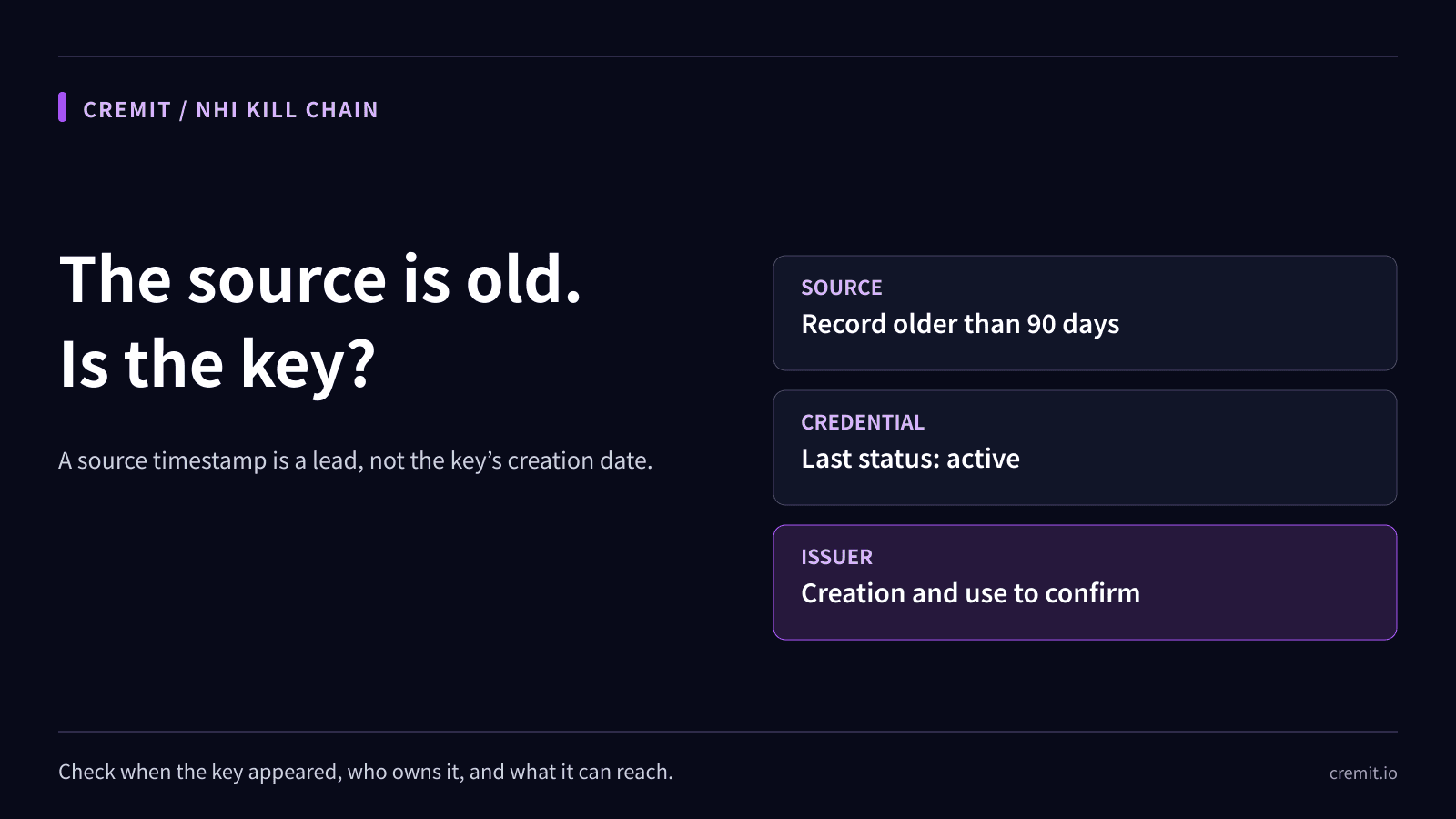
Long-exposed credentials: what a 90-day source record tells you

An old source record and an active key do not establish key age. Check when the value appeared, issuer status, permissions, and dependencies.

Ben Kim
Ben Kim
API keys in incident chats and tickets: what to investigate
Apr 5, 2026

API keys in incident chats and tickets: what to investigate

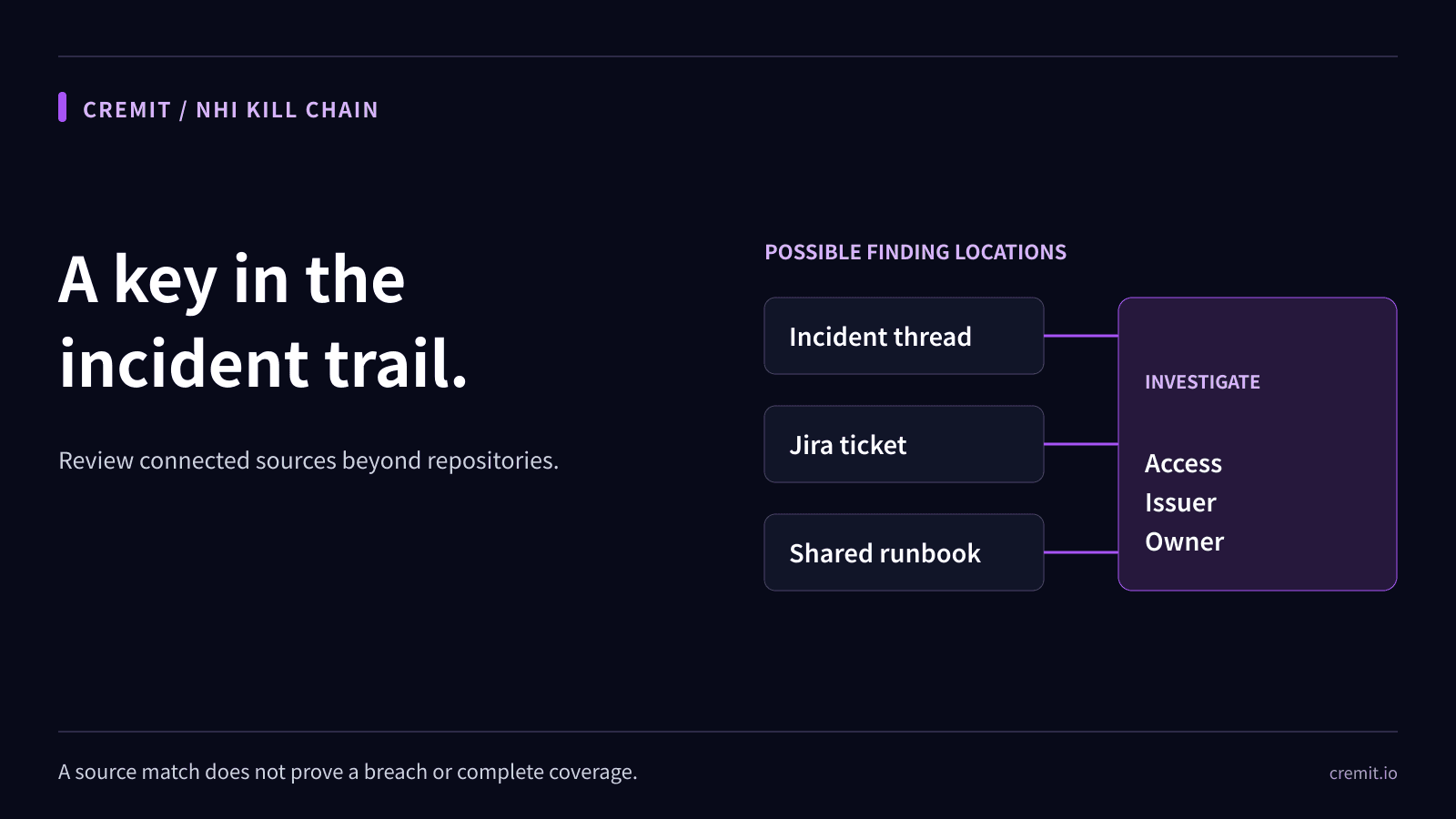
A credential outside a repository needs a source-access review, issuer check, owner, and verified response. A finding alone does not prove misuse.

Ben Kim
Ben Kim
Public API key in a repository: what to check first
Mar 17, 2026

Public API key in a repository: what to check first

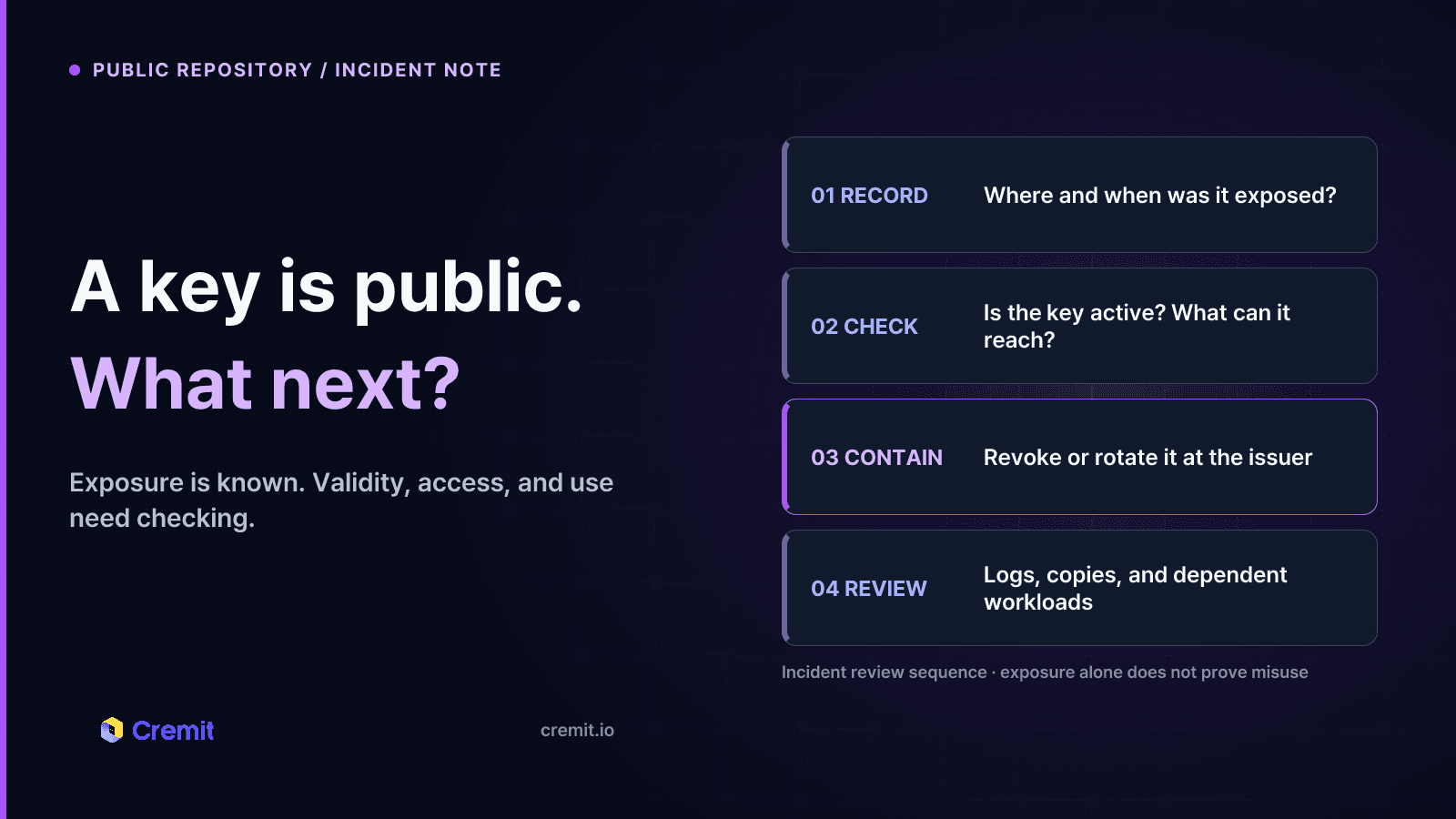
A public commit proves exposure, not misuse. Check validity, permissions, issuer logs, and dependent workloads before closing the incident.

Ben Kim
Ben Kim
A rotation record is not a map of leaked credentials
Apr 23, 2025

A rotation record is not a map of leaked credentials

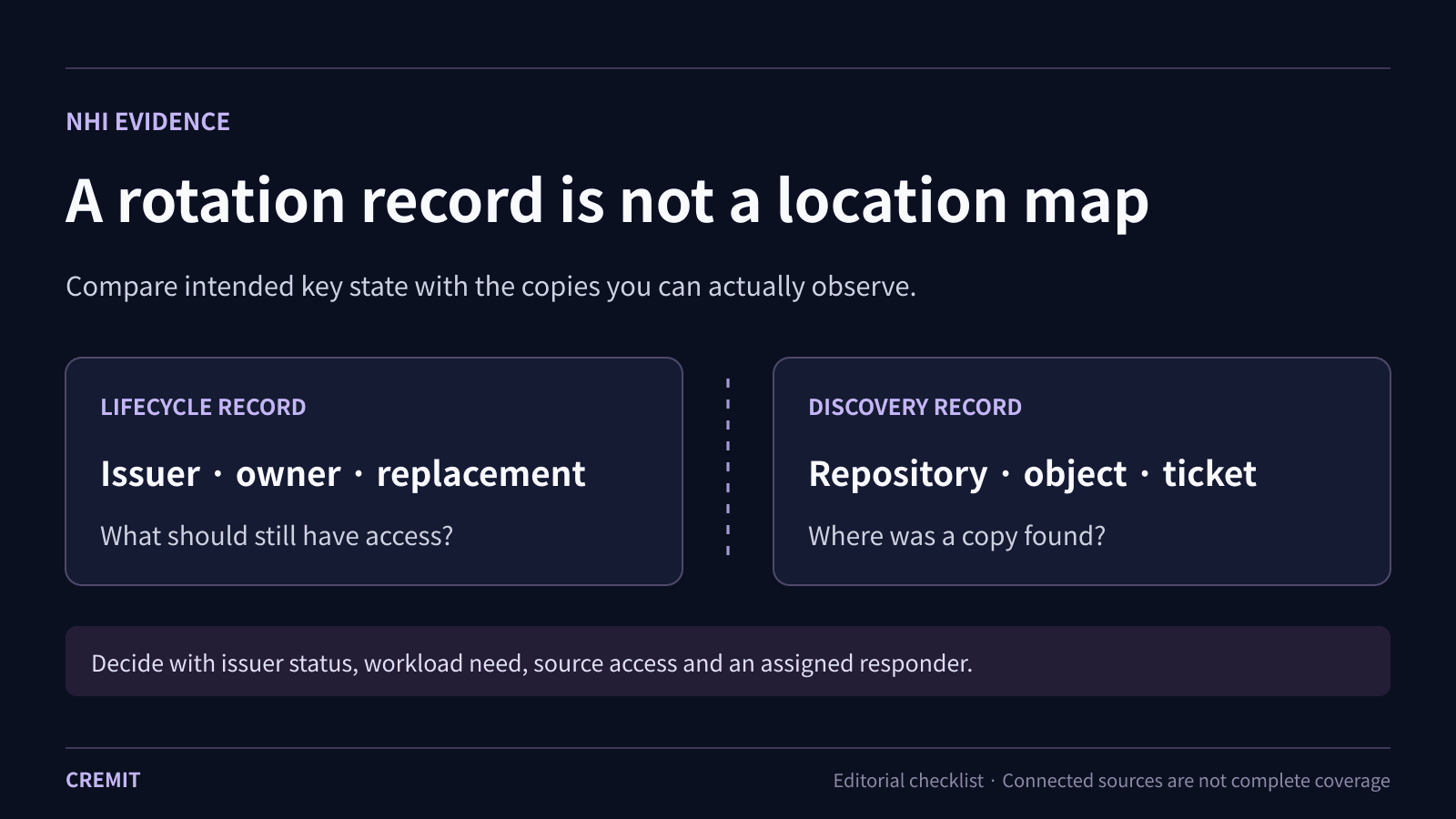
Lifecycle records show intended access. Secret findings show copies in scanned sources. Compare both before deciding who should replace a key.

Ben Kim
Ben Kim
Where credentials escape a CI/CD pipeline
Apr 18, 2025

Where credentials escape a CI/CD pipeline

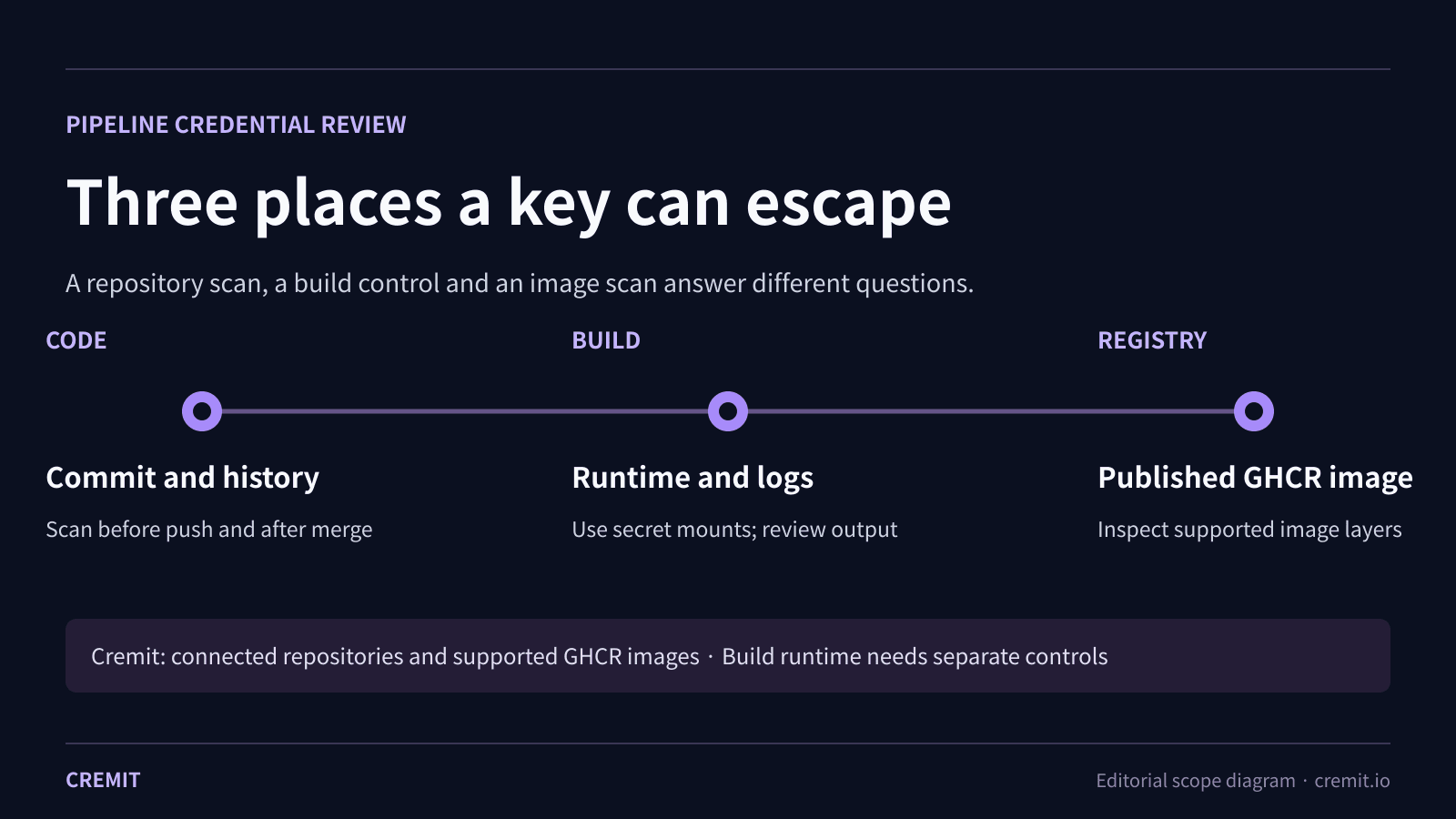
A key can land in Git history, build output or a published image. Use a different check at each boundary and verify any exposure at its issuer.

Ben Kim
Ben Kim
Secret scanning before and after a Git push
Apr 14, 2025

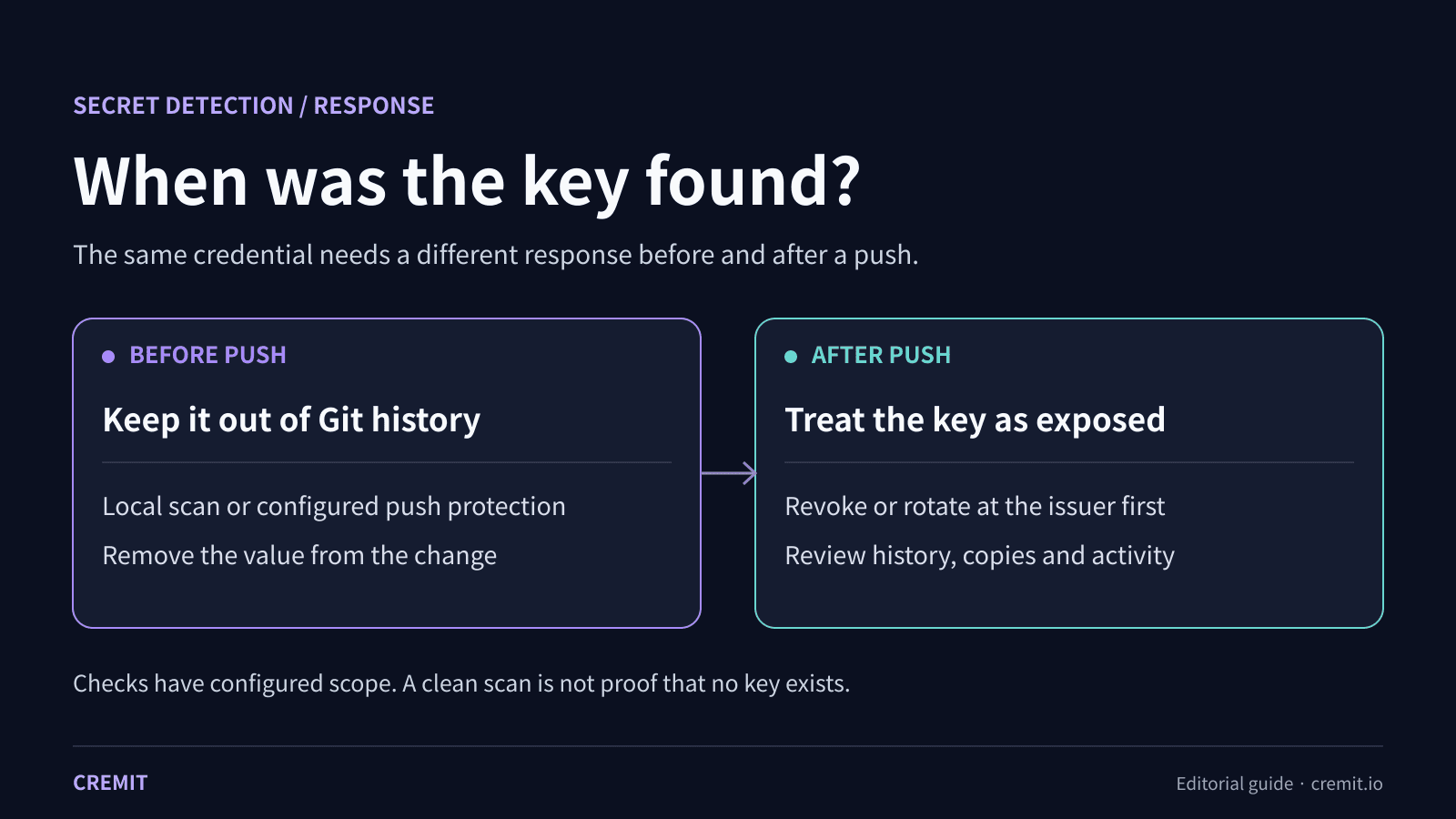
Secret scanning before and after a Git push

A key caught before push can be removed from the change. A key found afterward needs issuer-side revocation or rotation, even if the commit is deleted.

Ben Kim
Ben Kim
A credential in an S3 object: what to check next
Apr 14, 2025

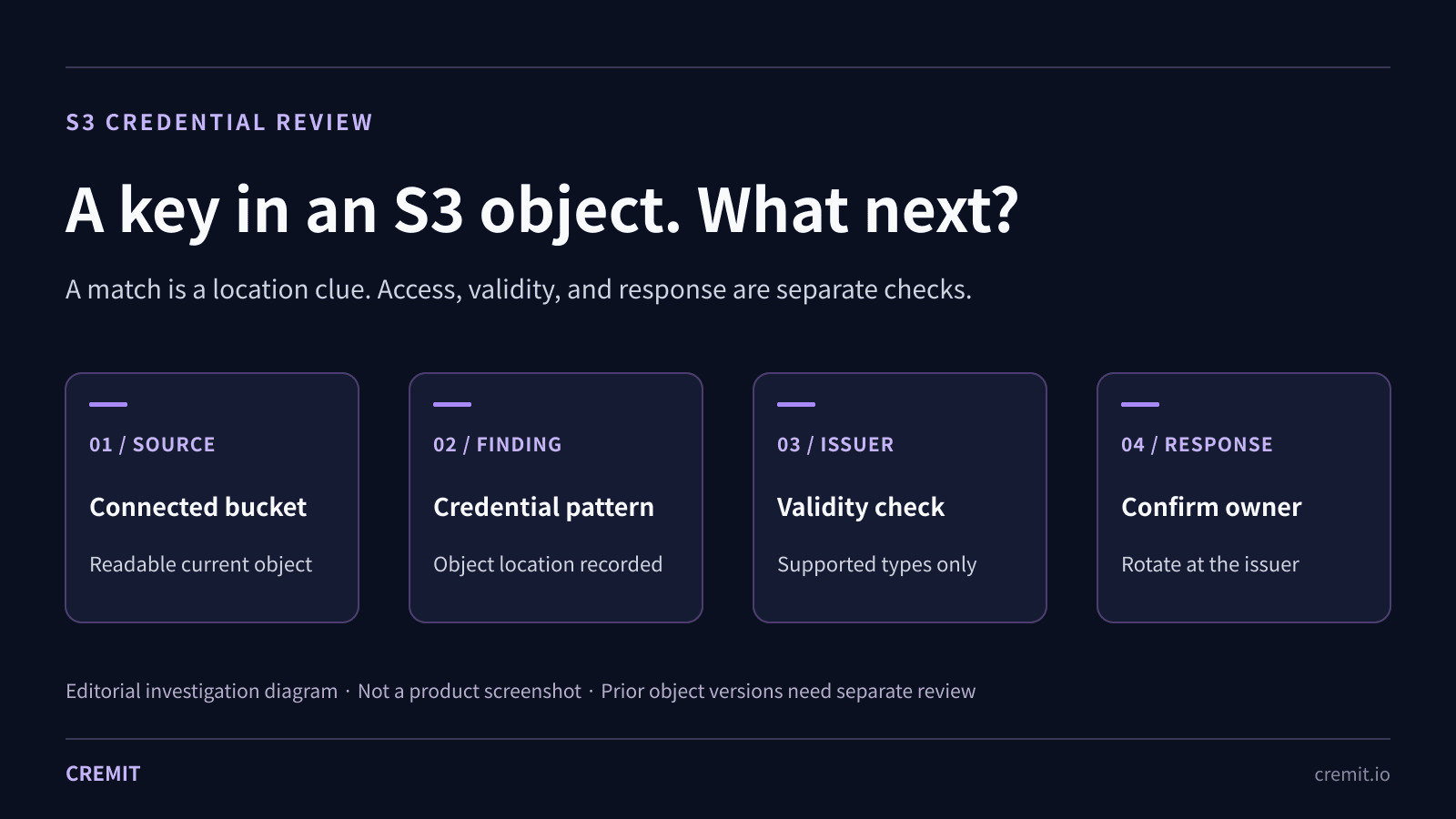
A credential in an S3 object: what to check next

A key-shaped string in S3 does not prove public access, a live credential, or misuse. Check the object, issuer, scan coverage, and earlier versions.

Ben Kim
Ben Kim
Data breach costs: what an exposed key finding can tell you
Apr 4, 2025

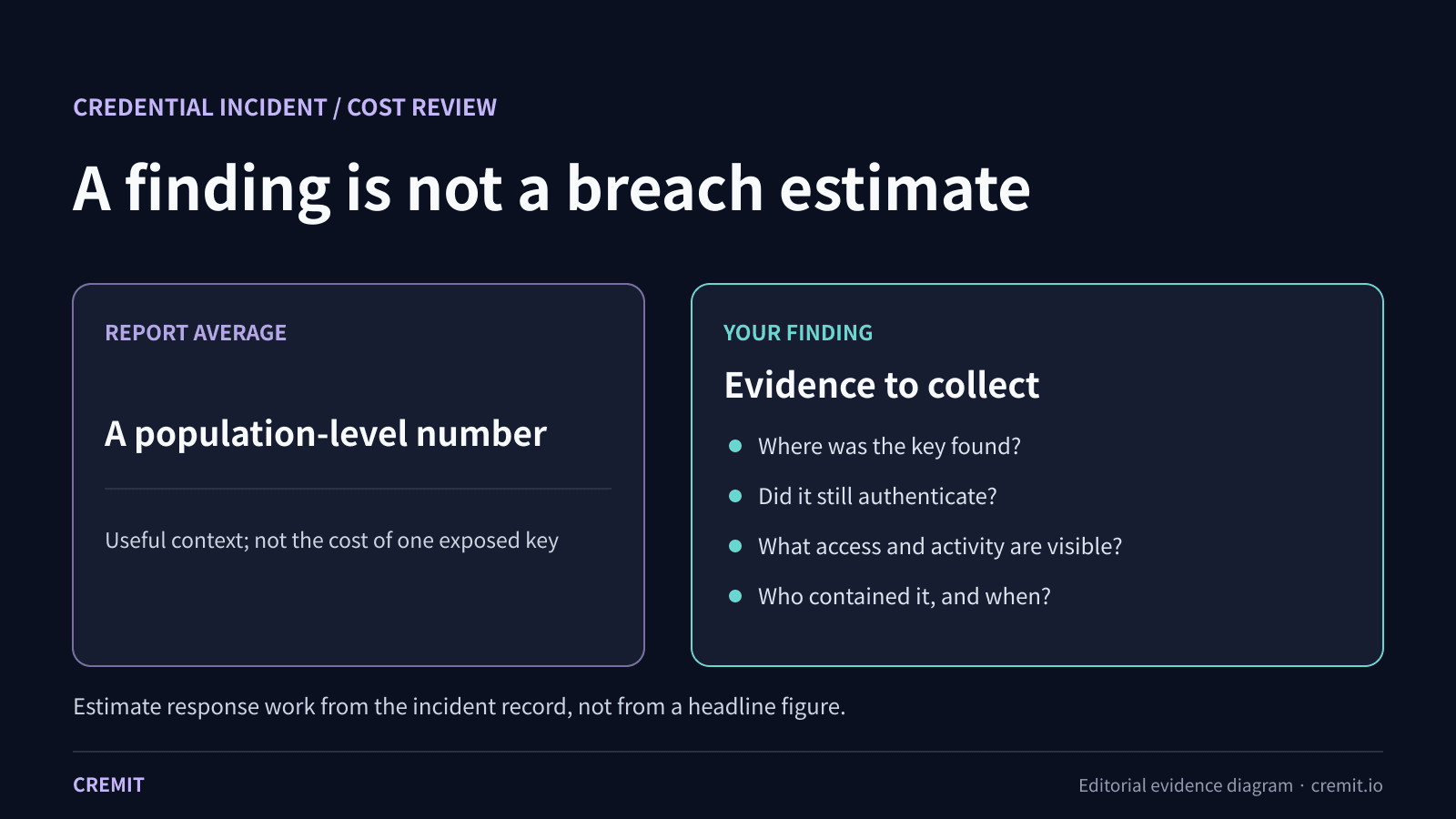
Data breach costs: what an exposed key finding can tell you

A breach-cost average cannot price one exposed credential. Record the key’s source, issuer status, available access and activity evidence, and response work before estimating impact.

Ben Kim
Ben Kim
Frontend API key leaks: classify and investigate browser output
Nov 17, 2024

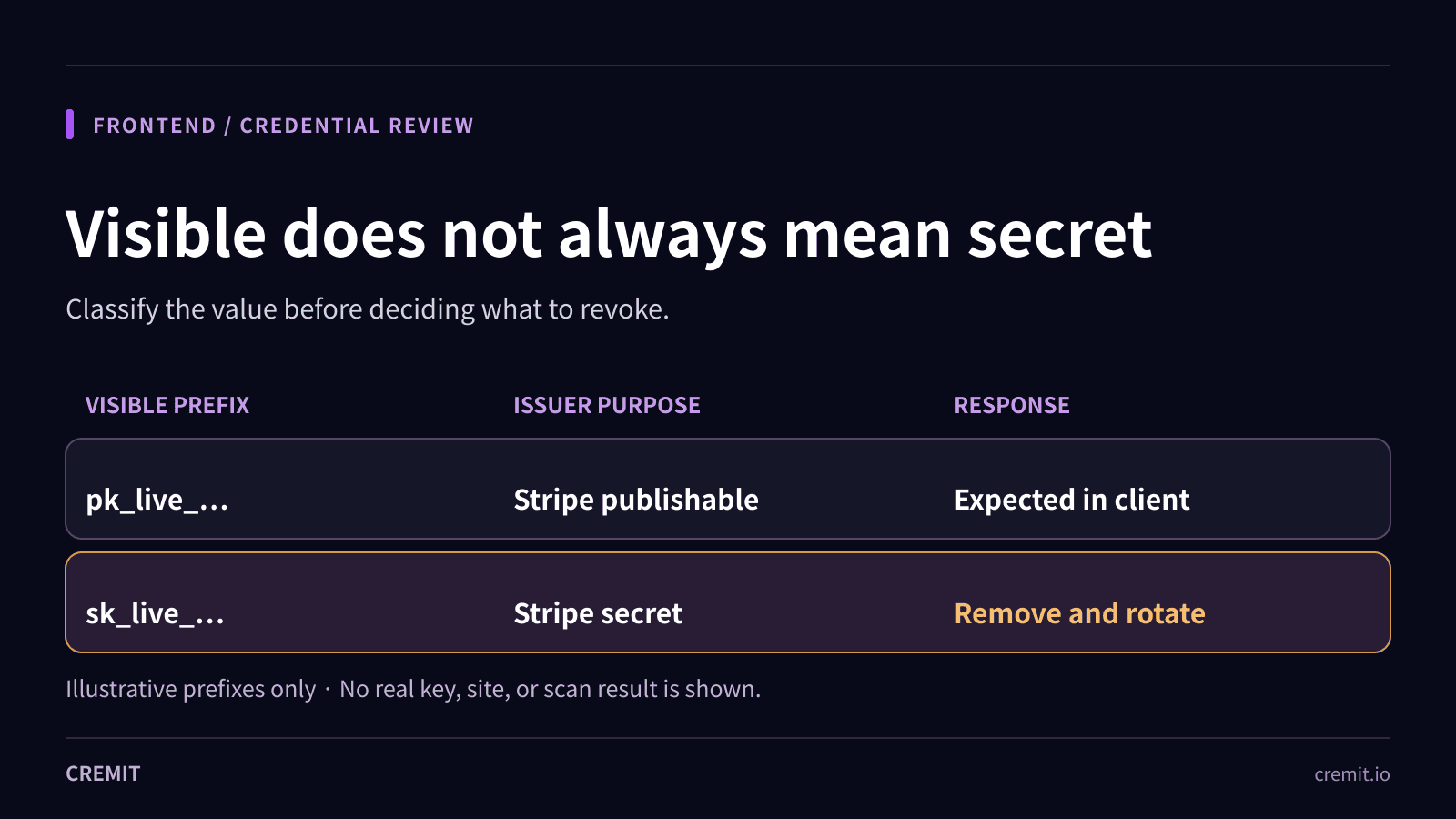
Frontend API key leaks: classify and investigate browser output

A browser-visible key may be public by design or an active secret. Use issuer key types, a documented Resend case, and build evidence to decide.

Ben Kim
Ben Kim
What is secret detection? From pattern match to response
Feb 26, 2024

What is secret detection? From pattern match to response

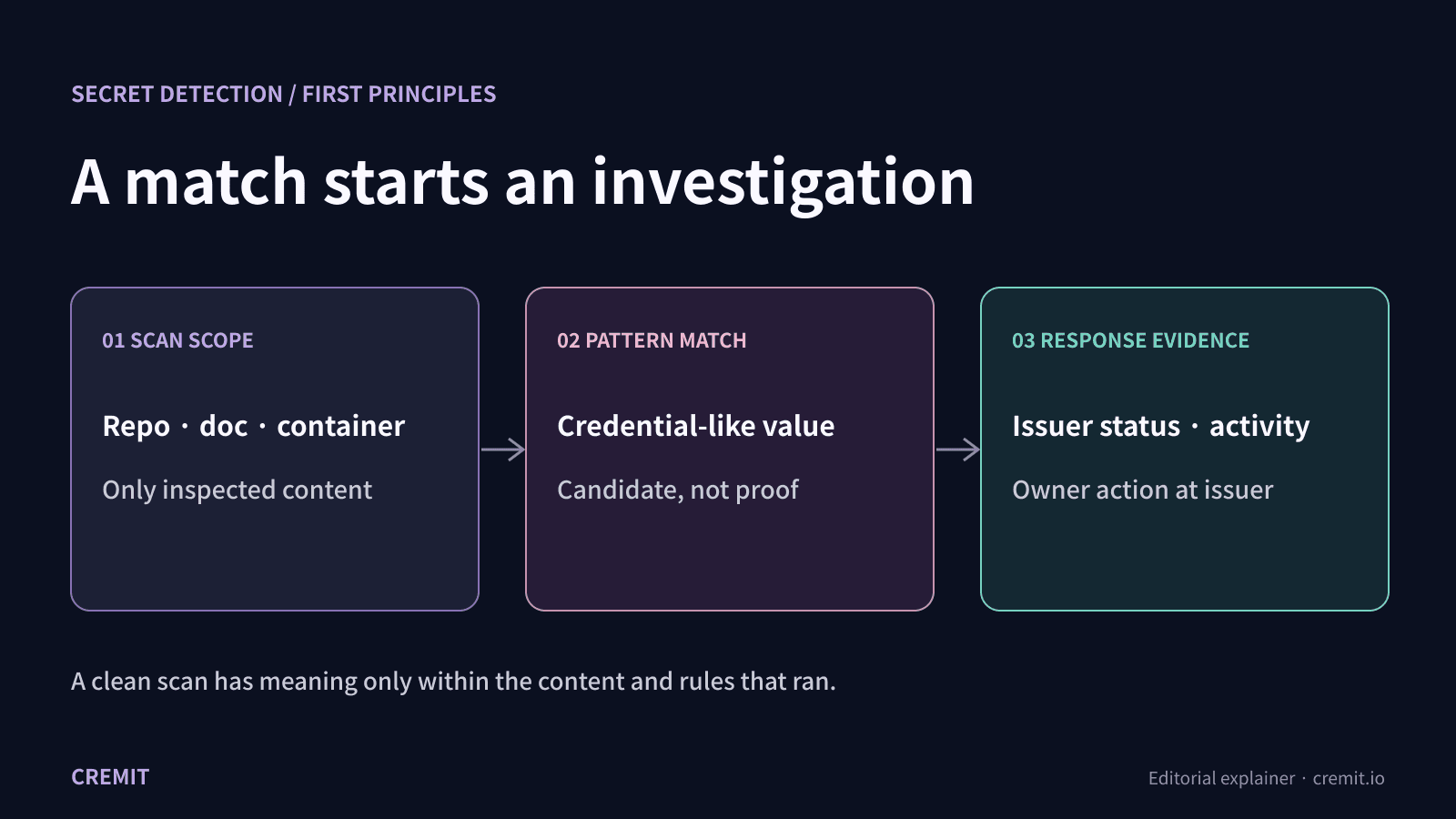
Secret detection finds possible credentials in content a tool actually inspects. Learn what a match proves, where scans run, and how to verify and contain an exposed key.

Ben Kim
Ben Kim
Secret Detection | Cremit Blog | Cremit