Nov 12, 2026
Where Leaked API Keys Go
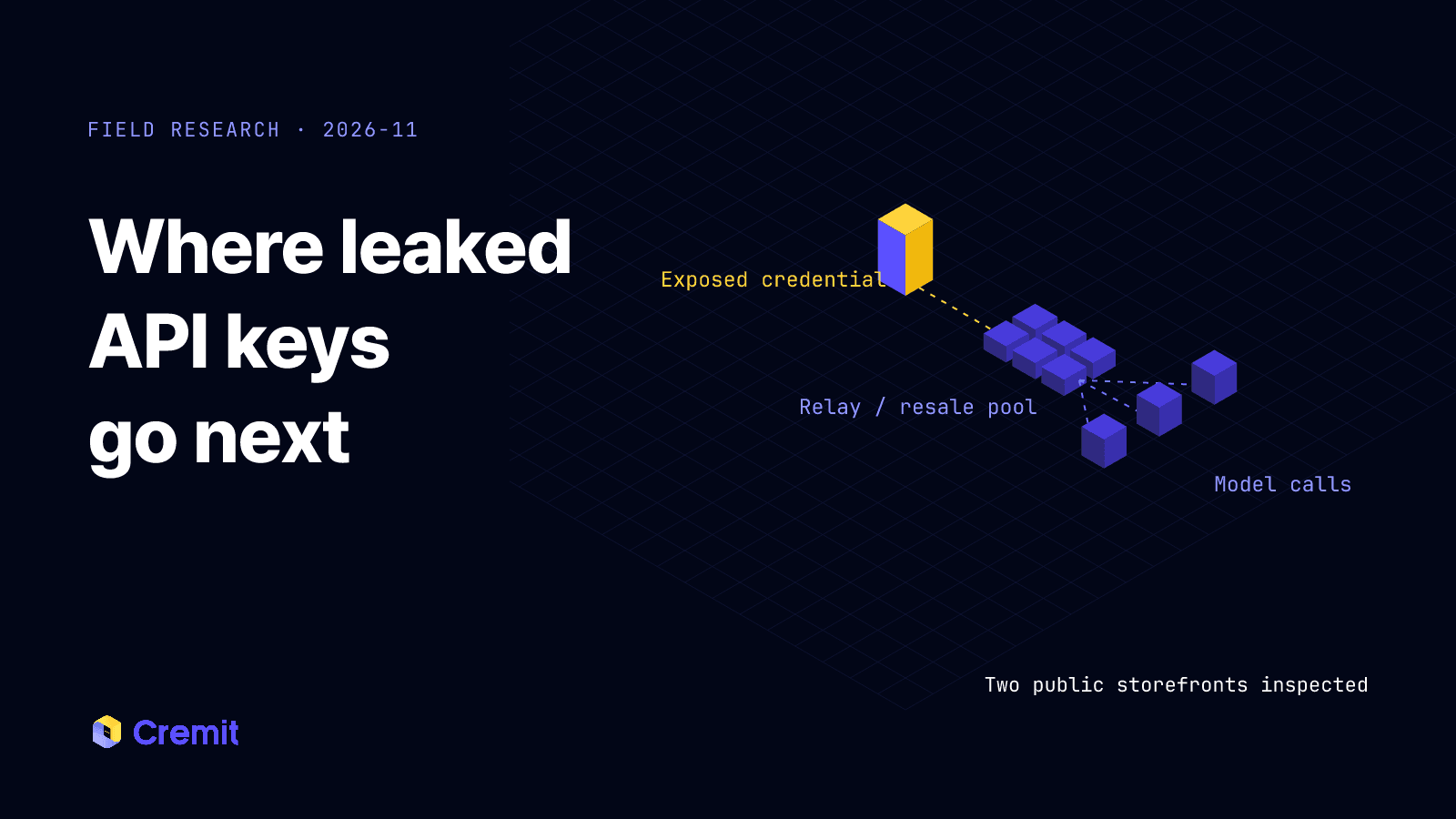
We inspected two public AI-access storefronts and compared the offers with hacking-forum ads and incident reports. Follow credential resale, evidence of abuse and the response work supported by Cremit.

Ben Kim
We inspected two public AI-access storefronts and compared the offers with hacking-forum ads and incident reports. Follow credential resale, evidence of abuse and the response work supported by Cremit.
On October 21, LiteLLM's own release pipeline published a credential-stealing 1.107.0 to PyPI and Docker. It started with an admin key committed to a public repository on May 27, deleted three hours later and never revoked. The attack path, what the build collected, what users should do, and what every team should check.
Zeabur, a Taiwanese PaaS, is shutting down on December 31 after two breaches in two months. The October attacker used plaintext admin tokens and AWS keys that were never rotated after August to reach shared clusters in nine regions and the platform database. We separate what is confirmed from what is still a hypothesis, list what users should do, and turn the root causes into a checklist for other teams.
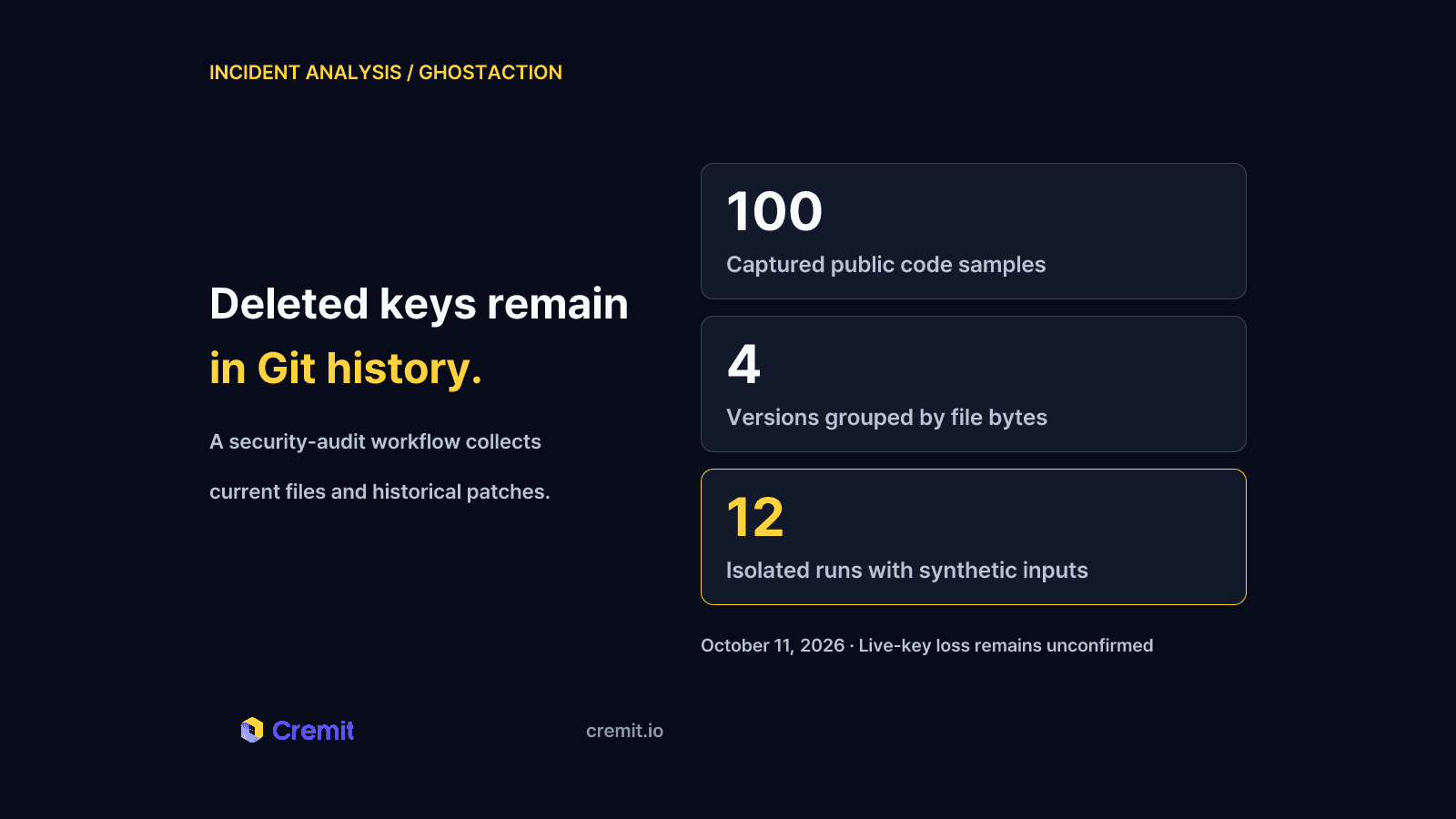
A review of 100 public workflow samples and Uber repository events shows four collector versions. We examine deleted-key collection through Git patches, successful exits after transfer failure, and credential-based response priorities.
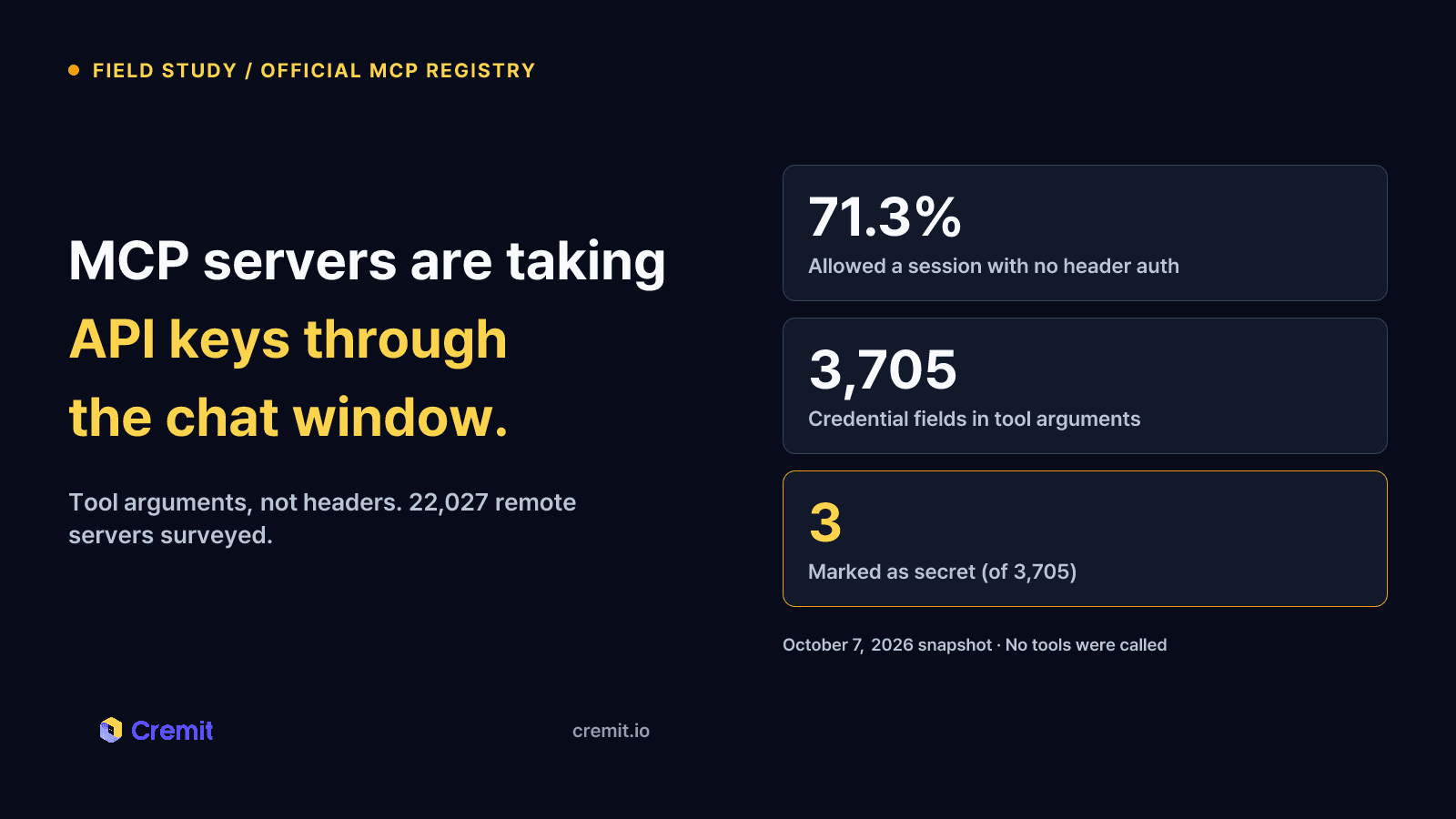
We sent one initialize request to every remote MCP server in the official registry. 71.3% of 22,027 responding servers opened a session with no header authentication, and 3,705 credential fields sit in tool arguments. Three of them are marked secret.
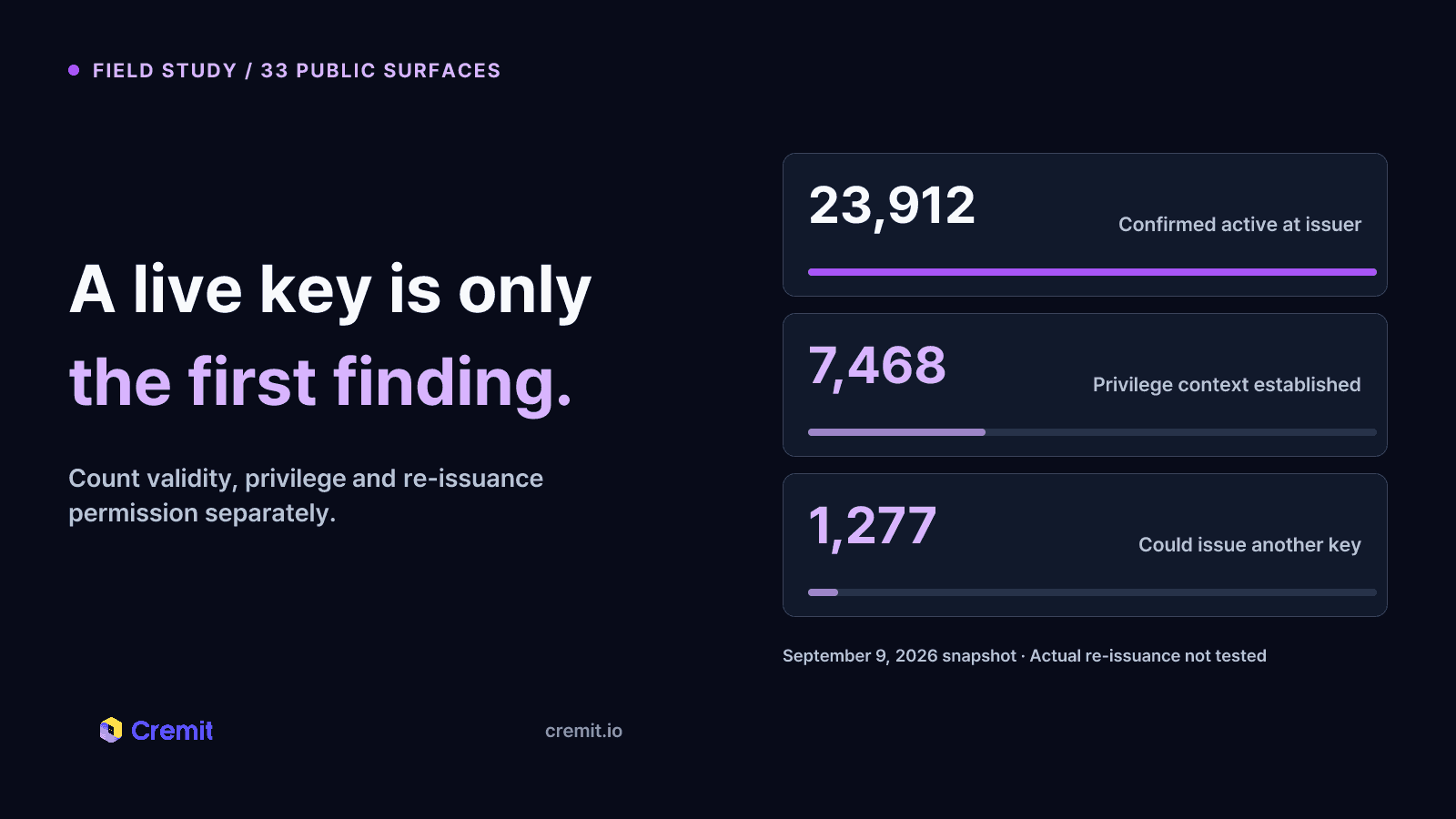
A September 2026 sweep of 33 public surfaces confirmed 23,912 active credentials. Privilege context was established for 7,468; 1,277 had permission to issue another key. Actual re-issuance was not tested.
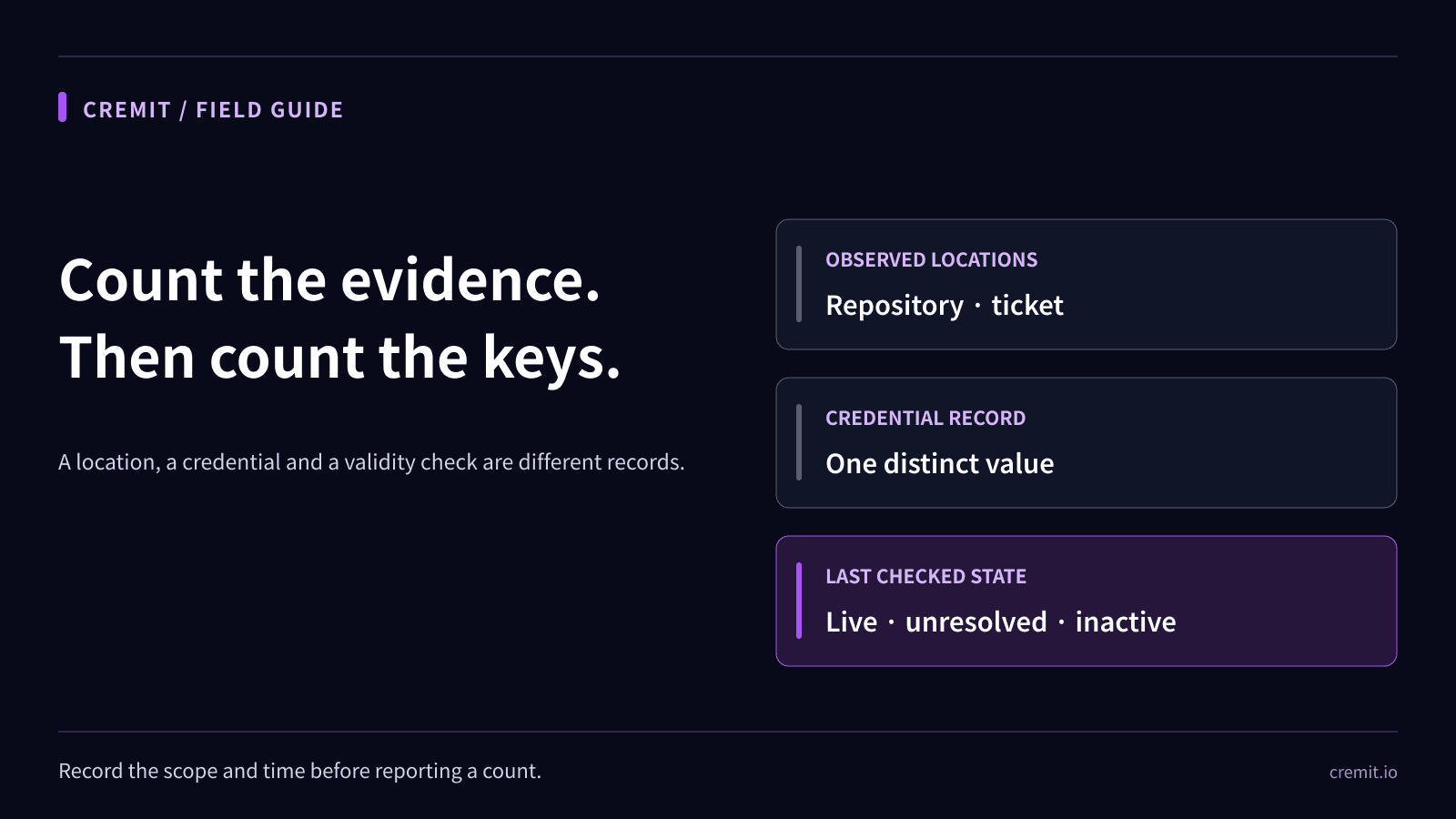
Count observed locations, distinct credential records and verification states separately. Define scope and check time before reporting exposure.
How Cremit Platform finds exposed credentials, verifies supported types, and routes findings to an owner, with clear limits.
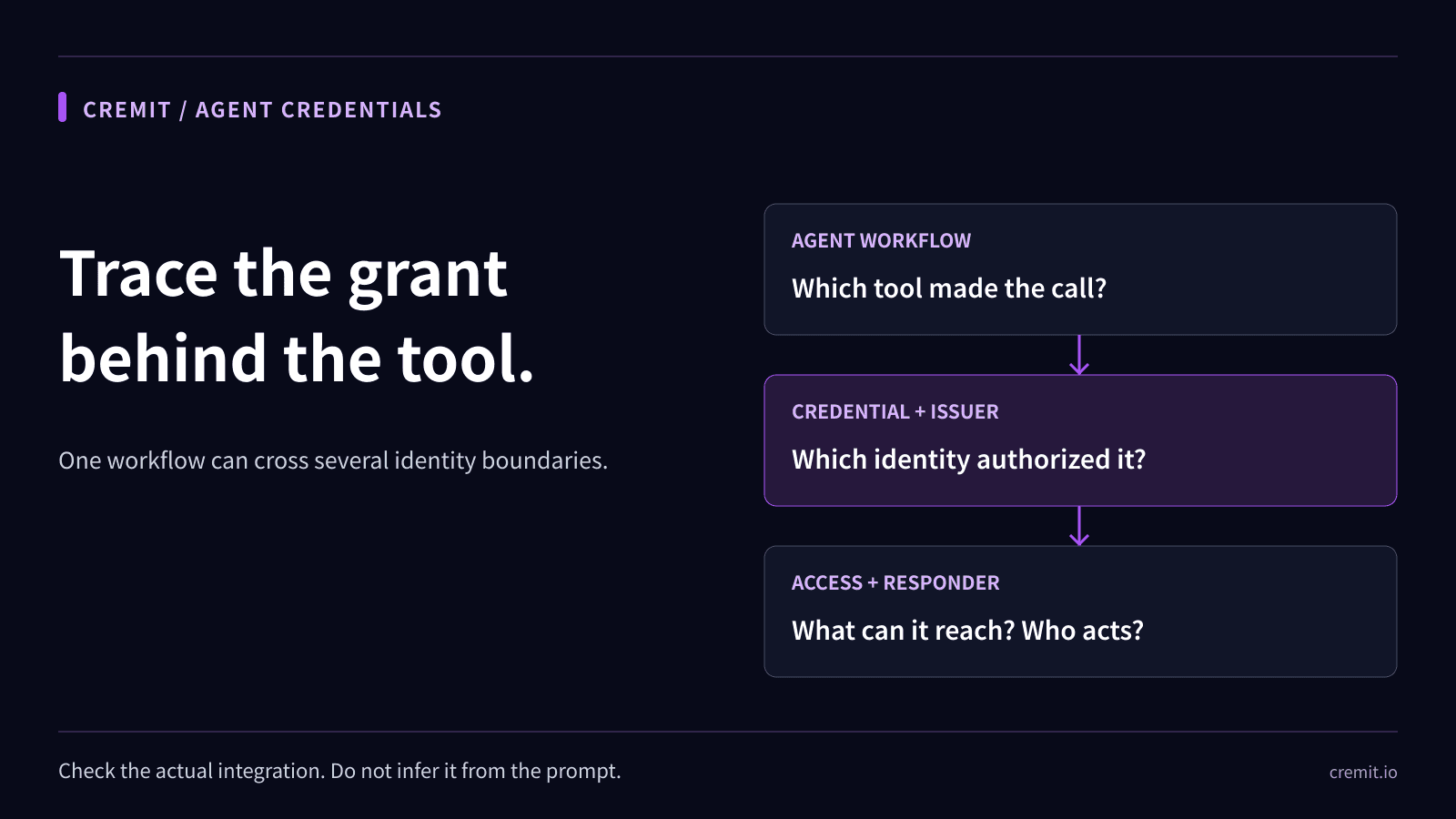
An agent workflow may cross several identity boundaries. Trace the actual grant, source location, permissions and owner before judging a leaked key.
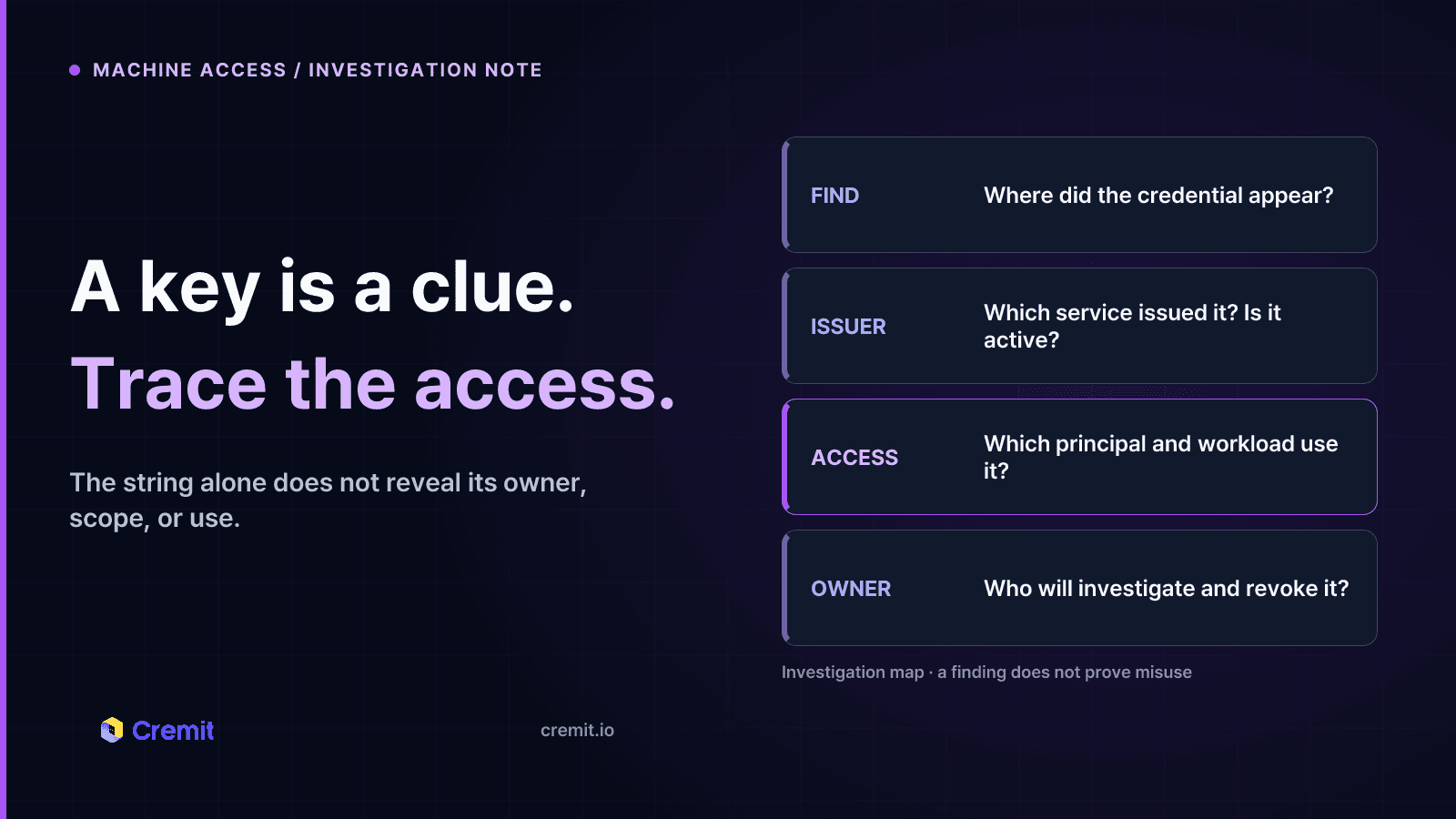
An exposed key is a lead. Connect it to its issuer, principal, permissions, workload, and owner before closing the access path.

A leaked Slack incoming webhook is usually triaged as low severity: write-only, one channel, no data access. The moment an AI agent reads that channel and can act with tools, that write-only primitive becomes an indirect prompt injection path into the agent's privileges. Here is the full kill chain, the exact preconditions, and how to defend it.
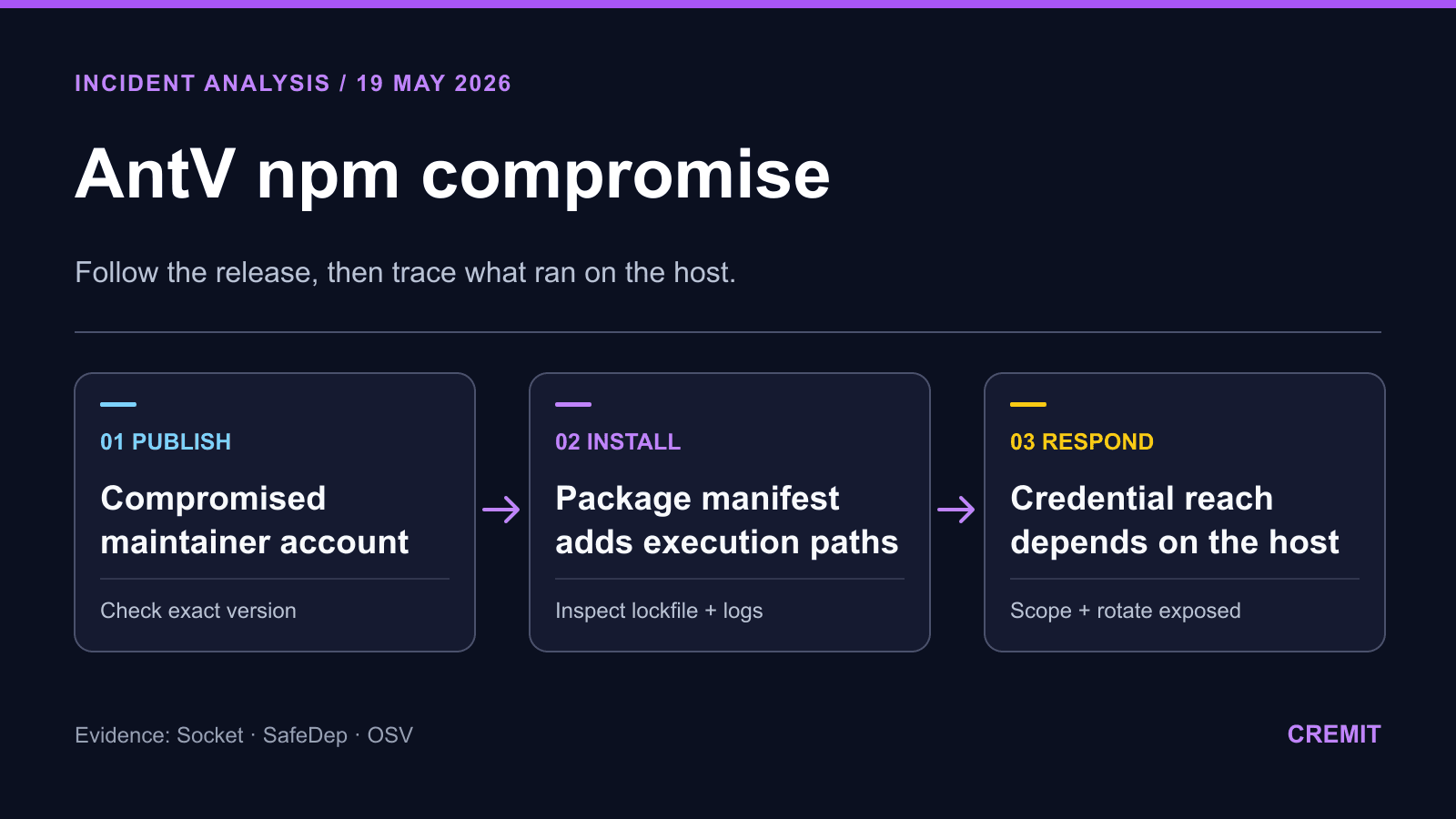
Socket and SafeDep documented hundreds of malicious AntV-related npm releases. Compare exact versions, understand the two execution paths, and scope credentials exposed on affected hosts.
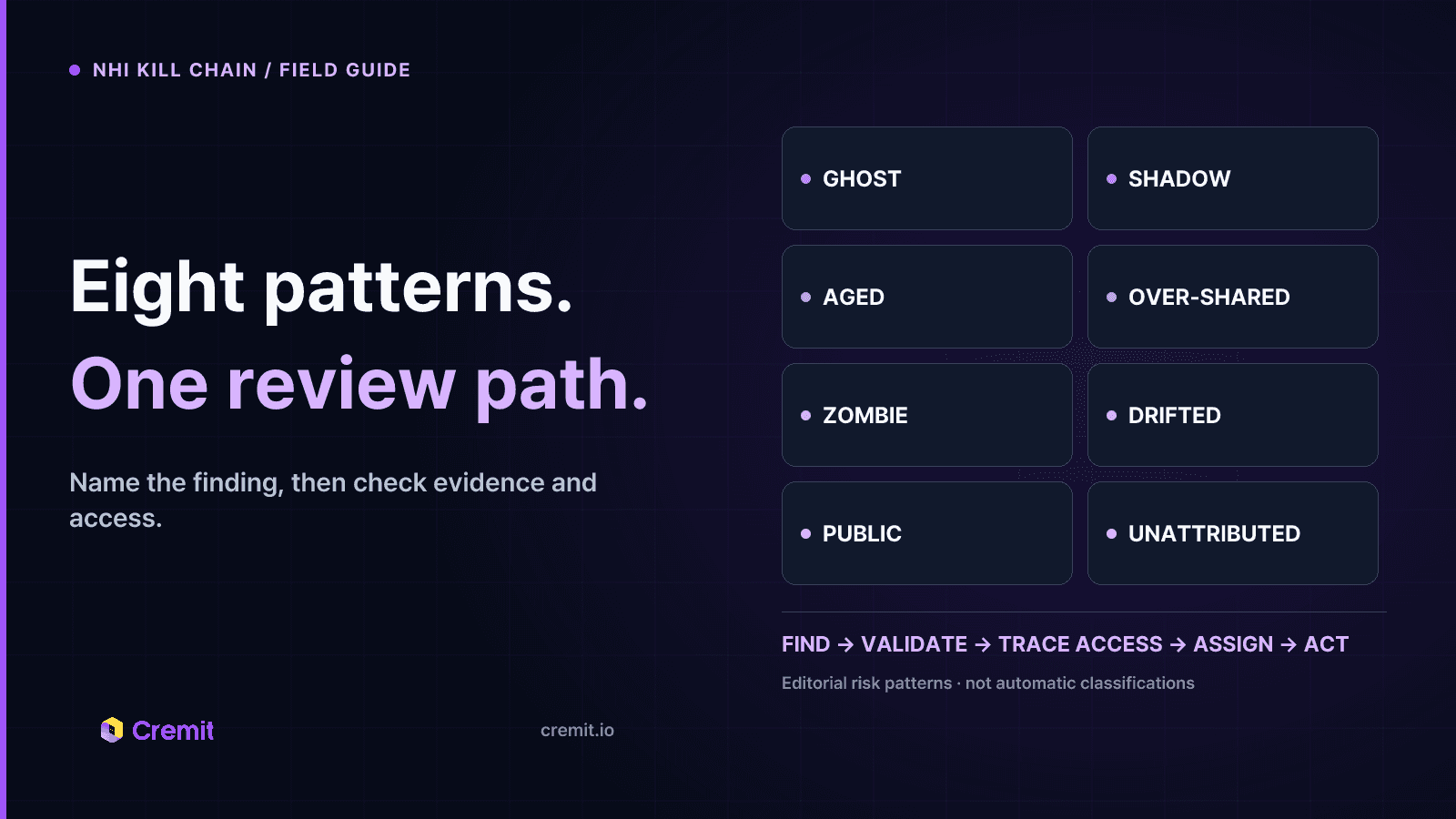
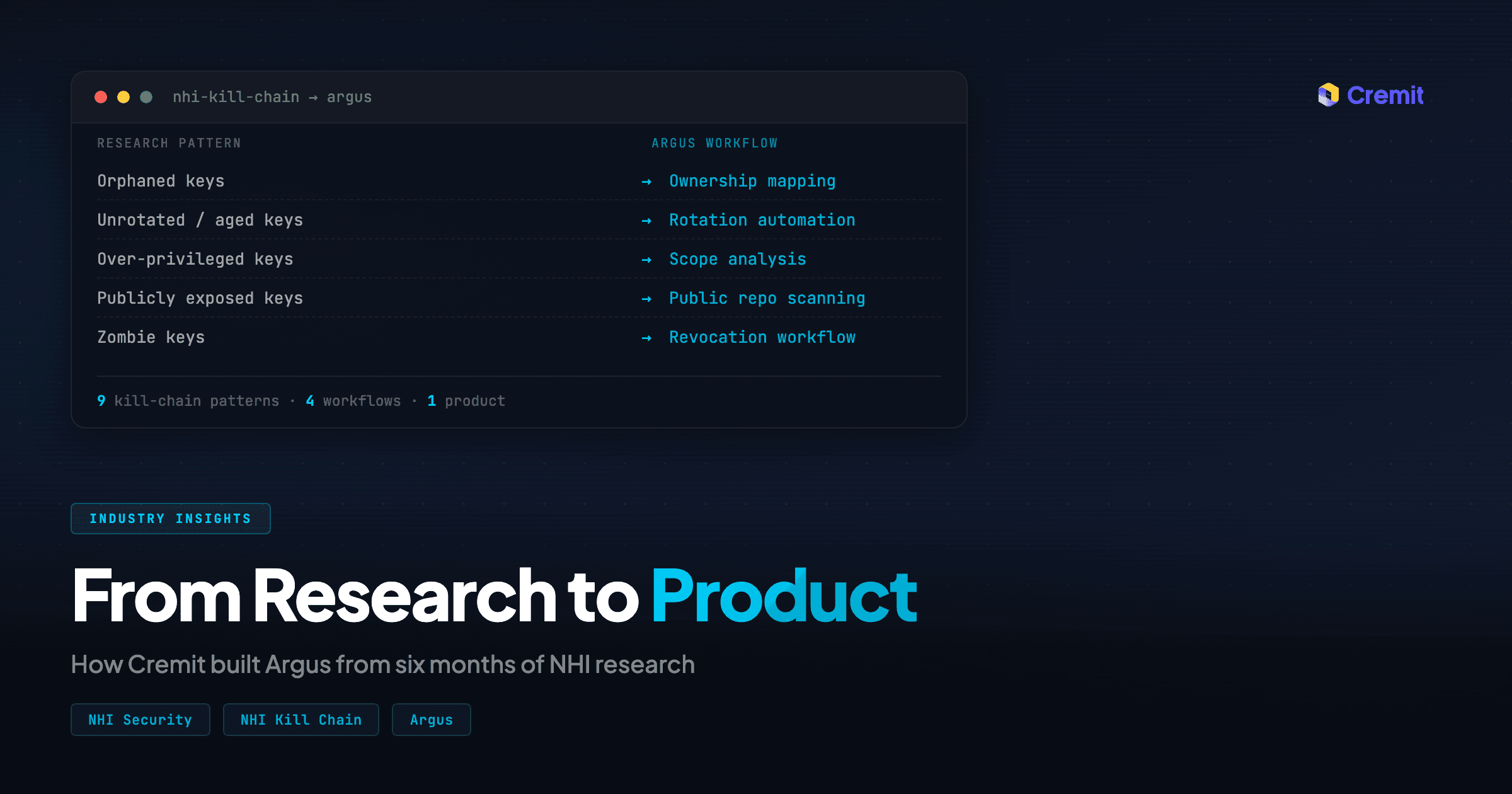
A practical summary of eight NHI credential exposure patterns, the evidence to check, and what Cremit Platform can help investigate.
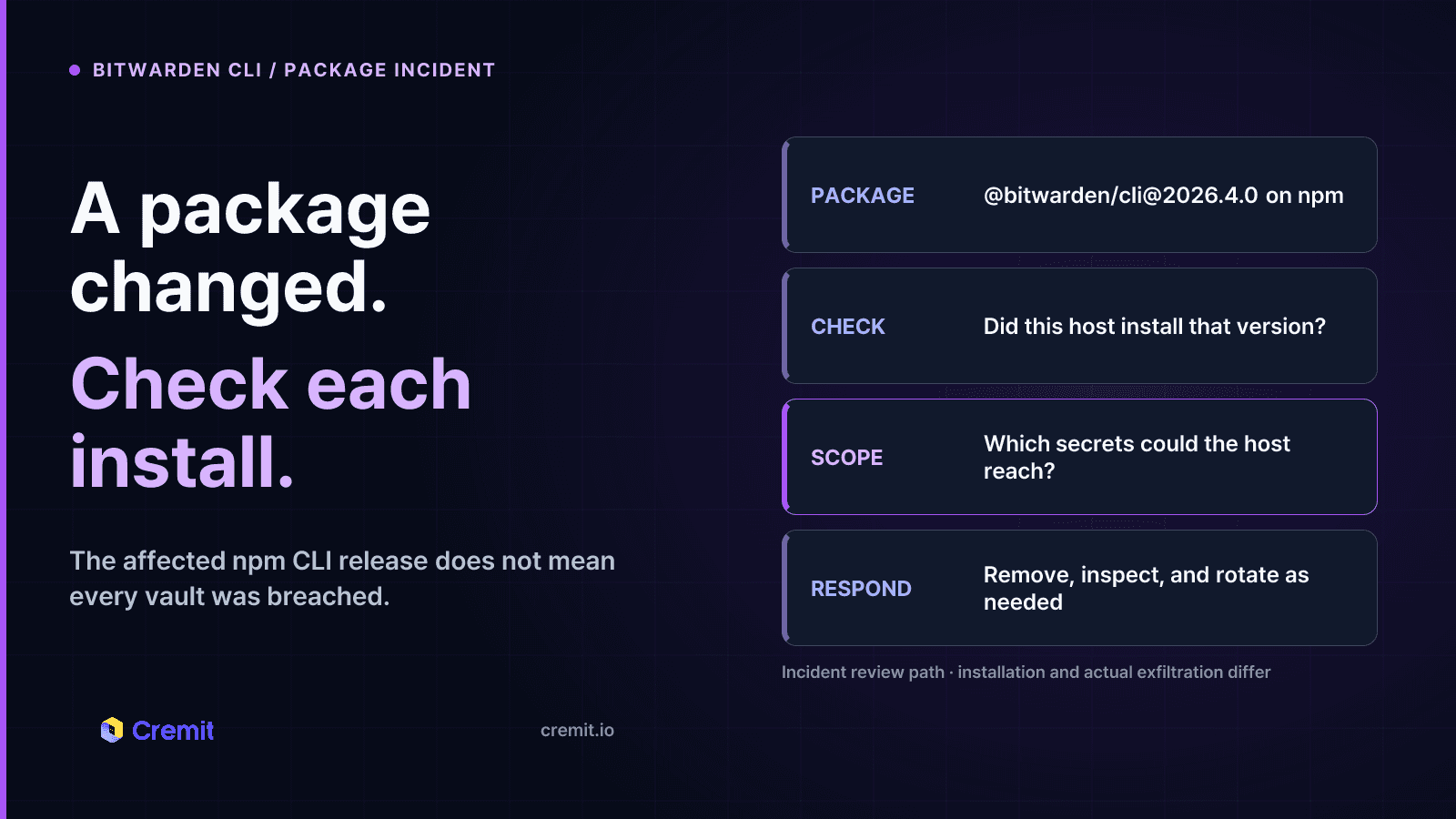
A malicious CLI package was available on npm for 93 minutes on April 22, 2026. Check who installed it, what researchers found, and Bitwarden’s response steps.
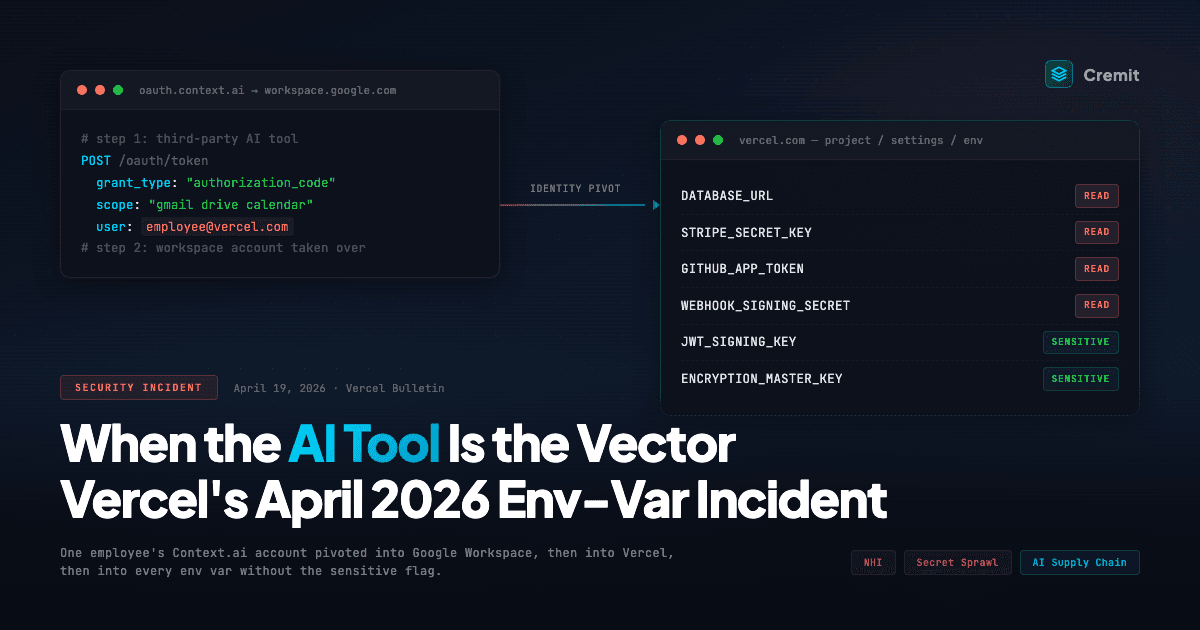
Vercel confirmed an unauthorized-access incident on April 19, 2026 that started in a third-party AI tool, pivoted through Google Workspace, and reached environment variables in a subset of customer projects. The exposure surface is every env var that was not marked sensitive. Here is what is confirmed, what is noise, and what to rotate first.
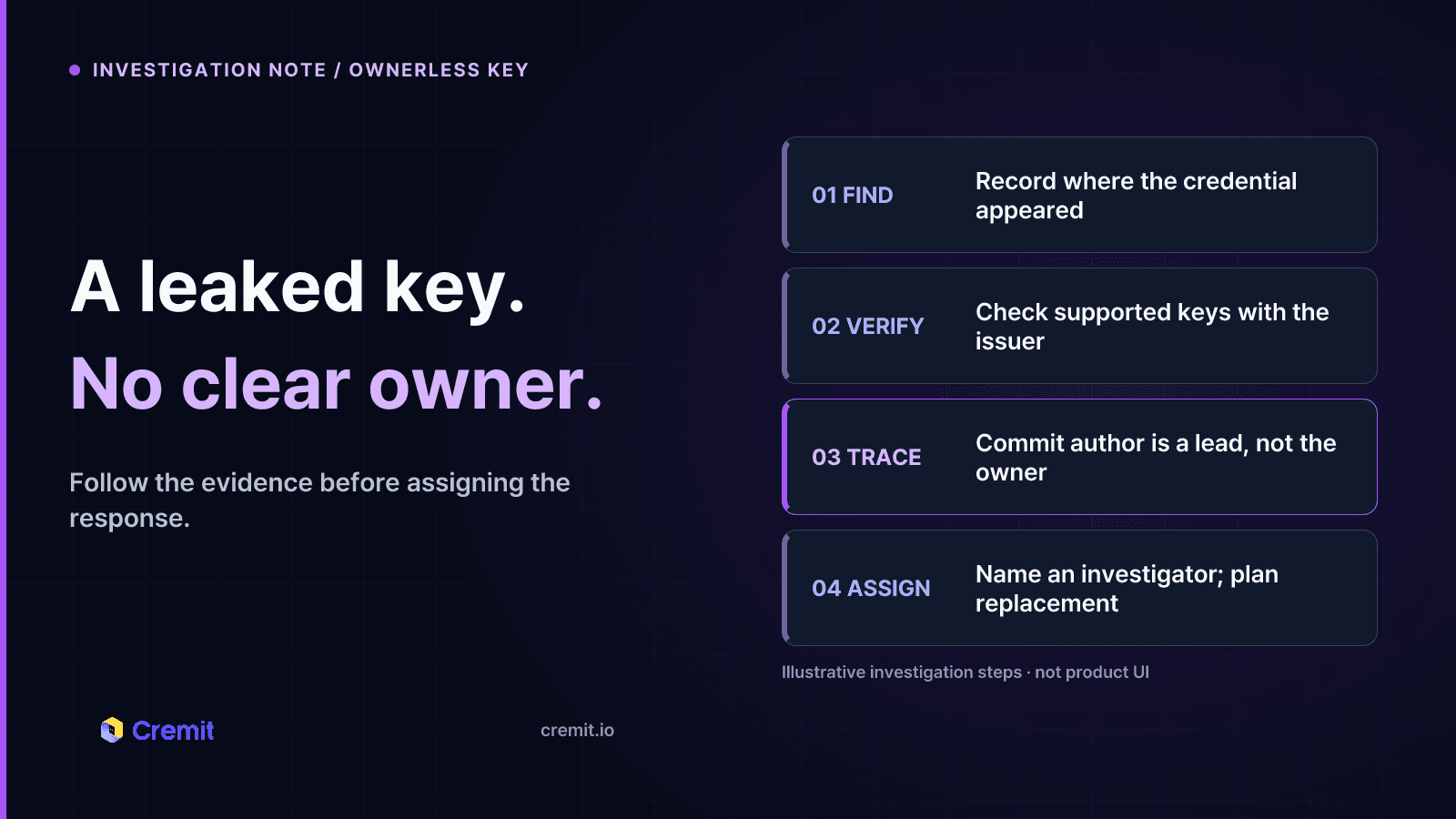
How to verify, investigate, assign, and replace an exposed credential when the service owner is unclear.
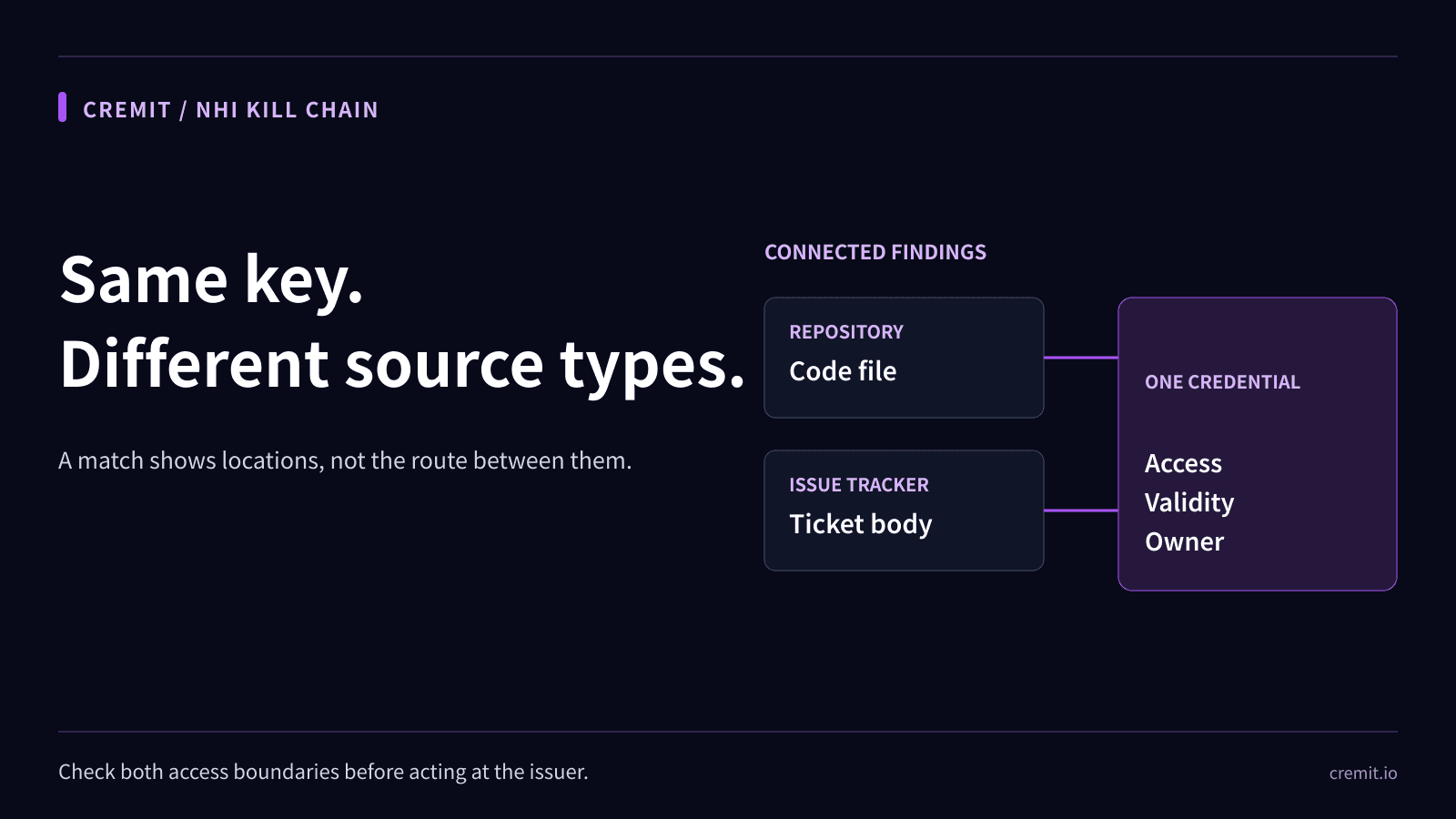
Two source types show two observed locations, not how a credential moved. Check access, issuer status, owner, and actual consumers.

An organization's core credentials sat in public repositories for years. The security industry's answer: "Out of scope."
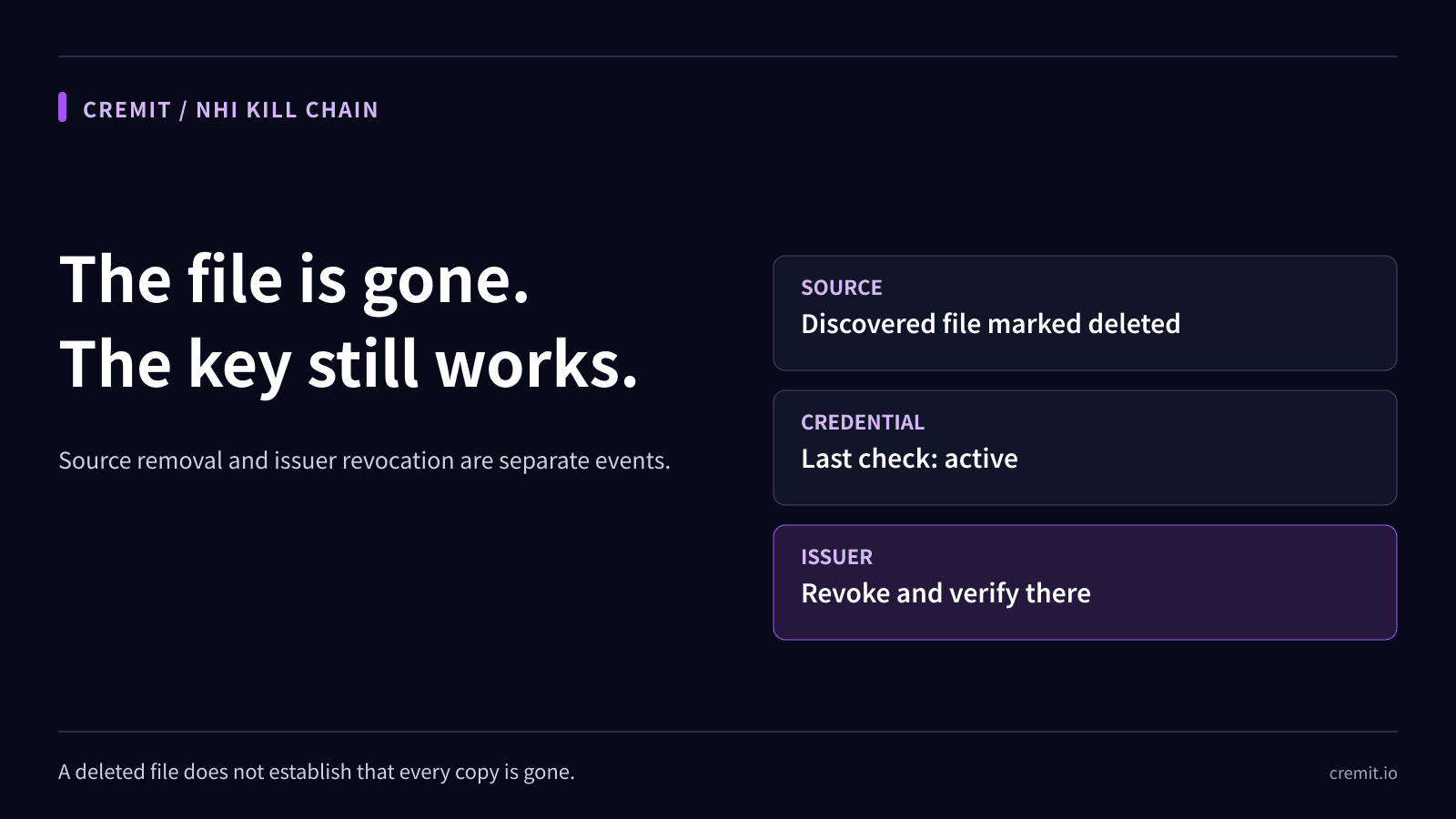
Source removal does not revoke a credential. Check the issuer, Git history, current owner, and last verification before closing the finding.
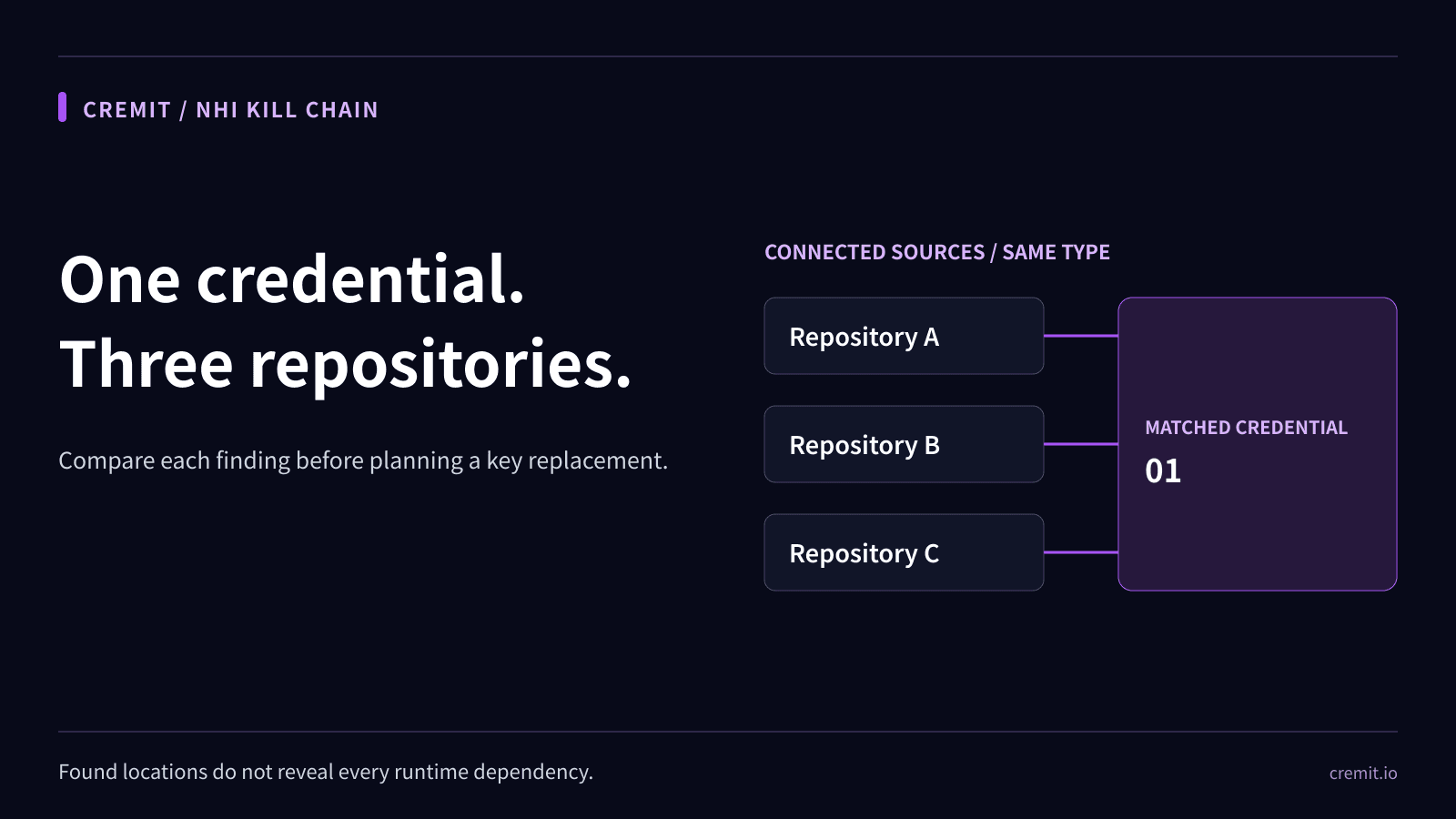
Three observed locations are not a complete dependency map. Check key type, issuer status, permissions, and actual consumers before replacement.
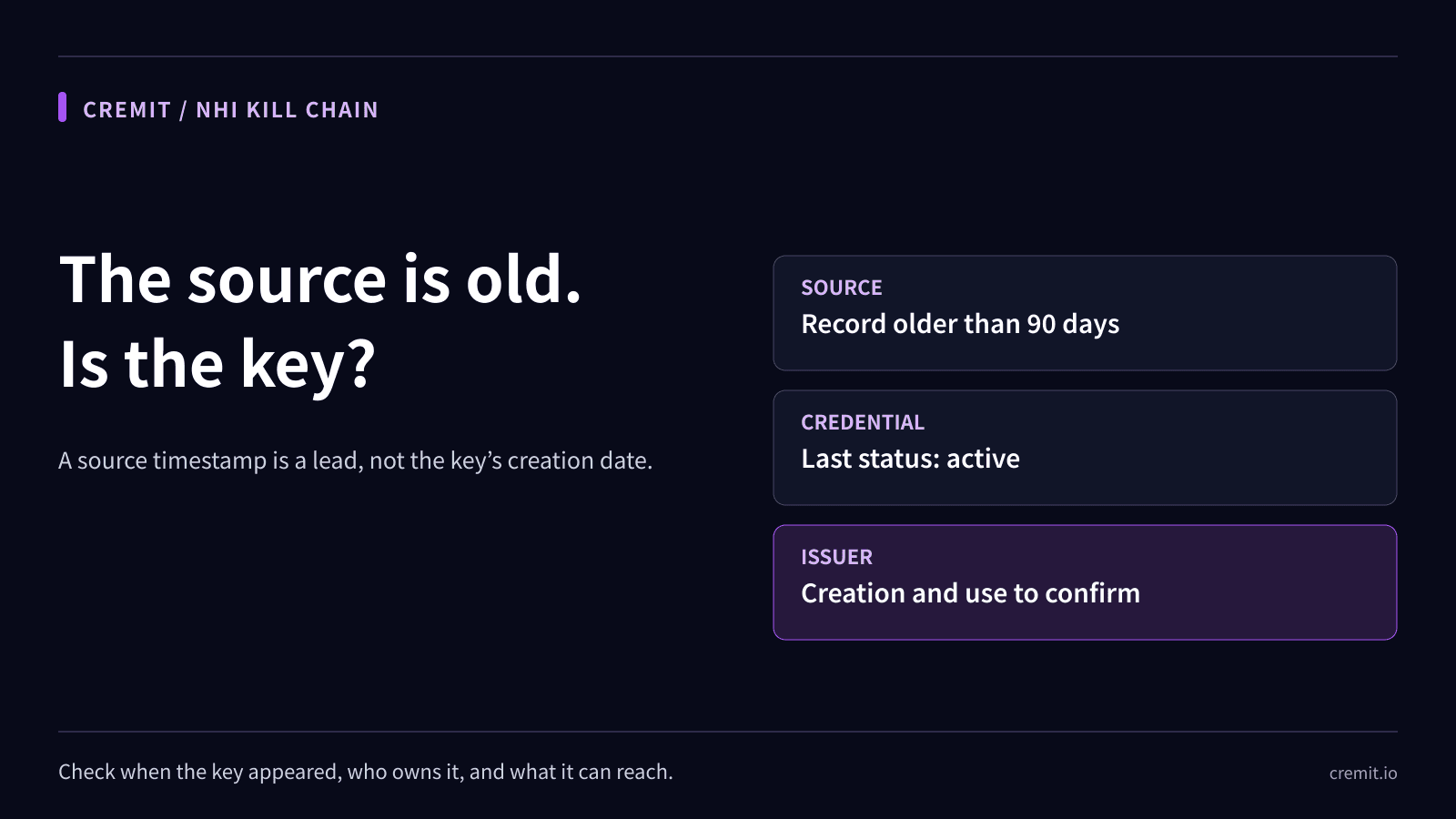
An old source record and an active key do not establish key age. Check when the value appeared, issuer status, permissions, and dependencies.
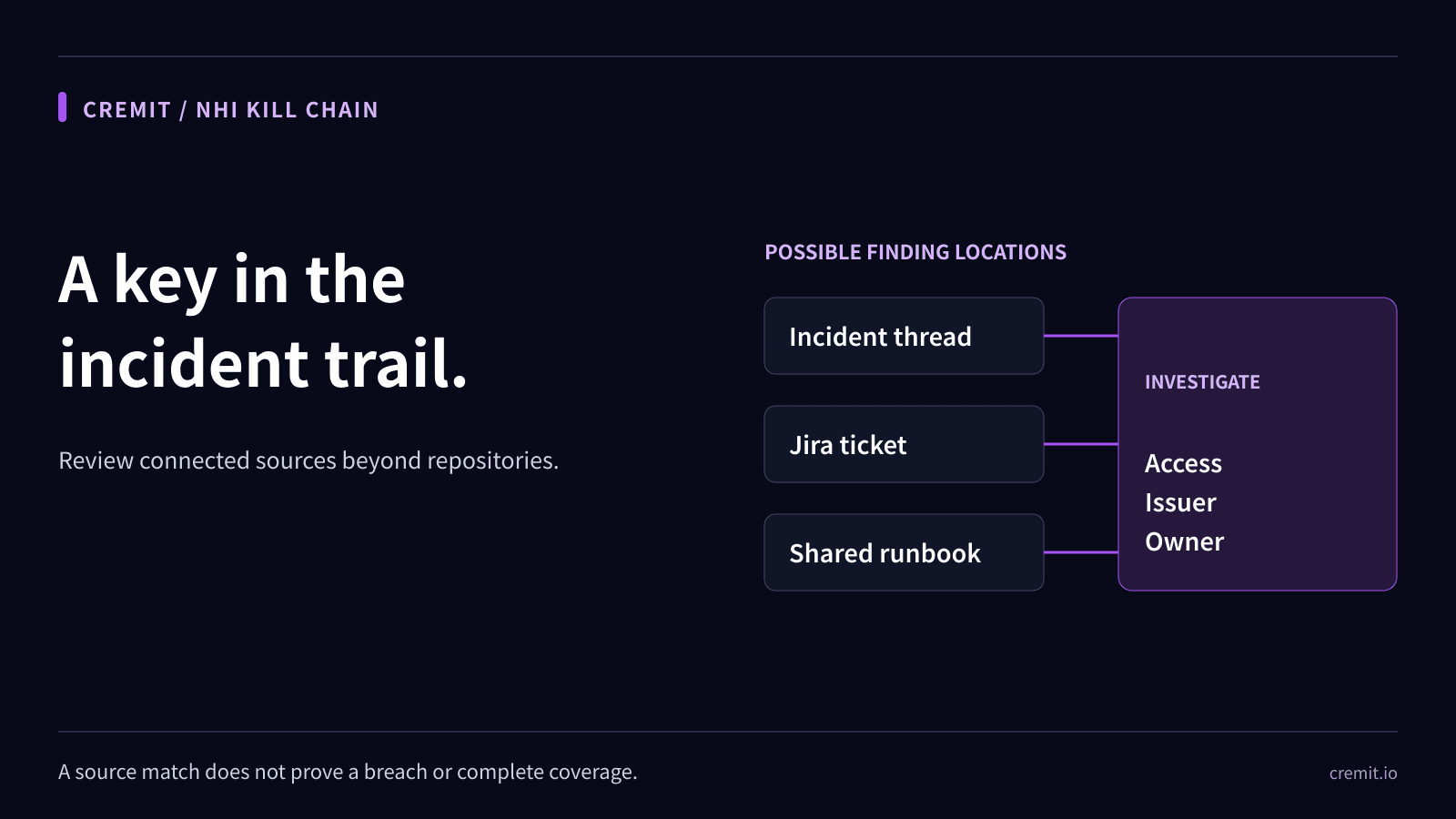
A credential outside a repository needs a source-access review, issuer check, owner, and verified response. A finding alone does not prove misuse.
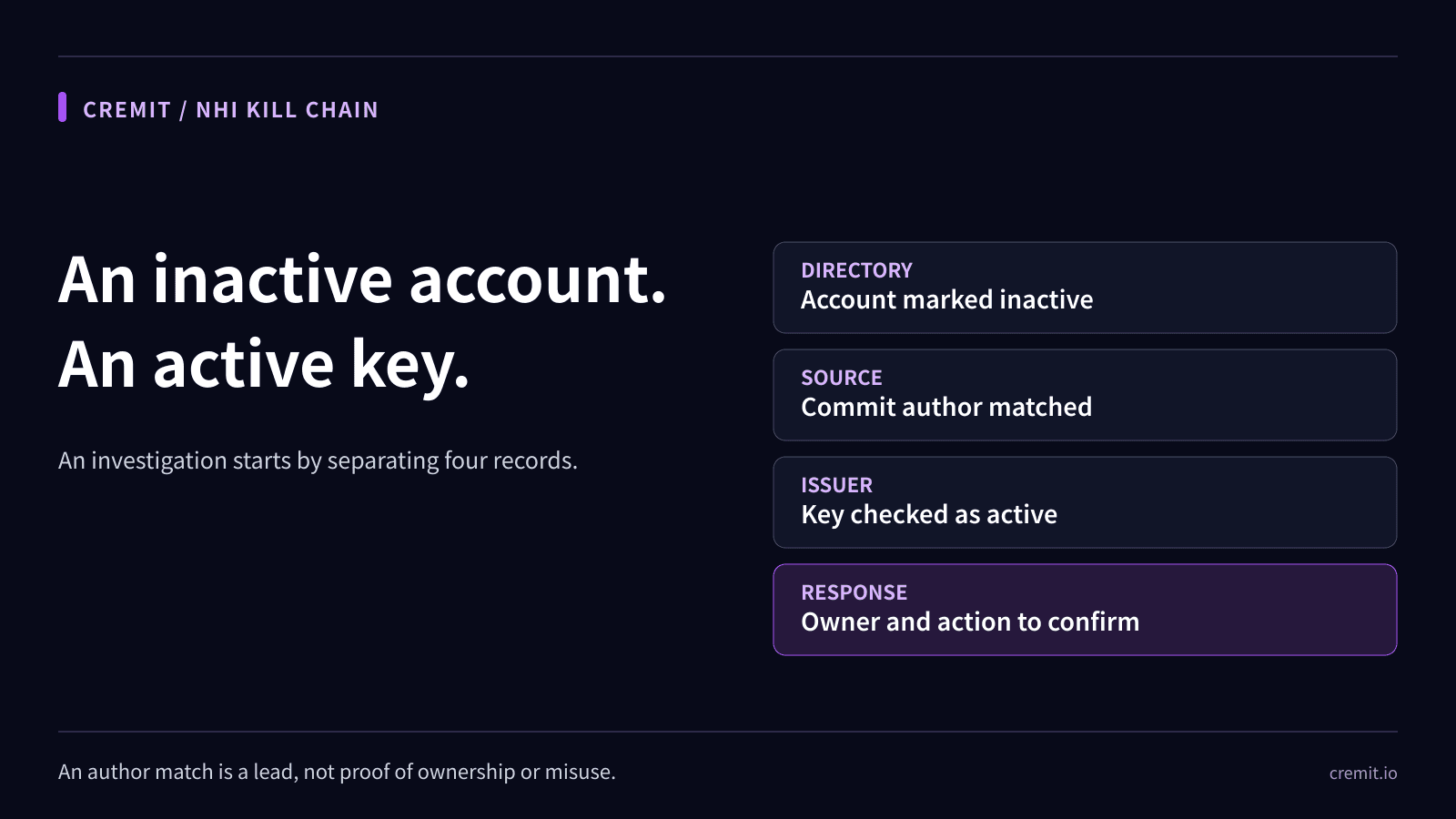
An active key linked to an inactive author is a lead. Check the directory, source, issuer, and current service owner before deciding what happened.

Aqua Security's Trivy was compromised by TeamPCP, cascading into LiteLLM. A 7-phase Cyber Kill Chain and MITRE ATT&CK analysis of how incomplete credential rotation turned a single breach into a five-ecosystem catastrophe.
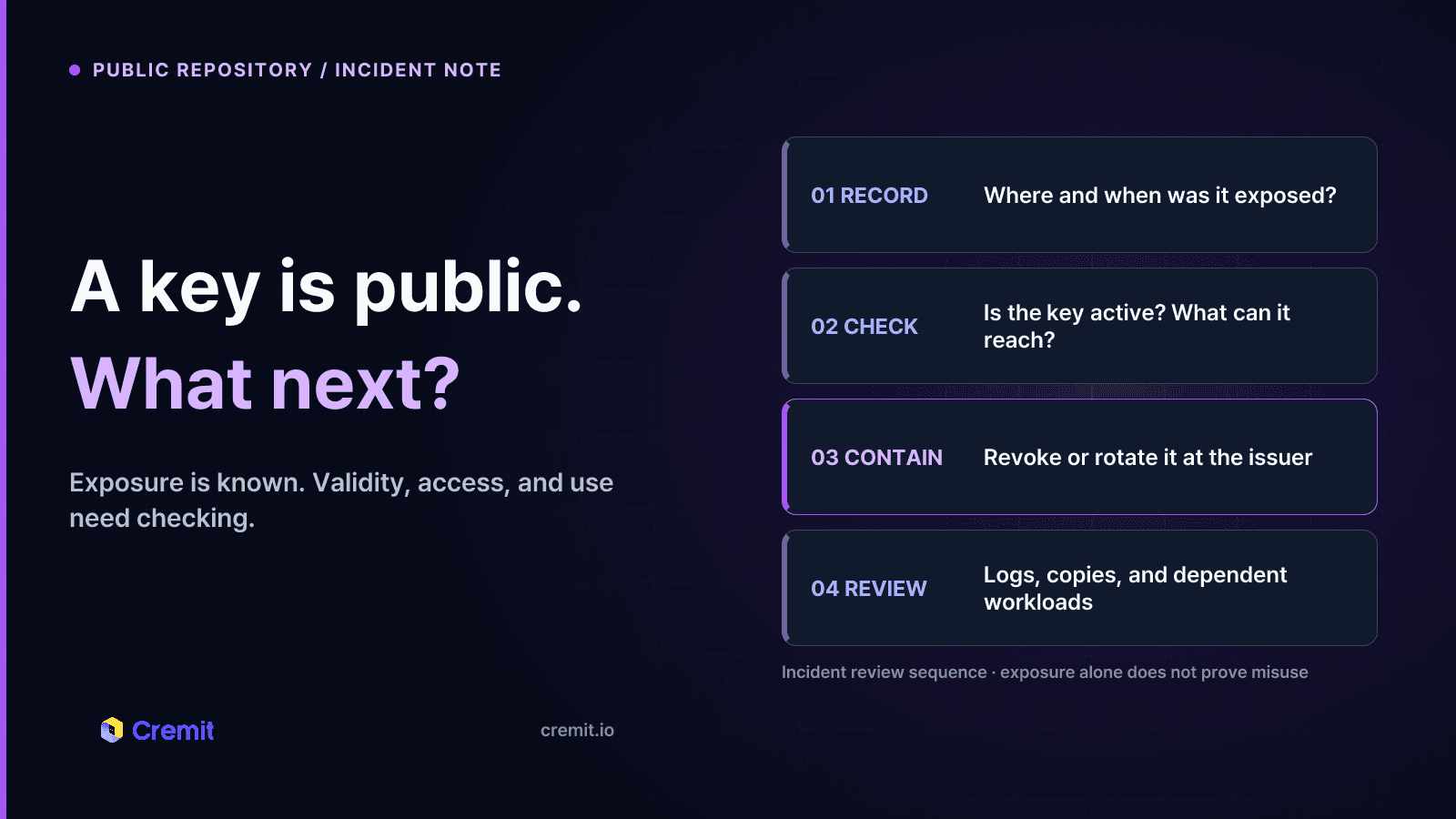
A public commit proves exposure, not misuse. Check validity, permissions, issuer logs, and dependent workloads before closing the incident.
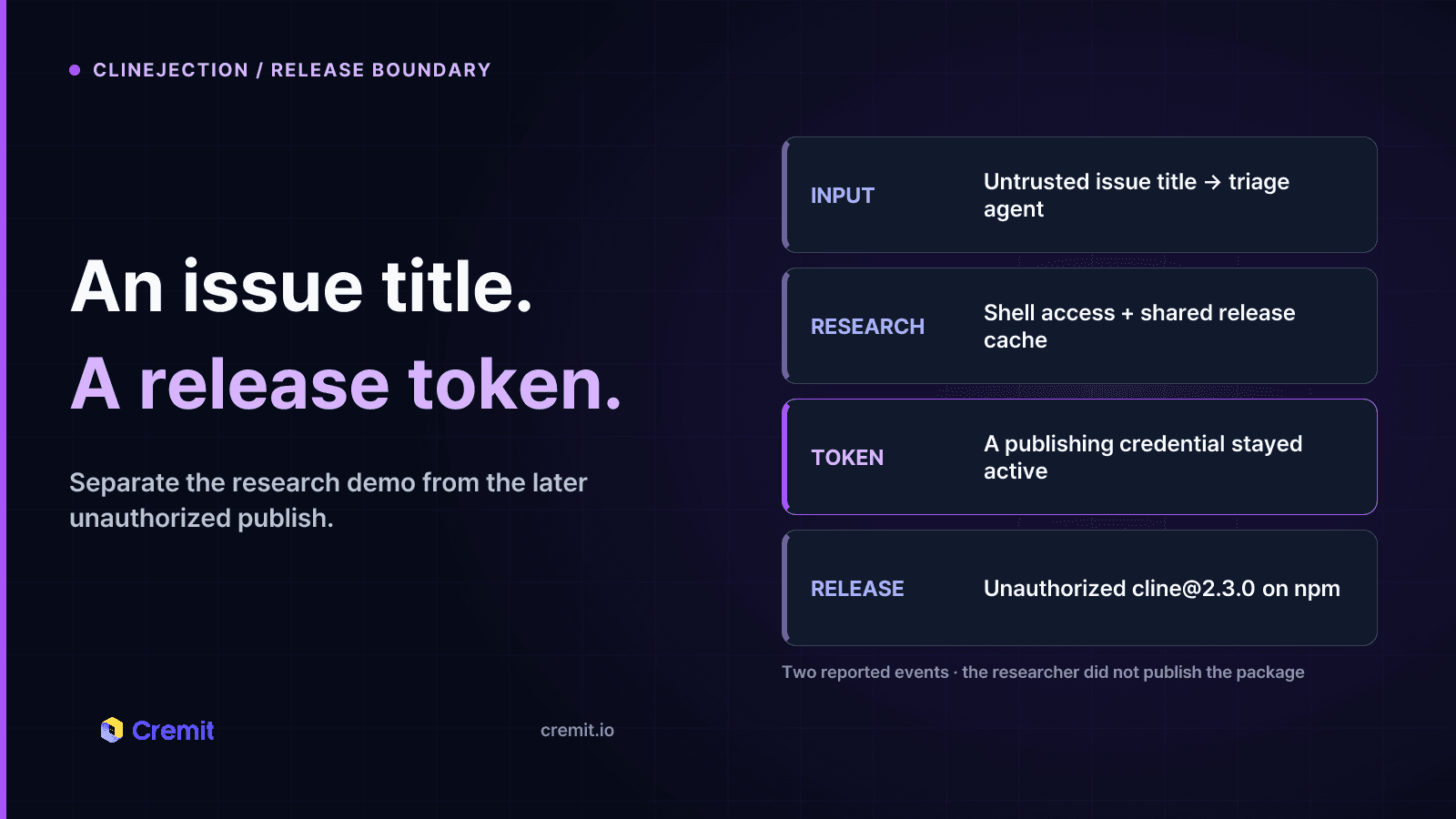
Cline’s issue-triage agent exposed a path to publishing credentials. A later unauthorized CLI release installed OpenClaw; Cline found no user data theft.
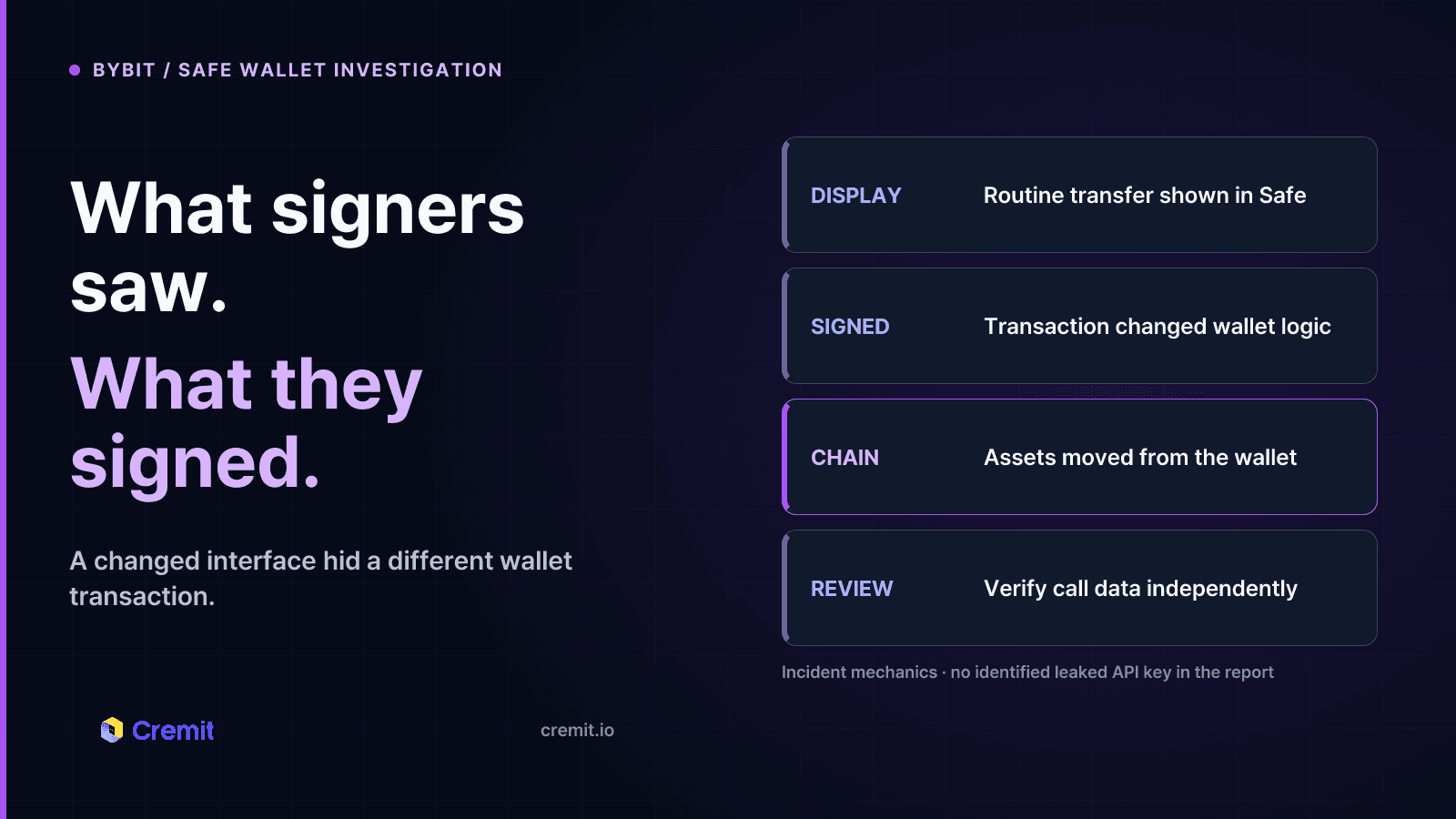
The February 2025 theft involved a compromised Safe developer and a manipulated transaction interface. Here is what investigators confirmed and what remains unknown.
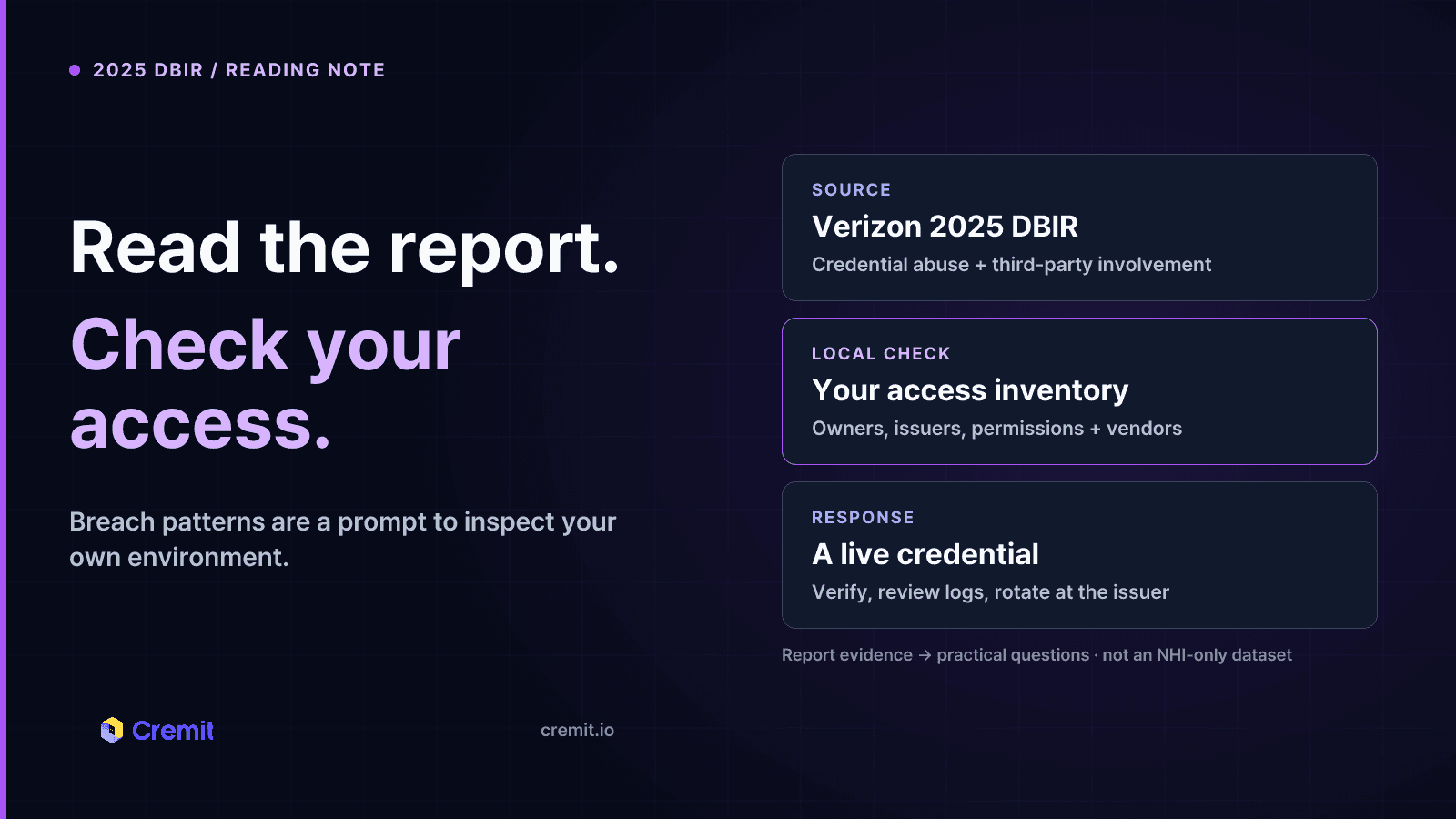
A sourced reading of the 2025 Verizon DBIR, with practical steps for credential inventory, leak prevention, and response.
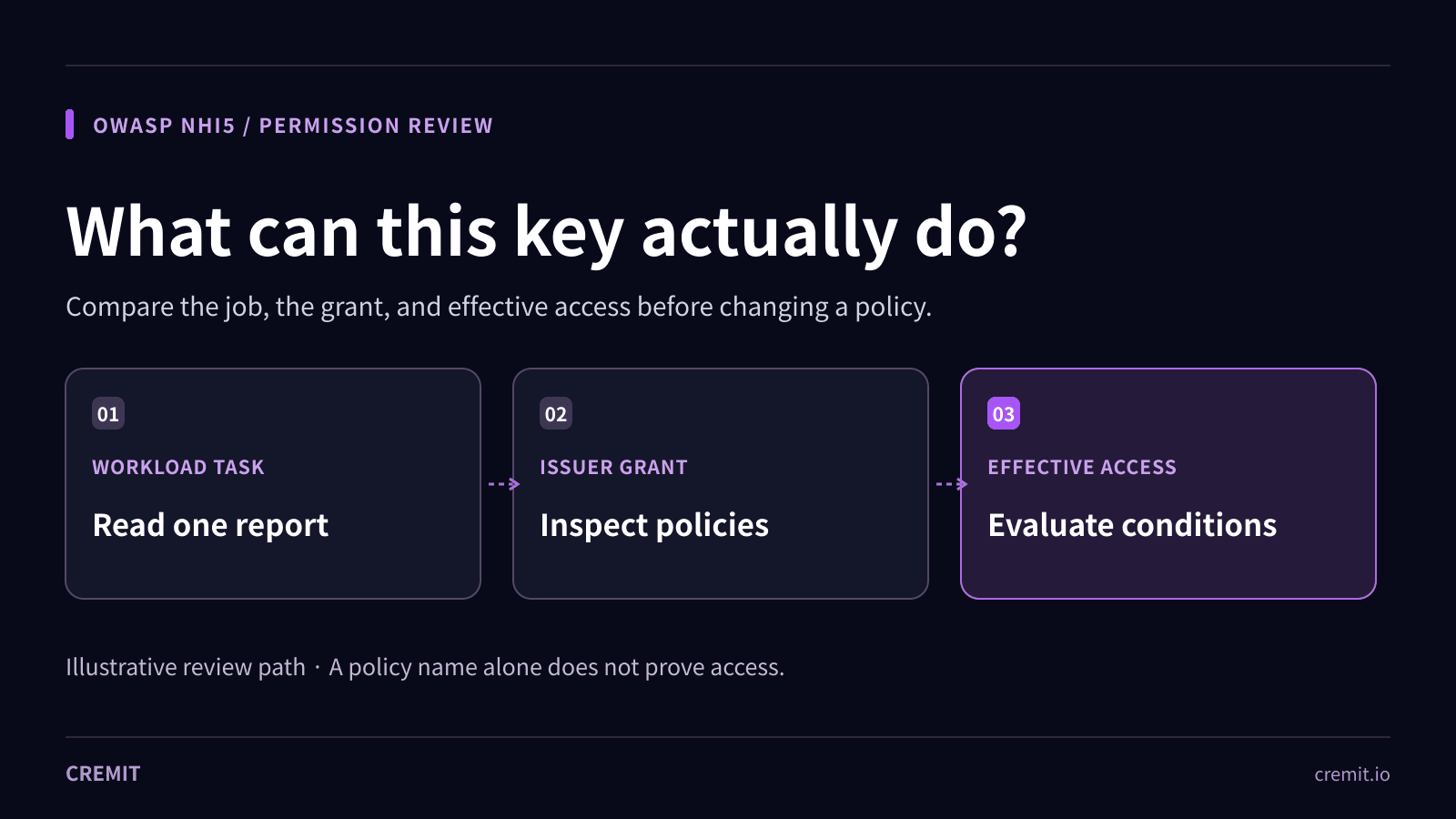
Compare workload needs, issuer grants, effective access, and observed use before reducing an NHI’s permissions.
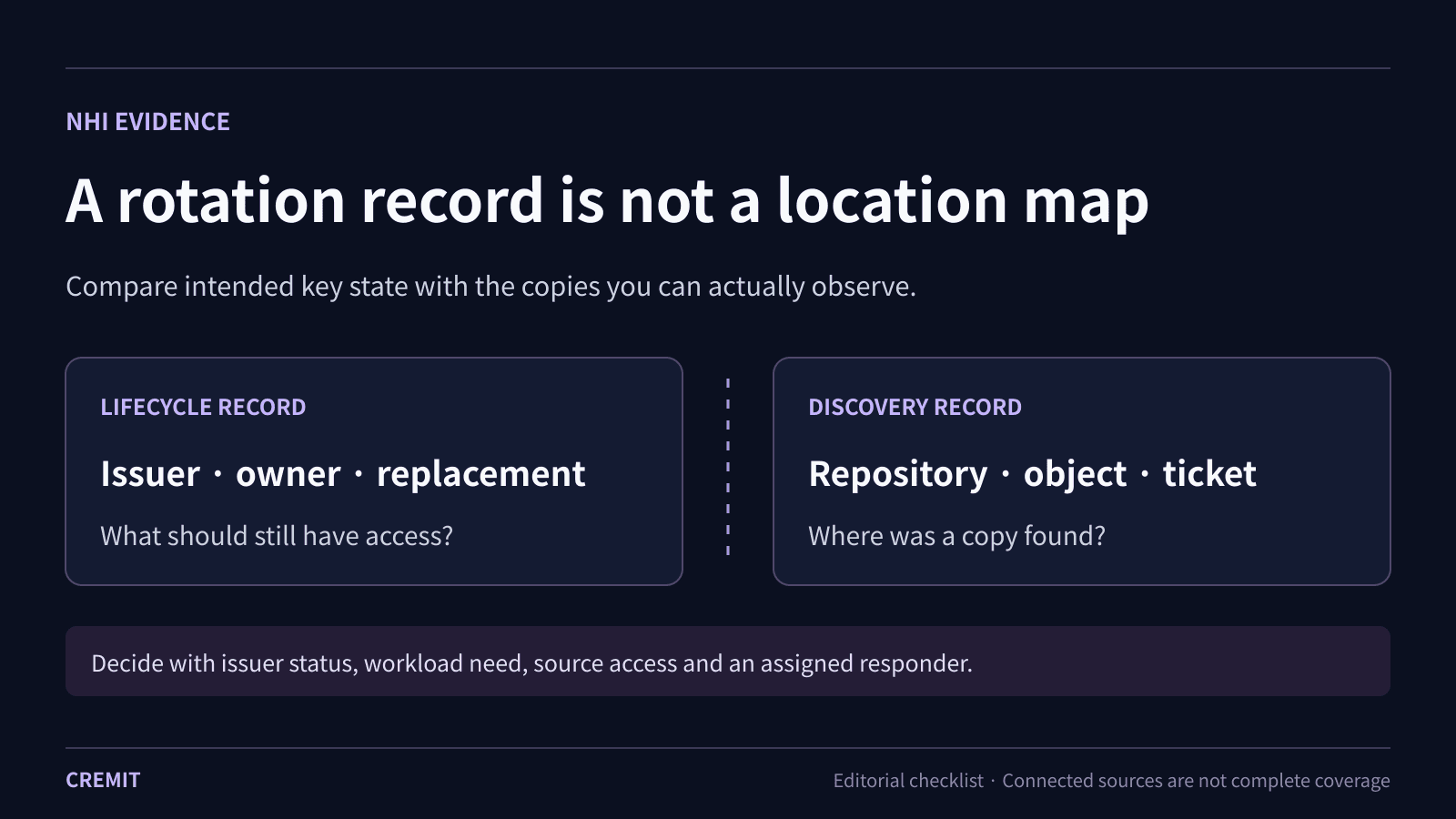
Lifecycle records show intended access. Secret findings show copies in scanned sources. Compare both before deciding who should replace a key.
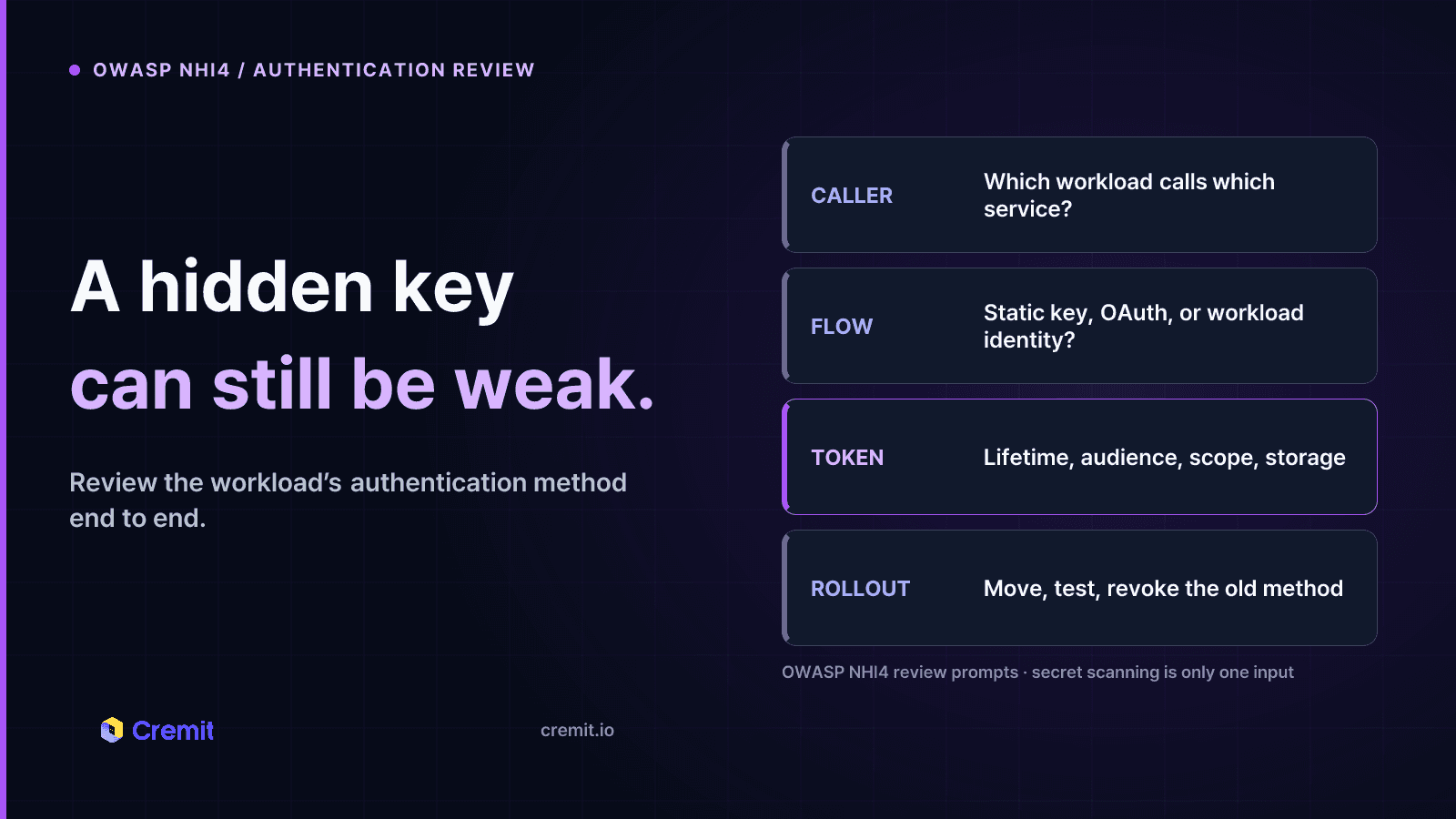
Insecure authentication is more than a leaked key. Review OAuth flows, static credentials, token scope, and the rollout path for safer workload access.
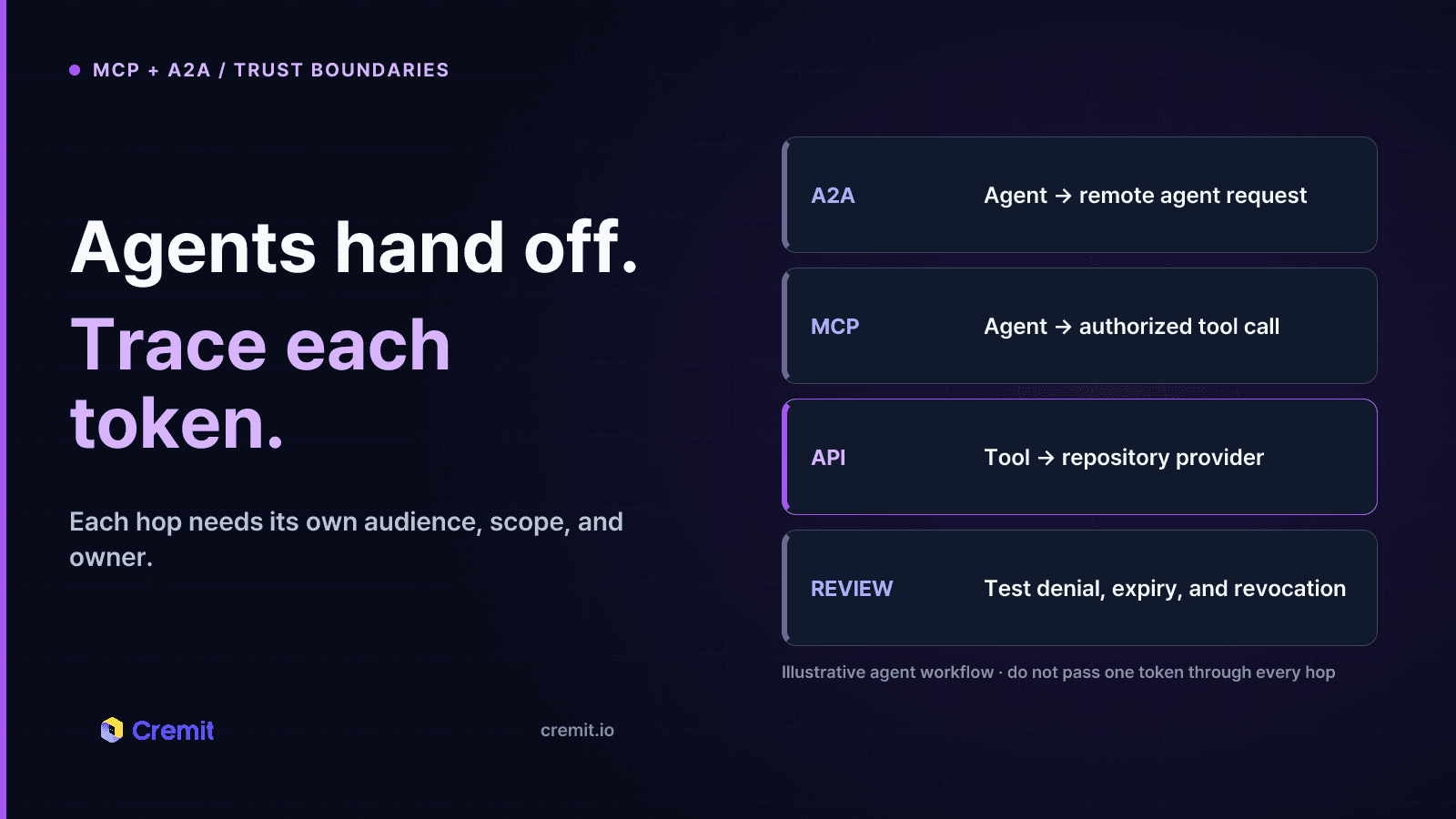
MCP connects agents to tools; A2A connects agents to each other. Map authentication, token scope, and exposed credentials at every hop.
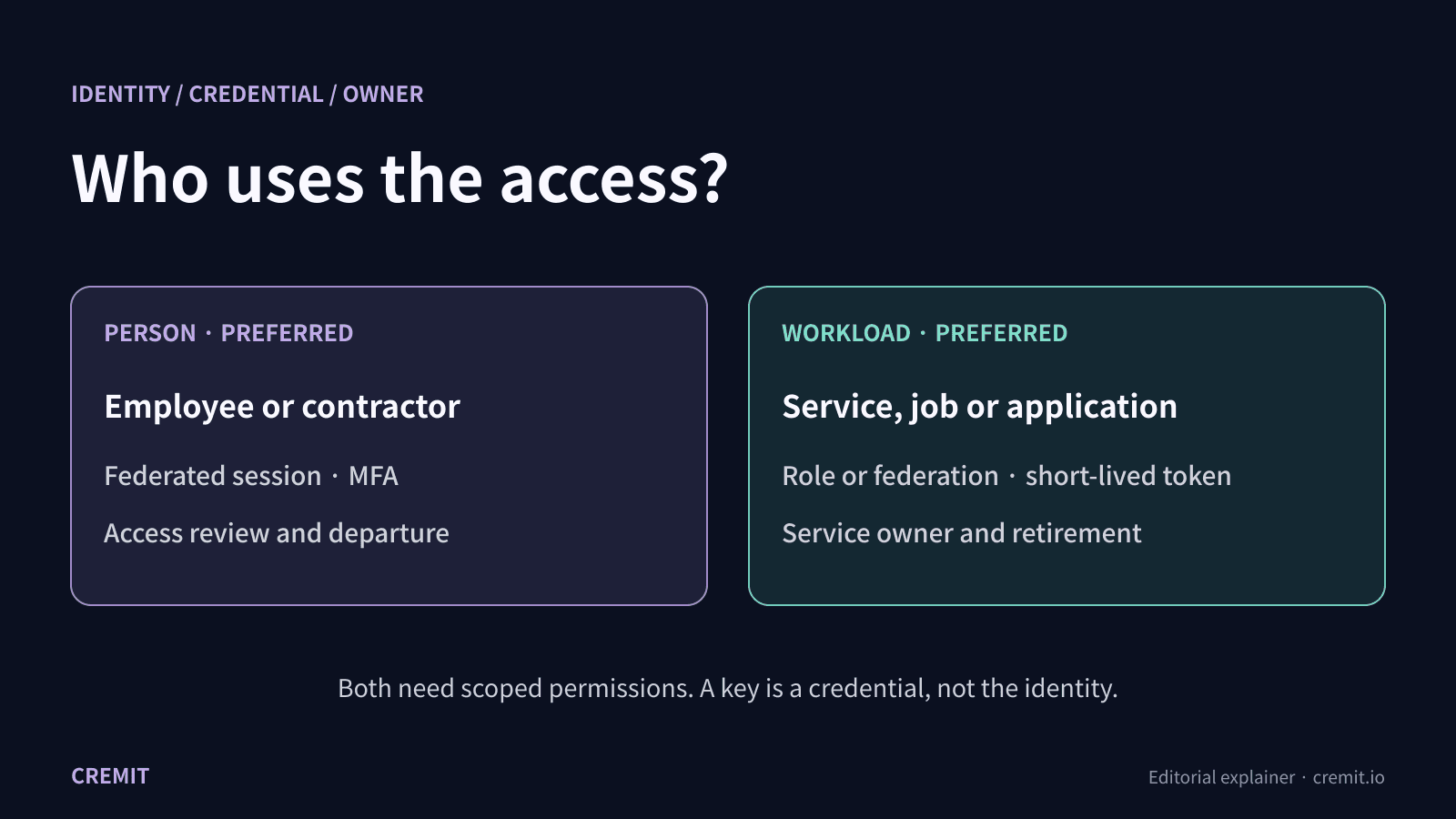
A person and a workload can both have privileged access. Compare the principal, credential, owner and offboarding record you need to review each one.
A GitHub Action used by more than 23,000 repositories was altered and its version tags retagged, leaking CI/CD secrets into build logs. The incident read as an NHI failure.
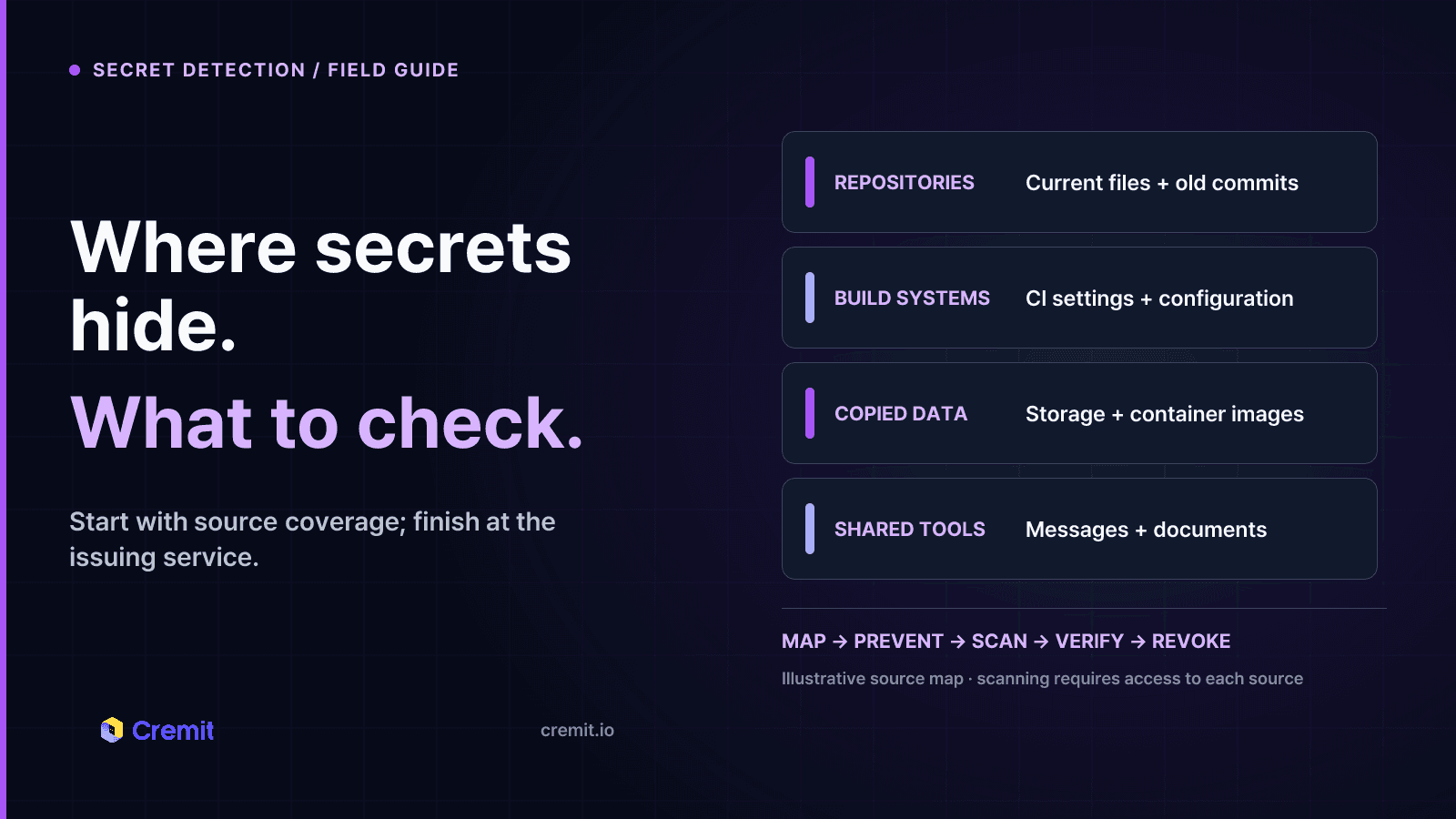
A practical workflow for preventing, finding, verifying, and replacing exposed credentials across code and shared tools.
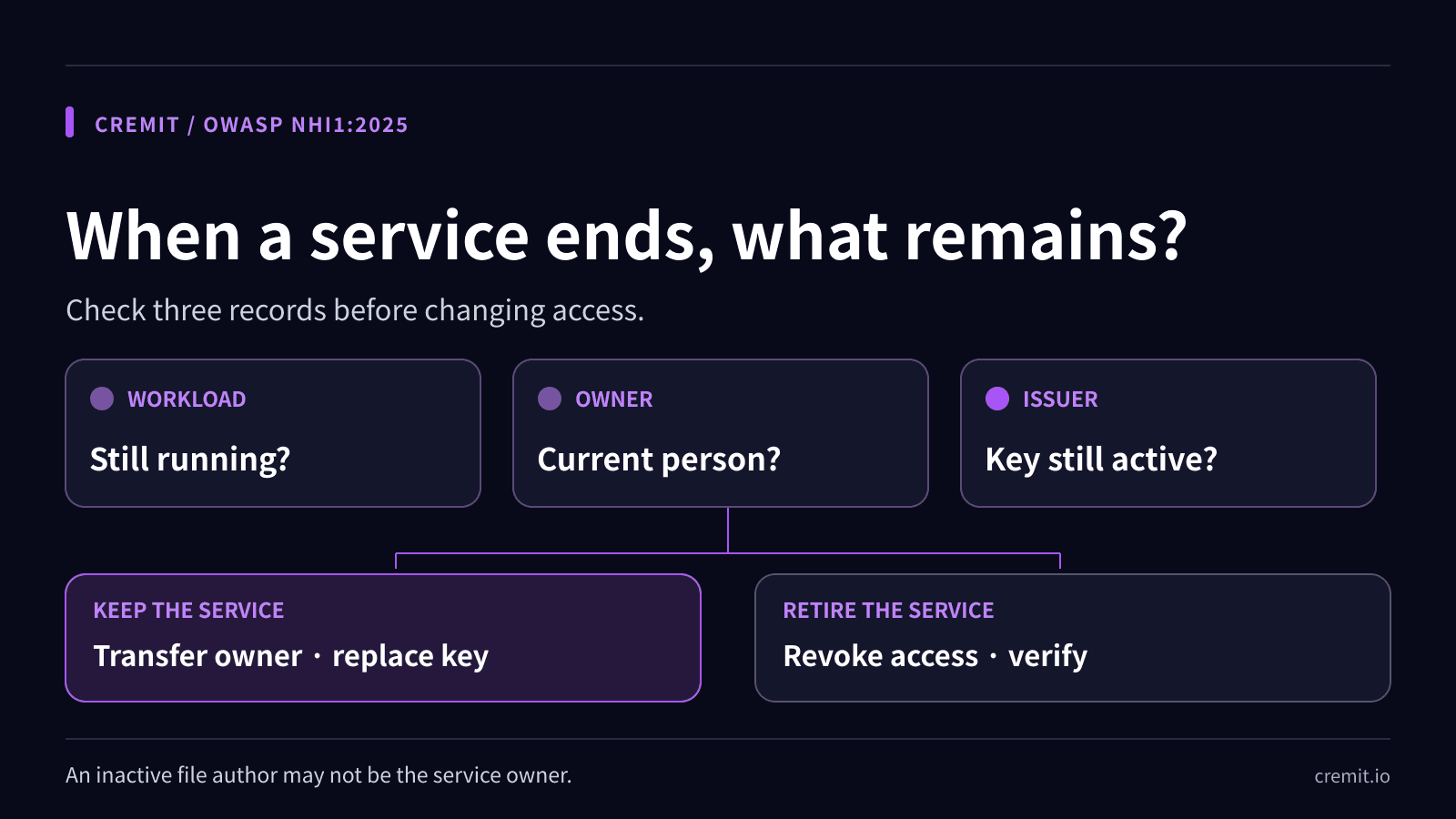
When a service ends or its owner leaves, decide what still runs, transfer responsibility or revoke access, and verify the old key no longer works.
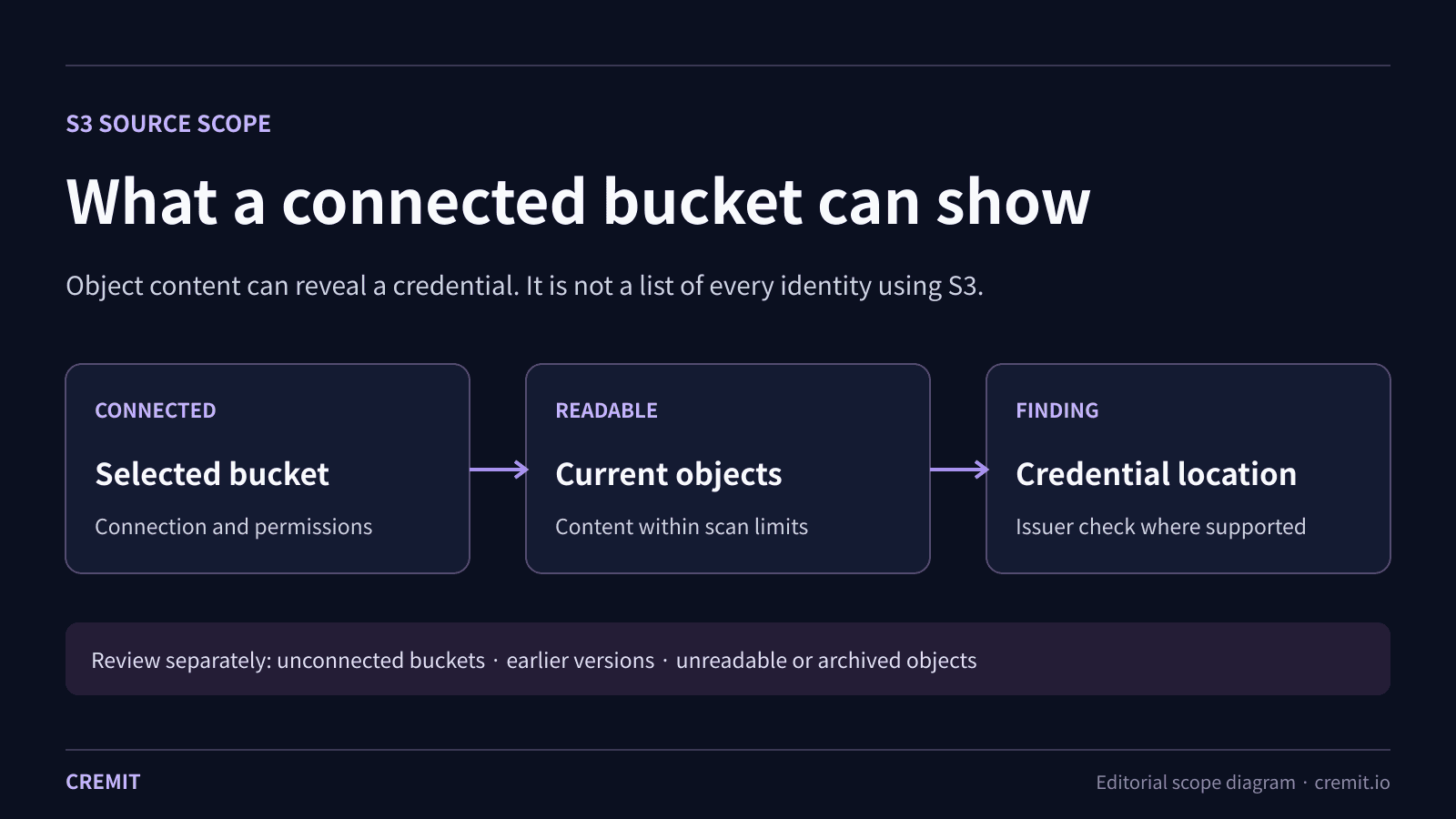
Cremit reads supported current objects in connected S3 buckets to locate credentials. Check access, skipped objects, earlier versions and the issuer separately.
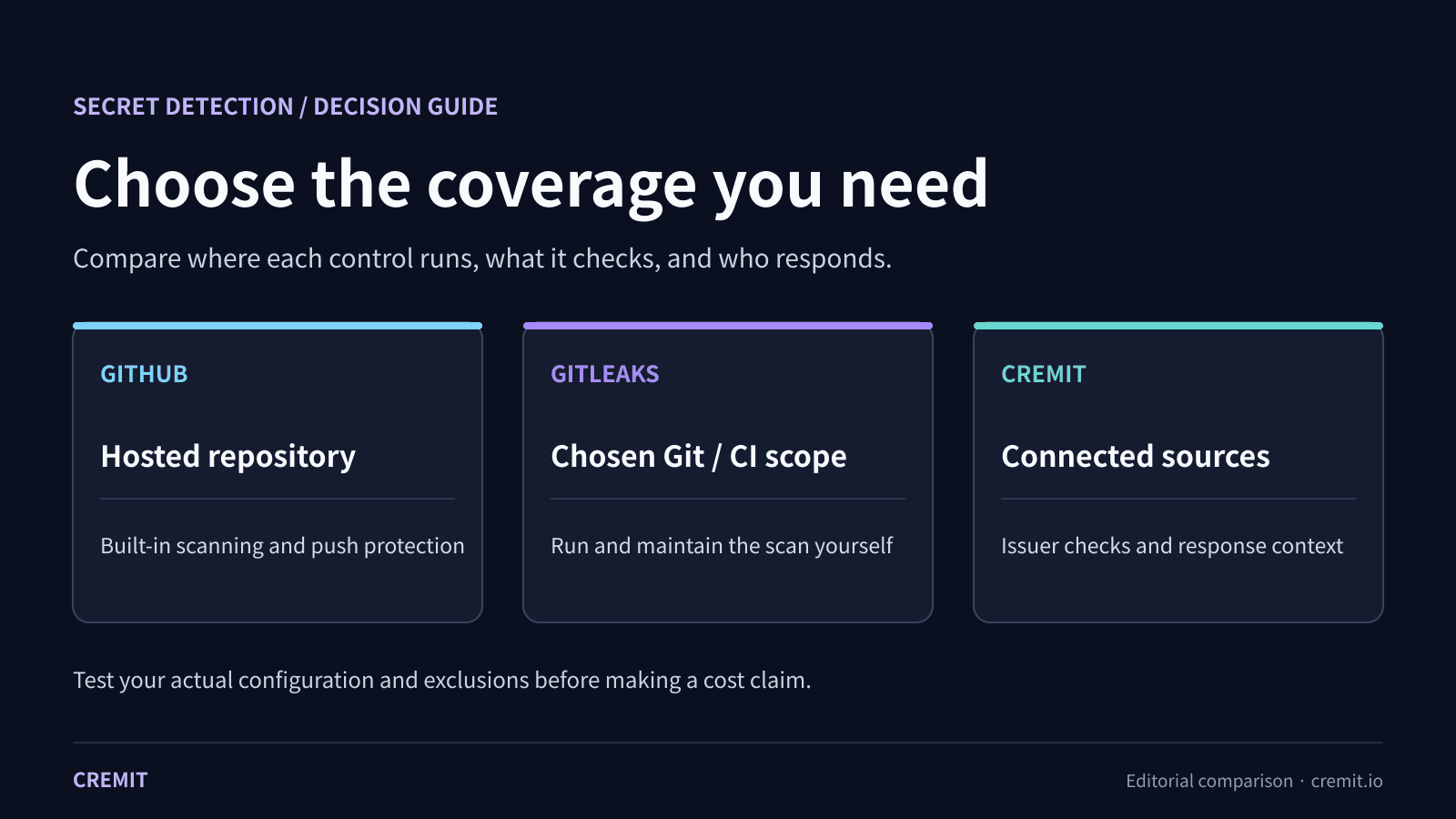
Start with the sources you need to inspect, the evidence each check returns, and who will revoke a live key. Compare GitHub, Gitleaks and Cremit by the work each covers.
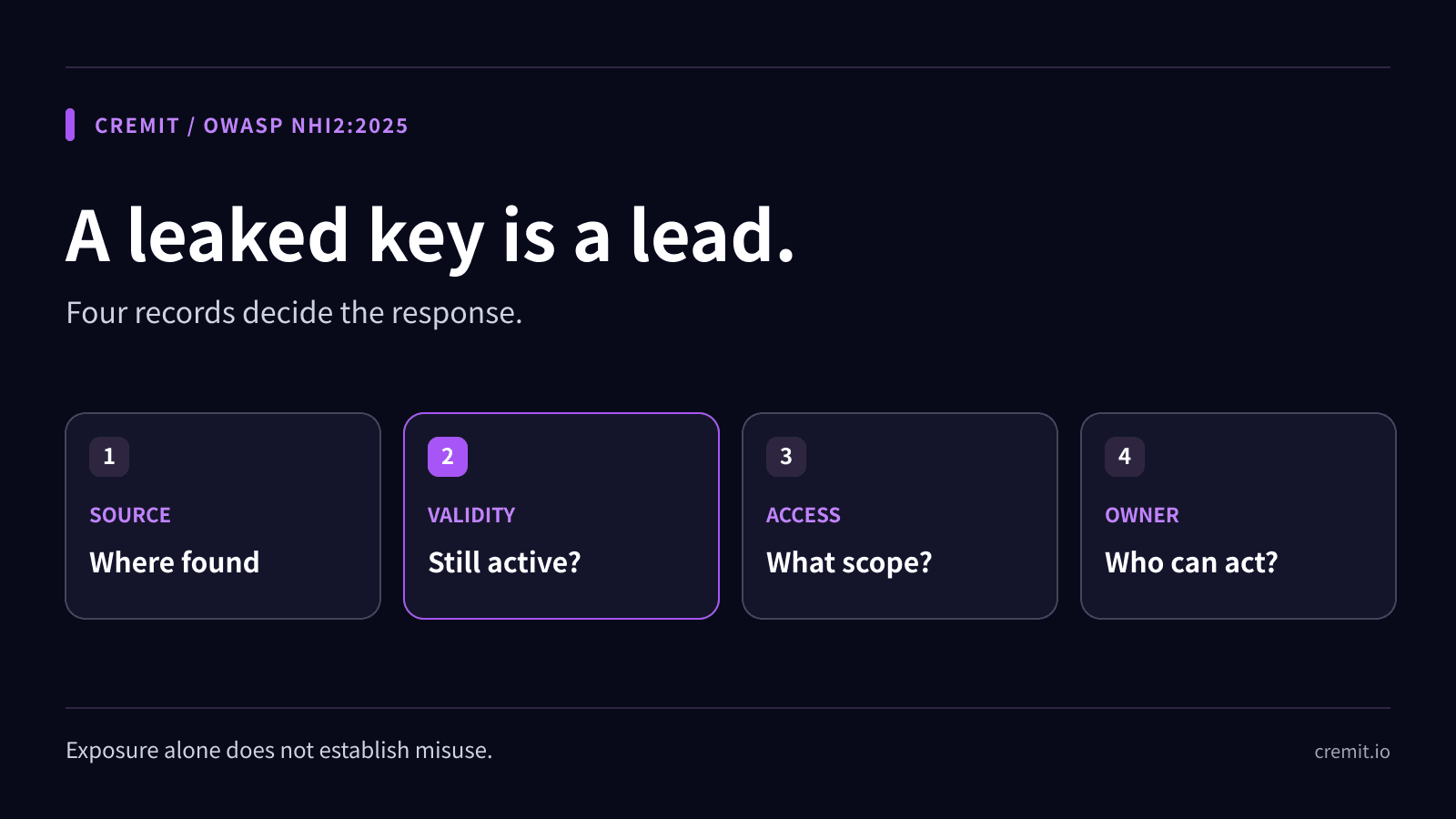
A leaked secret is a lead, not proof of misuse. Check its location, validity, access, and response owner before closing the exposure.
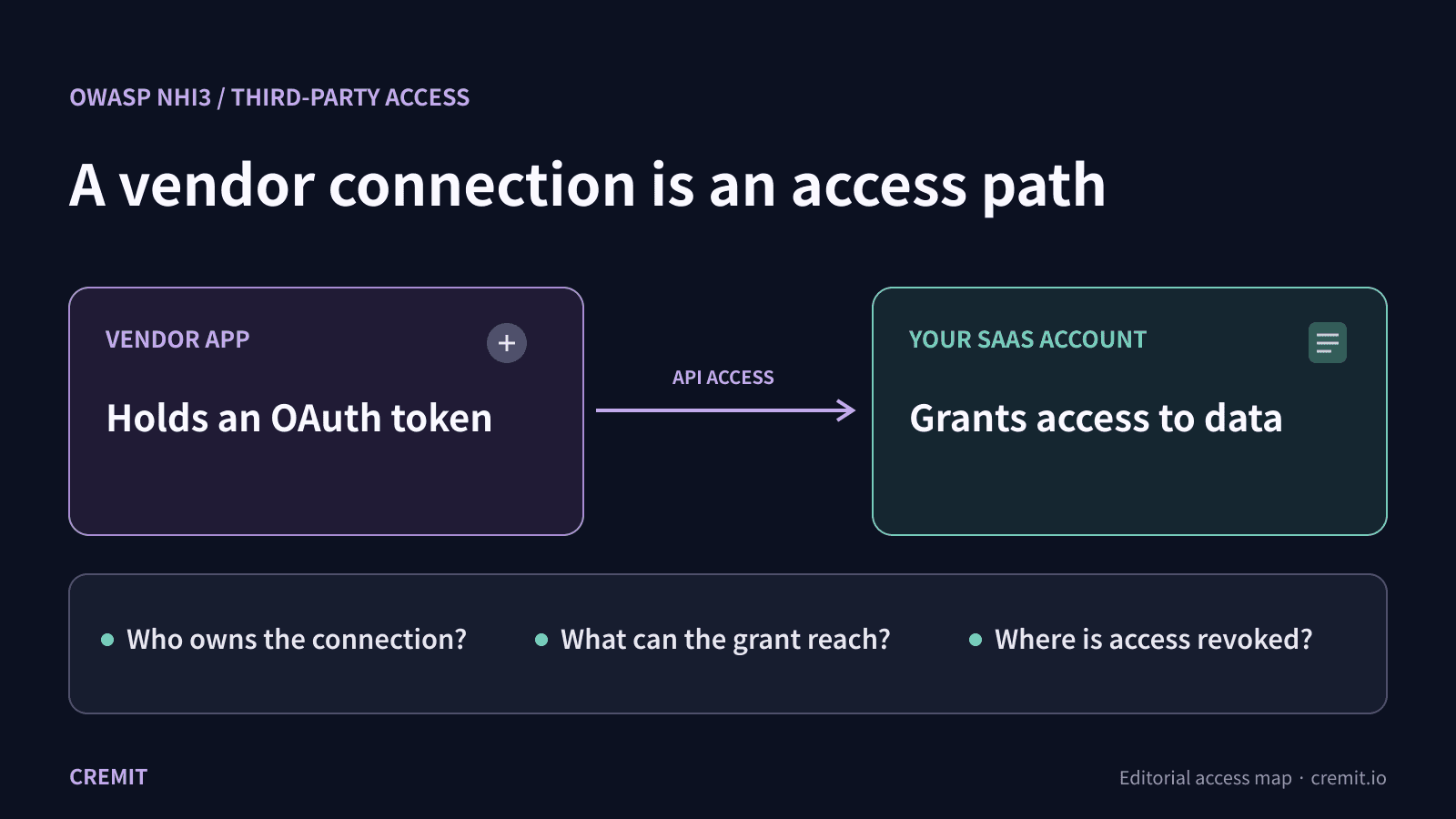
A vendor can hold a token that reaches your SaaS data. Use the Salesloft Drift incident and GitHub App controls to review the grant, owner, activity and revocation path.
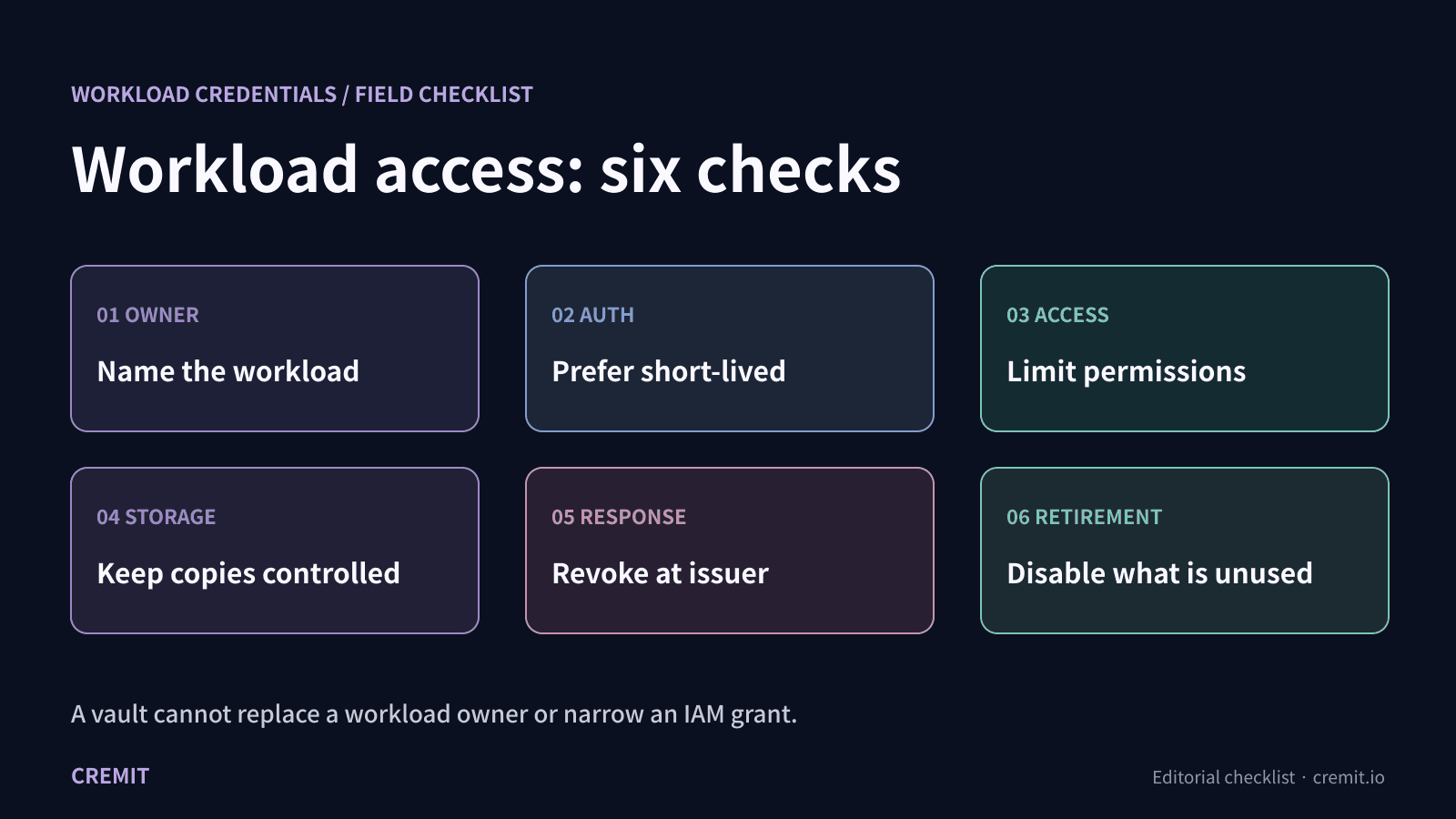
Before adding another key or vault entry, identify the workload, prefer temporary access, bound its permissions, plan exposure response and retire unused identities.
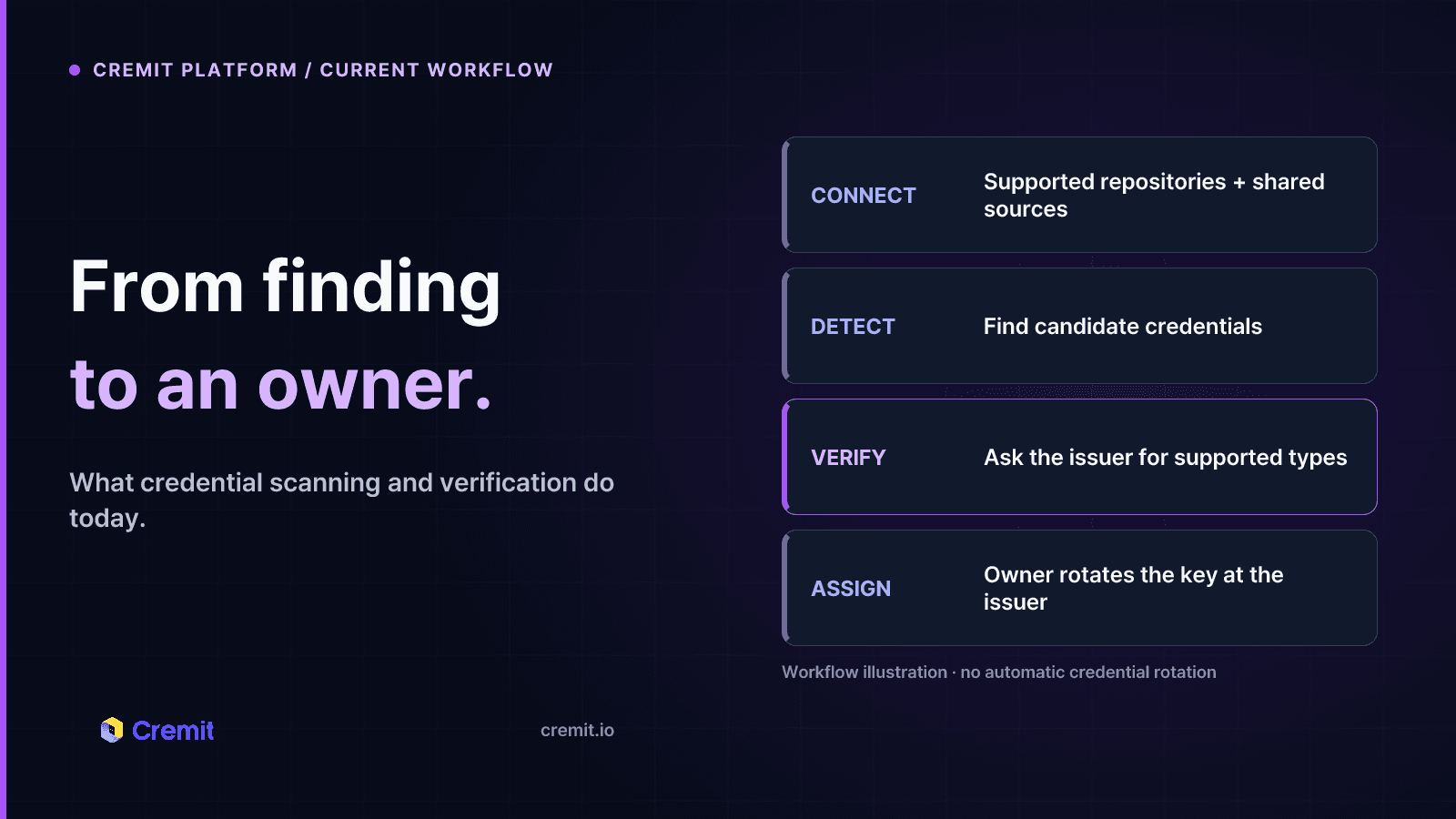
An updated guide to Cremit Platform’s scan sources, live credential checks, and remediation workflow, with current product limits.
The ten OWASP NHI risks explained through specific checks for service accounts, tokens, deployment systems, and owners.

A conversation with the team at ENlighten, a Korean energy IT platform, about how they manage credentials and secrets and what led them to Cremit.
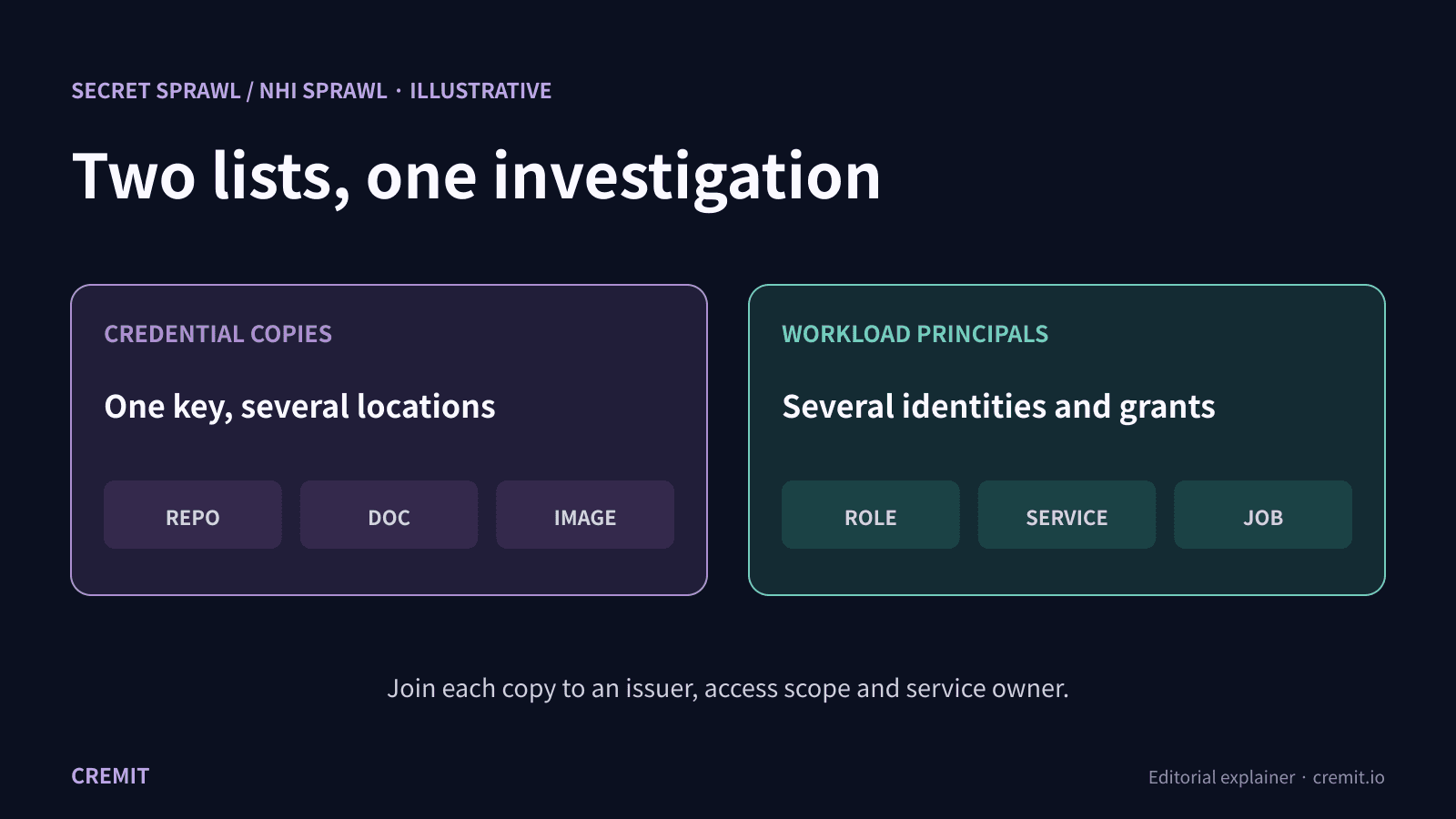
One credential can be copied to many places; many workload principals can accumulate grants. Keep separate records, then join the evidence for each investigation.
Optional cookies count visits, identify visiting companies, and measure ads. You can decline. Cookie policy