Jul 28, 2026
From exposed credentials to Cremit Platform: the workflow we support
How Cremit Platform finds exposed credentials, verifies supported types, and routes findings to an owner, with clear limits.

Ben Kim
How Cremit Platform finds exposed credentials, verifies supported types, and routes findings to an owner, with clear limits.
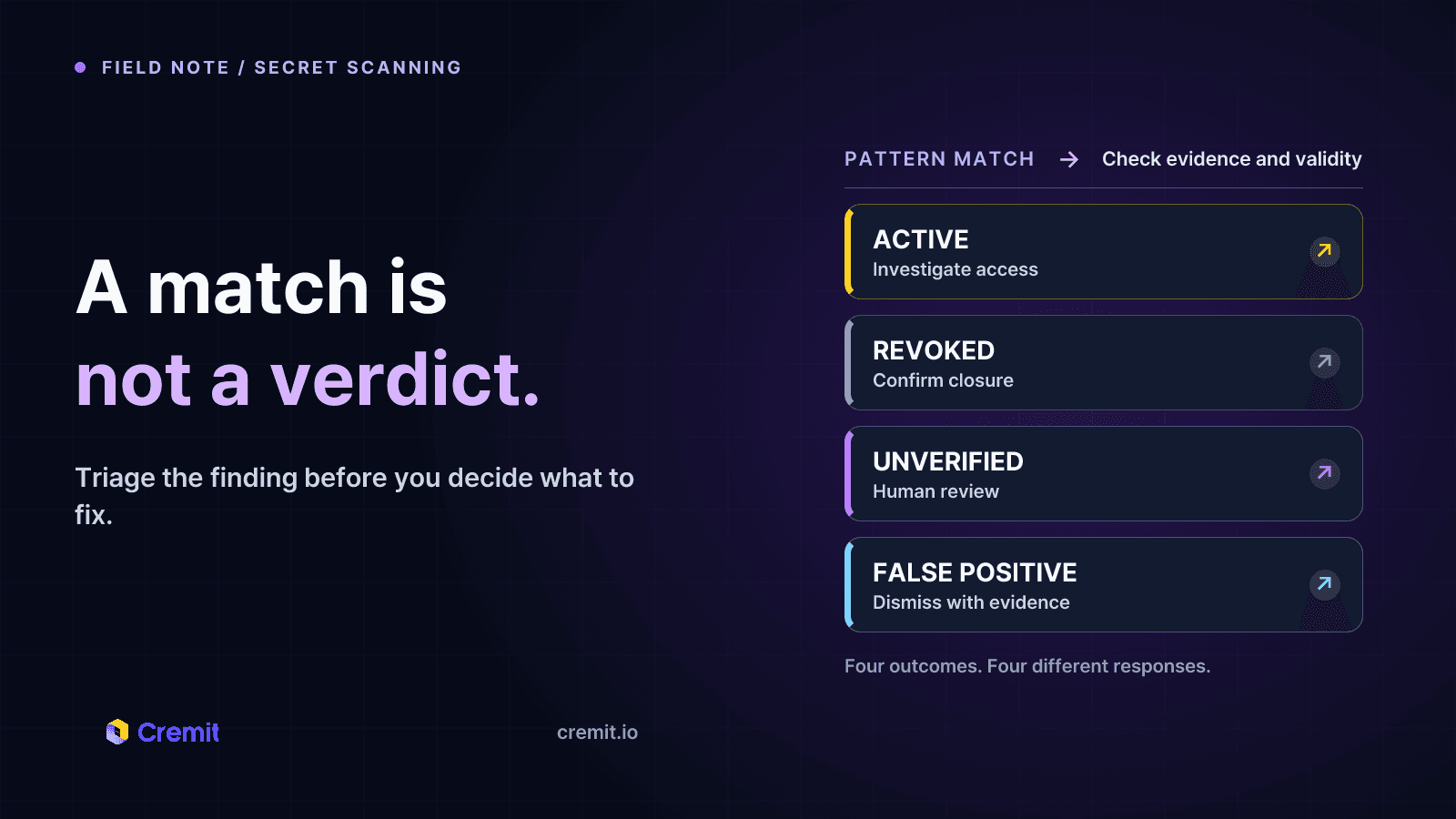
A pattern match, a revoked key, and an unverified key need different responses. Learn how to separate them and prioritize exposed credentials.
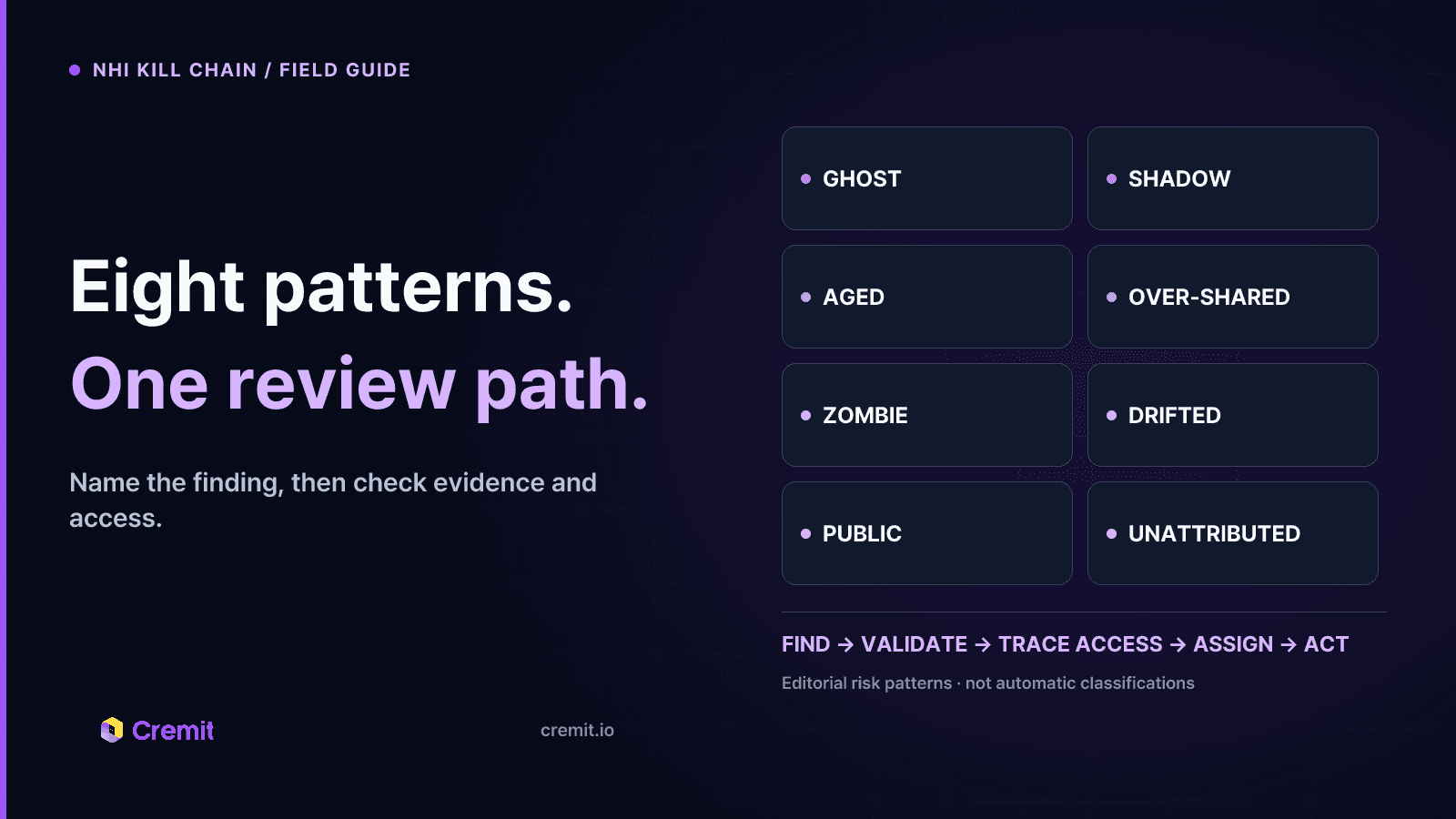
A practical summary of eight NHI credential exposure patterns, the evidence to check, and what Cremit Platform can help investigate.
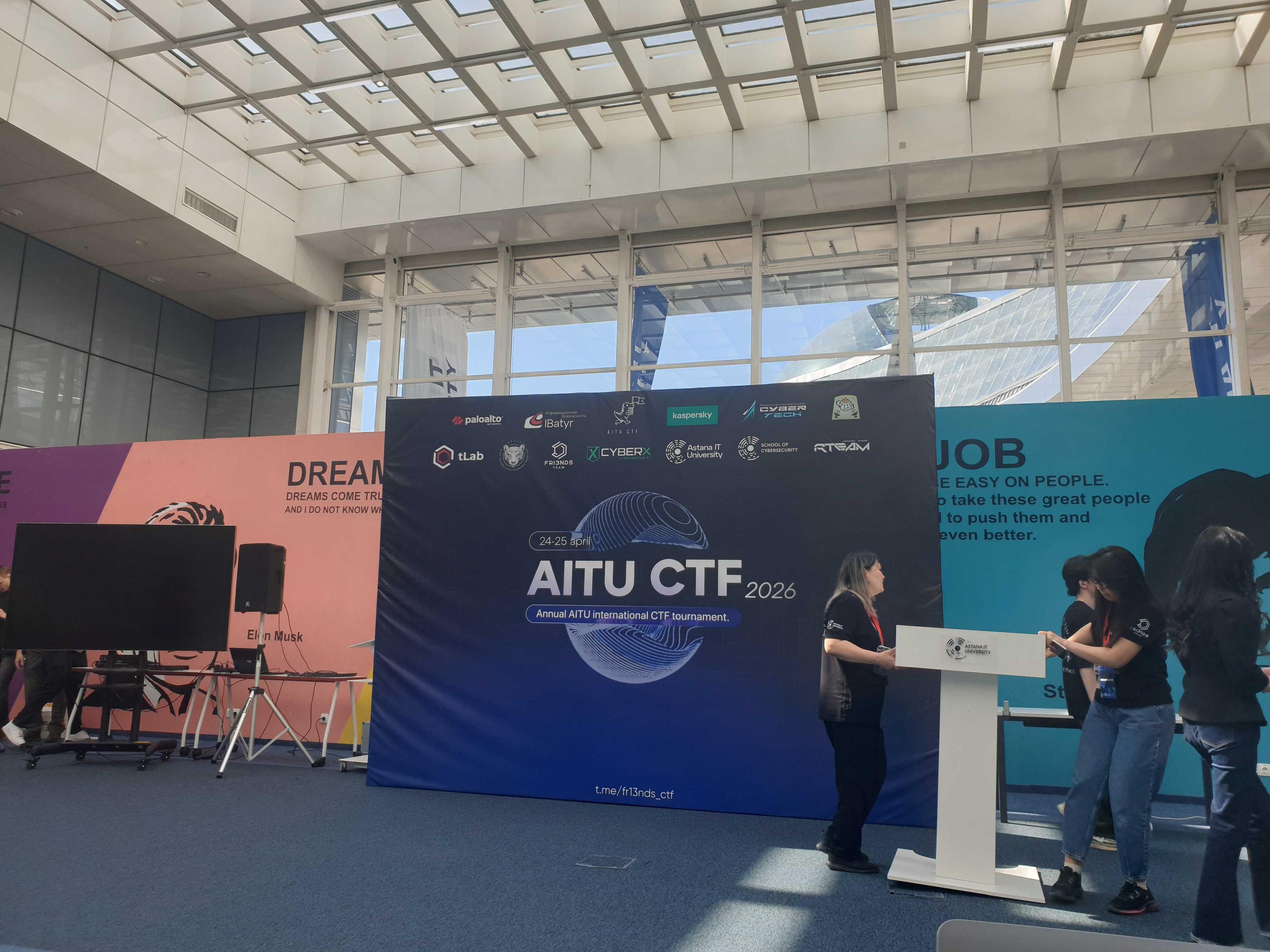
Full writeup of the AITU CTF Final (April 25-26, 2026), a HackCity-format competition. We walk through exploiting DMZ hosts via XXE, SSTI, and SQLi, pivoting into the DEV segment through AD lateral movement, escaping a privileged Docker container via cgroup abuse, and breaching a healthcare system through JWT JKU header injection.

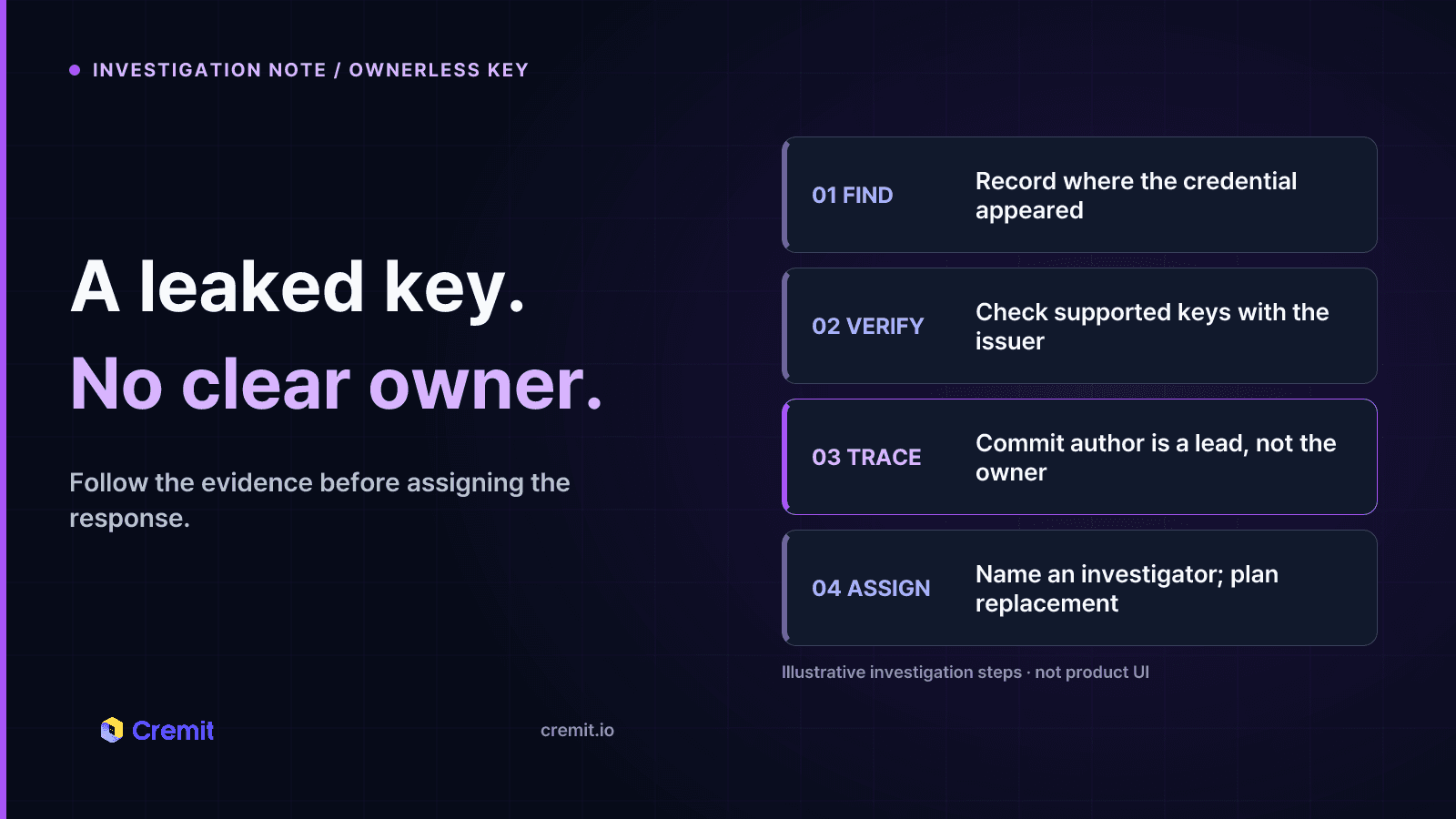
How to verify, investigate, assign, and replace an exposed credential when the service owner is unclear.
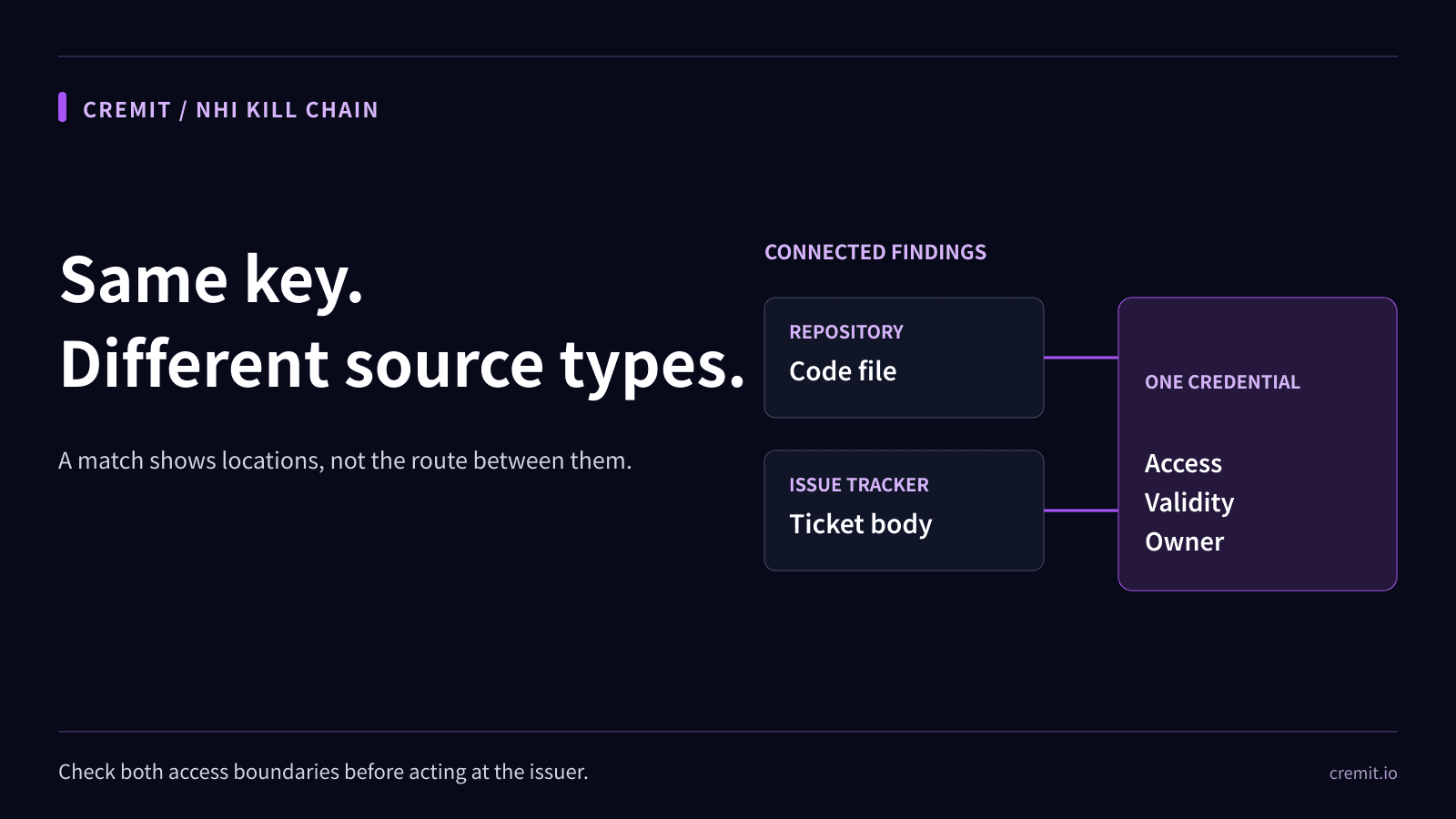
Two source types show two observed locations, not how a credential moved. Check access, issuer status, owner, and actual consumers.
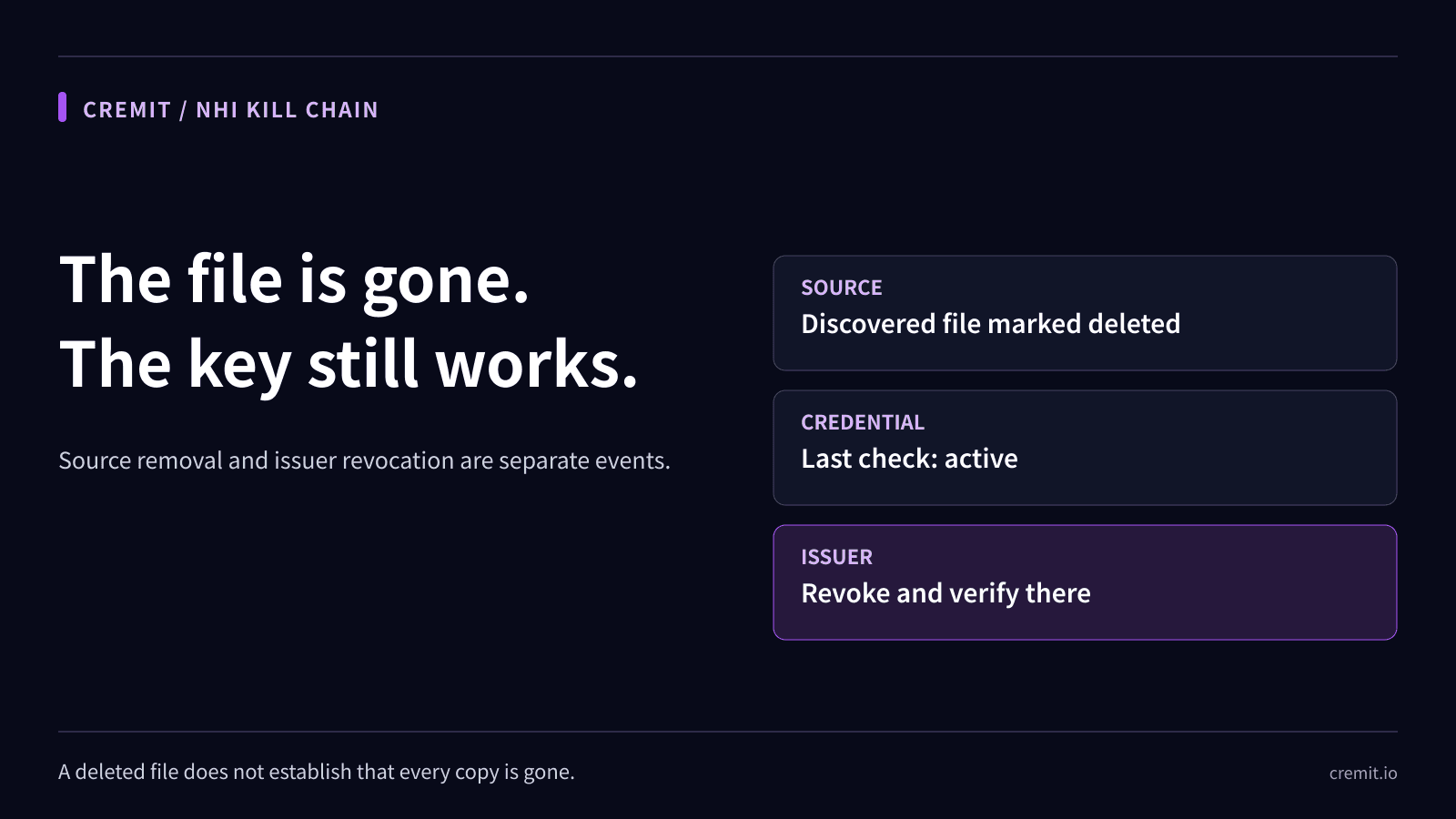
Source removal does not revoke a credential. Check the issuer, Git history, current owner, and last verification before closing the finding.
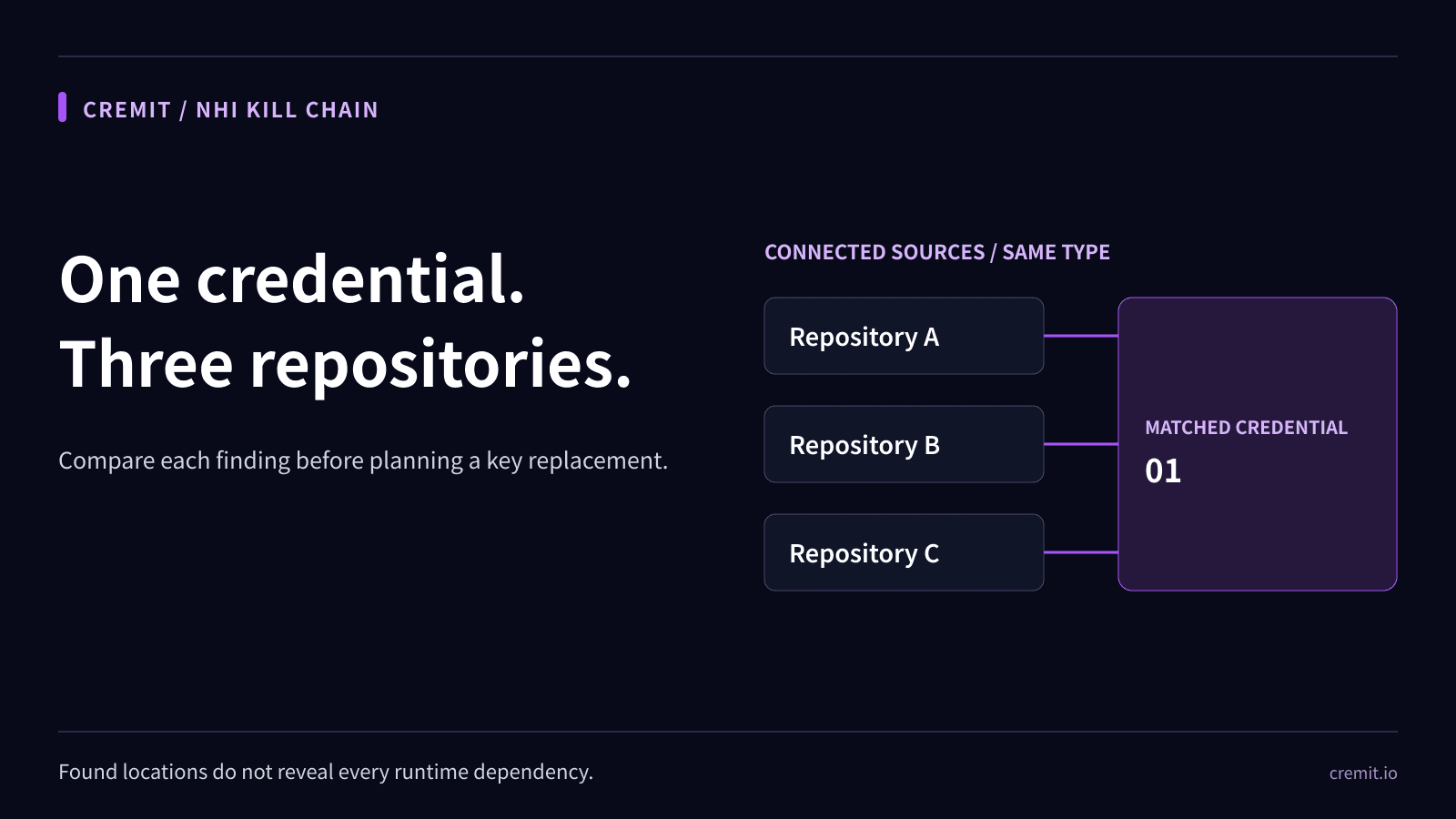
Three observed locations are not a complete dependency map. Check key type, issuer status, permissions, and actual consumers before replacement.
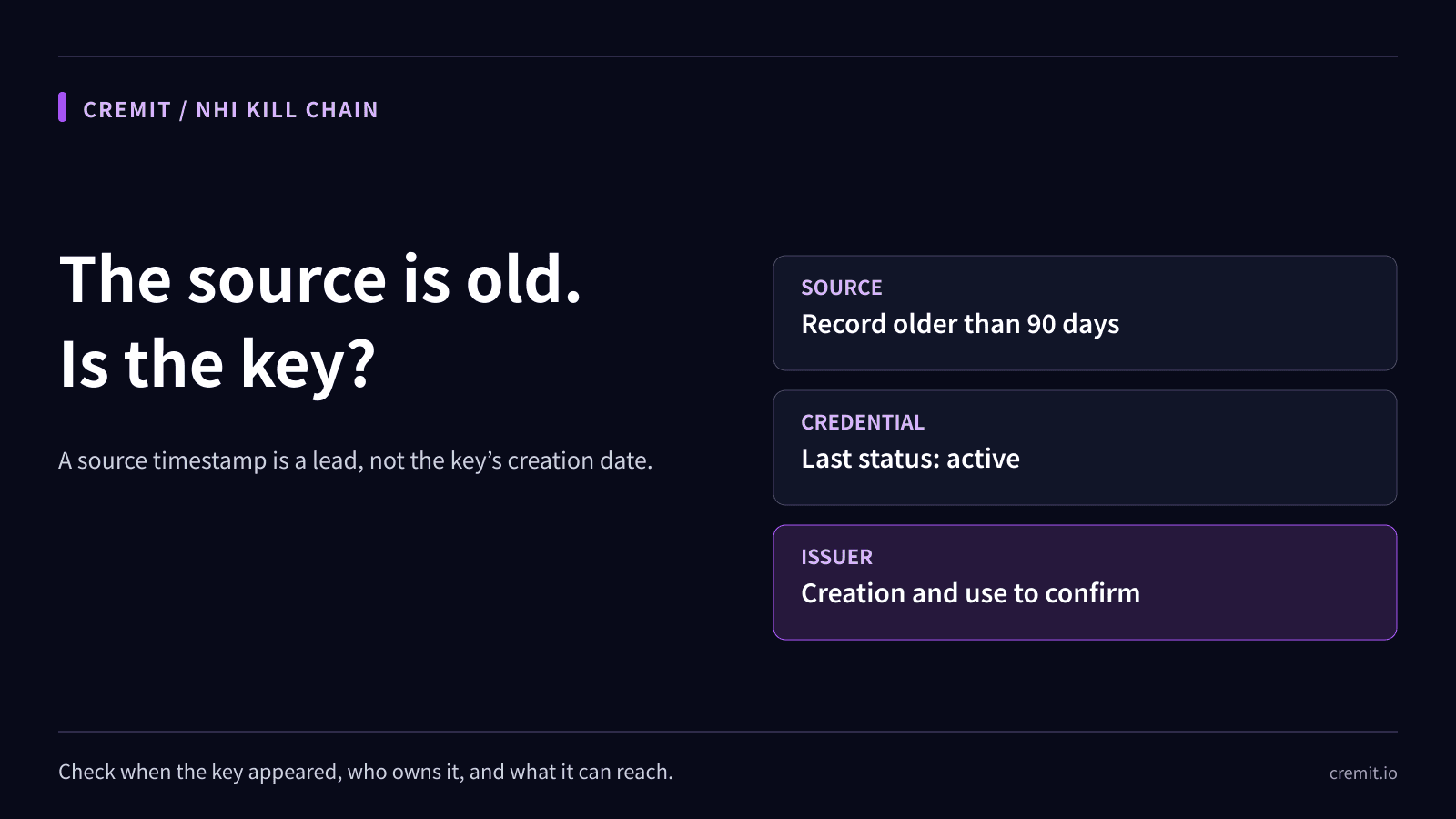
An old source record and an active key do not establish key age. Check when the value appeared, issuer status, permissions, and dependencies.
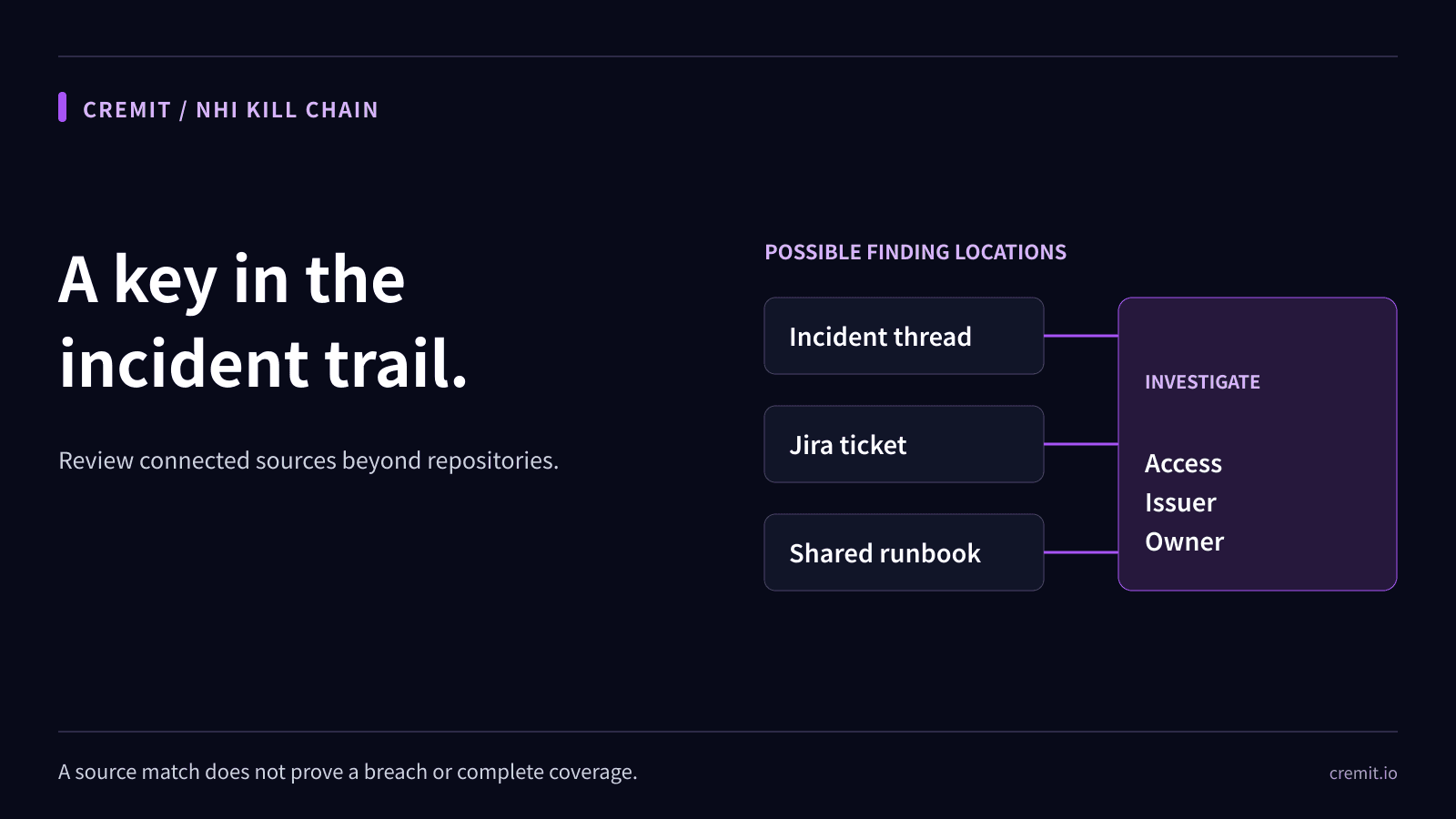
A credential outside a repository needs a source-access review, issuer check, owner, and verified response. A finding alone does not prove misuse.
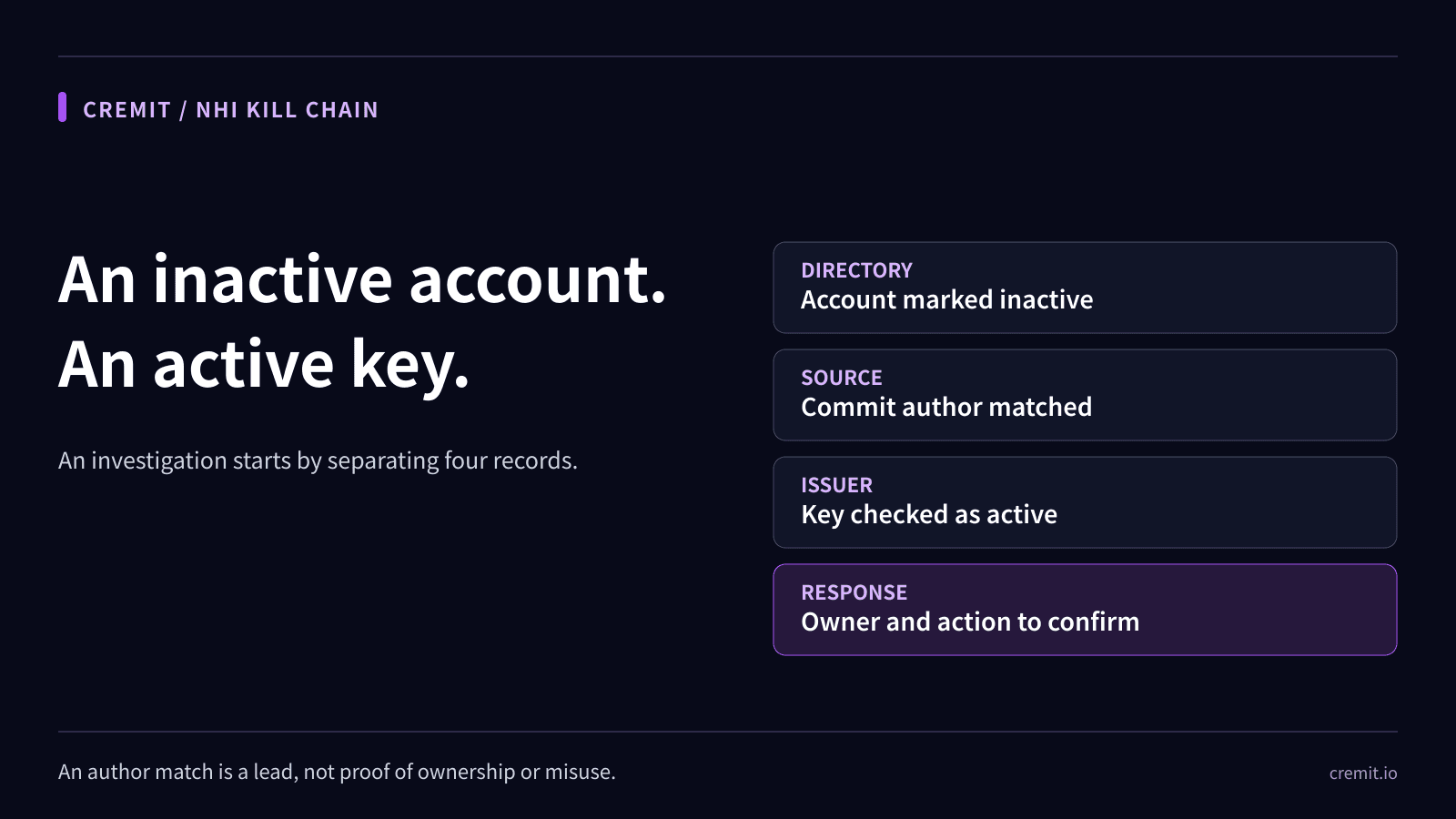
An active key linked to an inactive author is a lead. Check the directory, source, issuer, and current service owner before deciding what happened.

Aqua Security's Trivy was compromised by TeamPCP, cascading into LiteLLM. A 7-phase Cyber Kill Chain and MITRE ATT&CK analysis of how incomplete credential rotation turned a single breach into a five-ecosystem catastrophe.
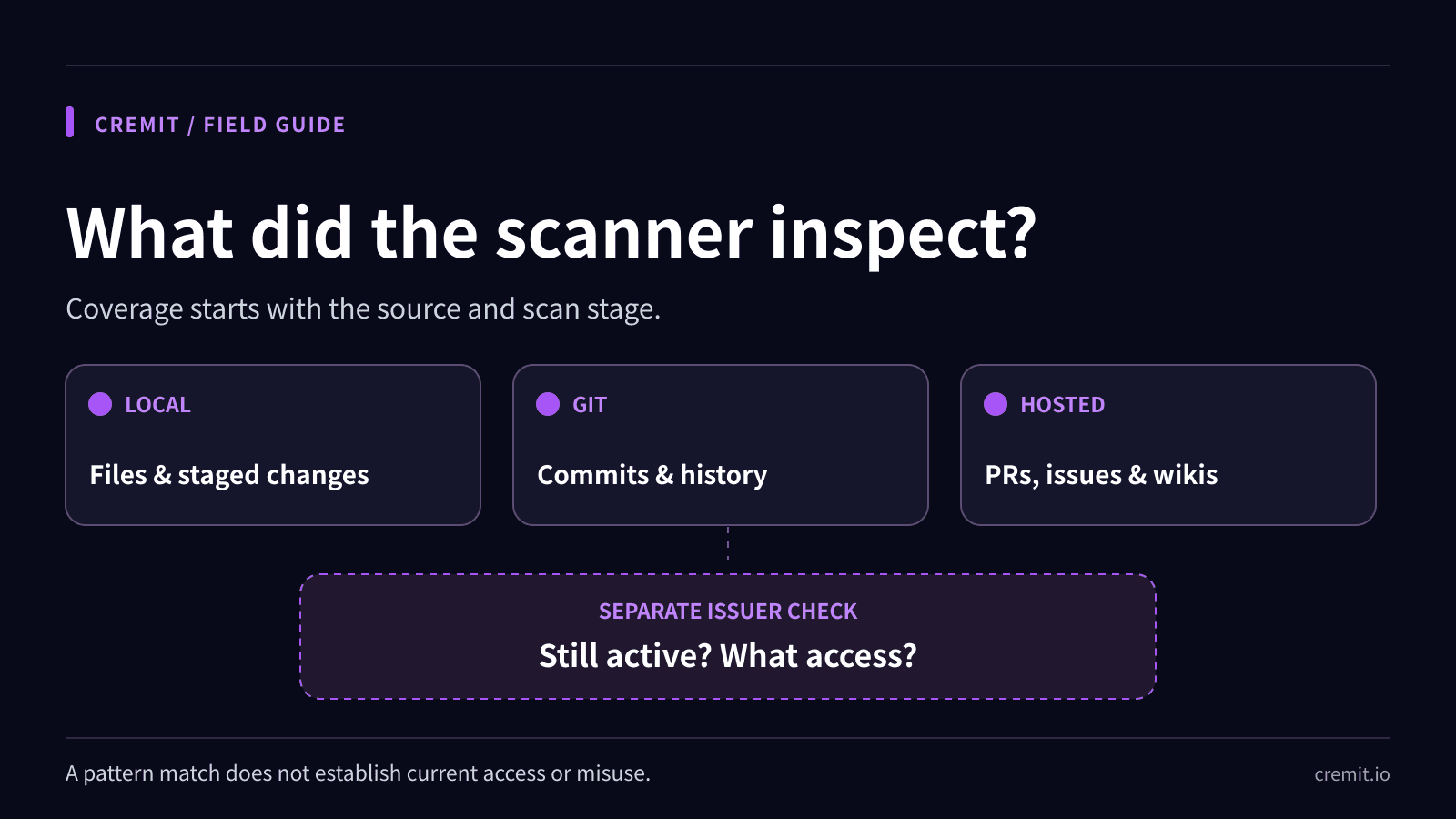
A practical guide to push protection, history scans, validity checks, and issuer-side response, with GitHub, GitLab, and Gitleaks source links.
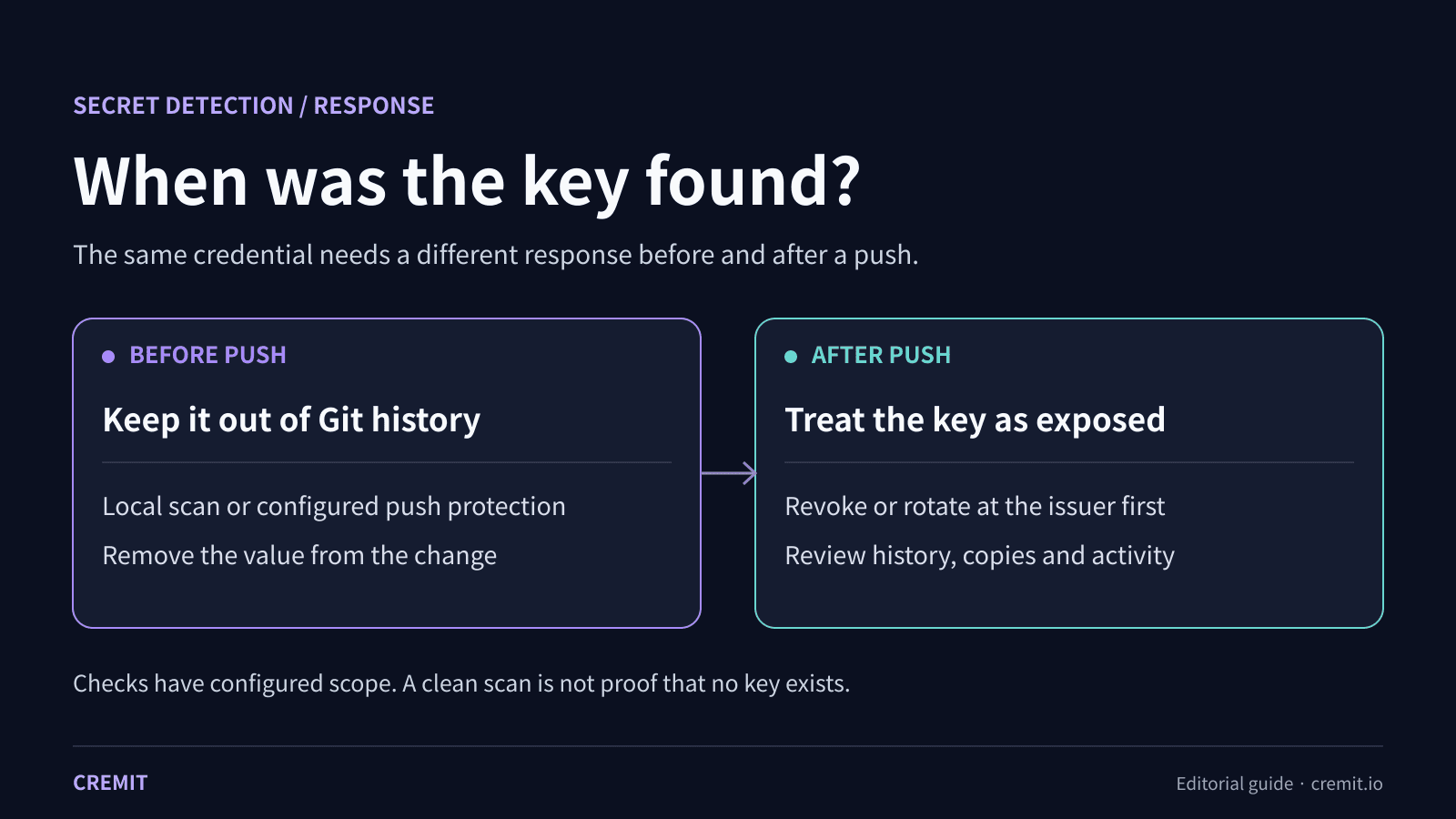
A key caught before push can be removed from the change. A key found afterward needs issuer-side revocation or rotation, even if the commit is deleted.
A practical rollout for credential detection across repositories and collaboration tools, with clear owners and honest scan timing.
Optional cookies count visits, identify visiting companies, and measure ads. You can decline. Cookie policy